
Antique Serviette Holders
Antique serviette holders are table accessories spanning Victorian to Mid-Century Modern periods, offering a practical way to mark individual places at dinner.
Antique Serviette Holders
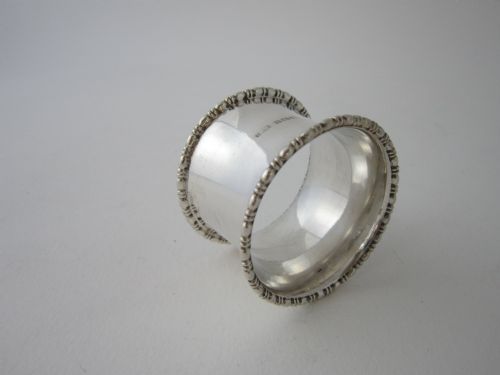
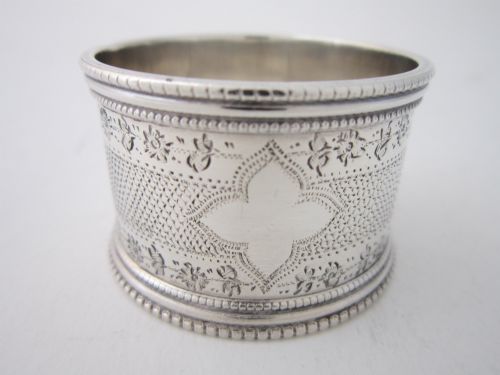
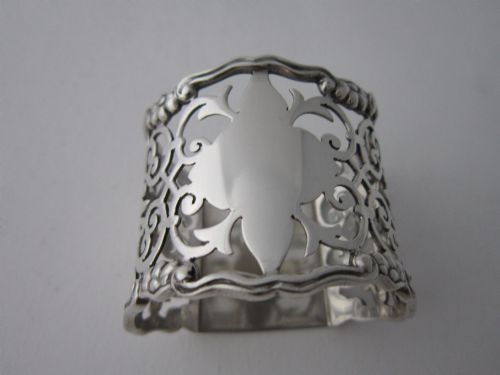
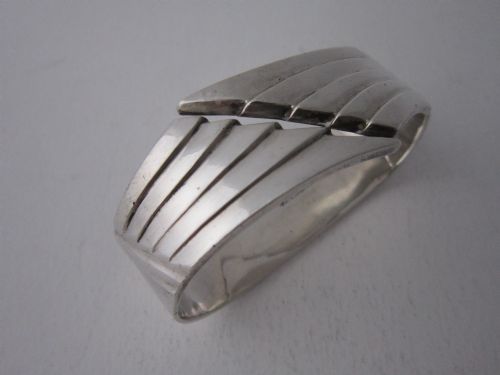
When searching for antique serviette holders, buyers encounter table accessories designed to keep table linen organised during meals. These pieces appear most frequently as napkin rings and napkin clips, shaped for individual dining settings.
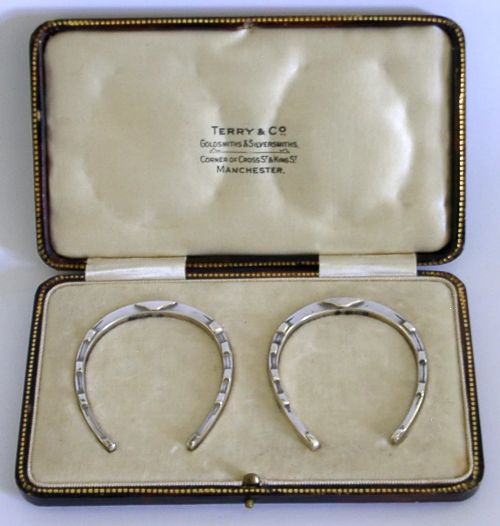
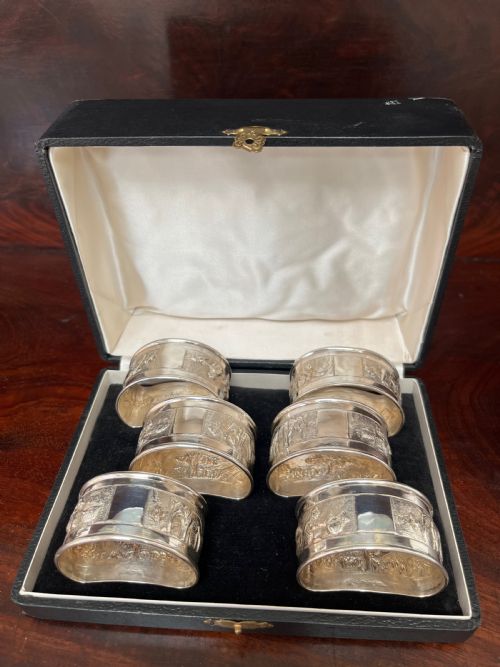
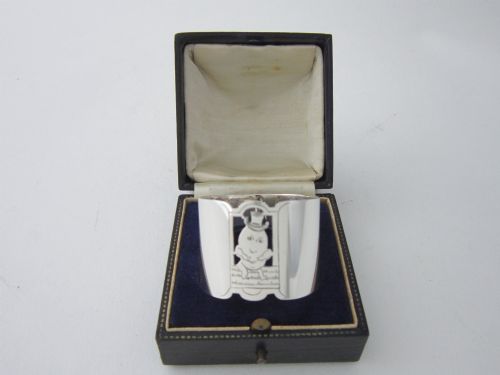
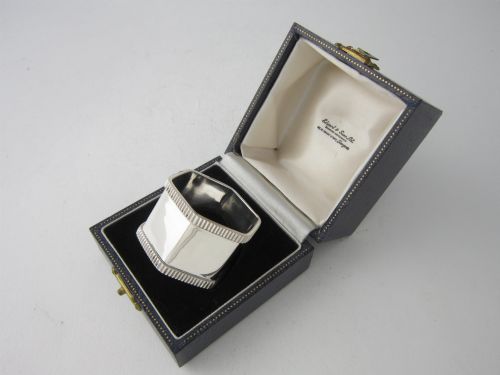
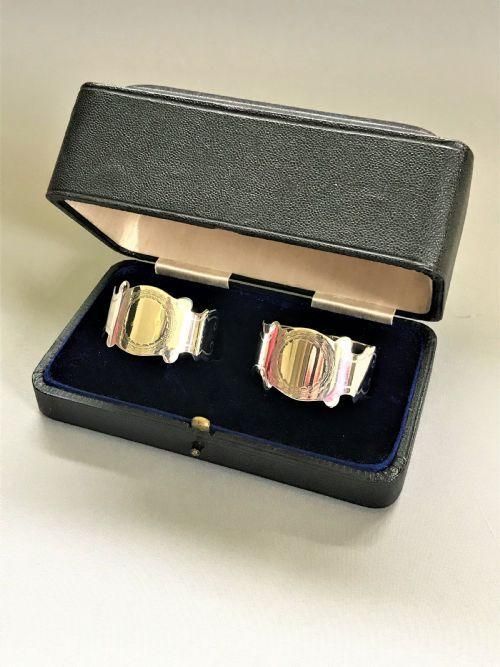
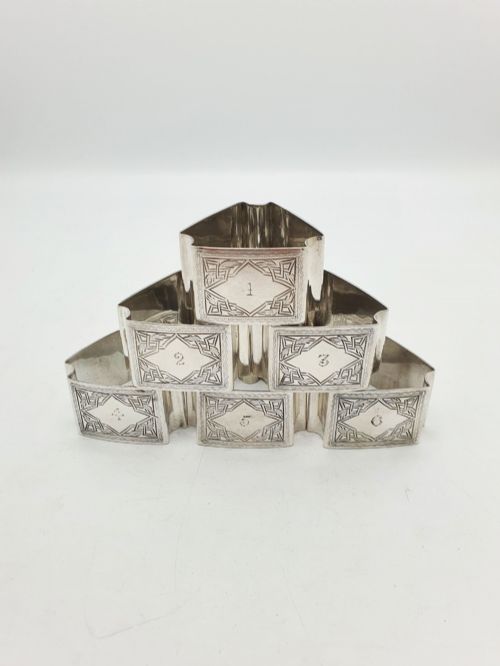
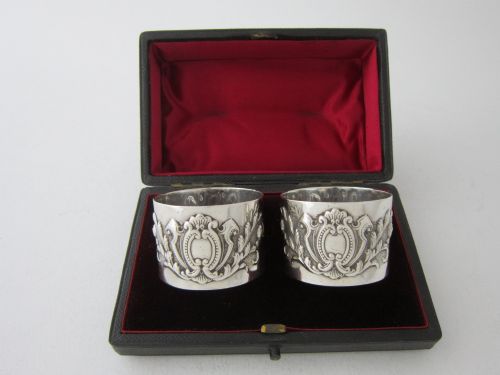
The selections available here range from Victorian and Edwardian examples to George V, Art Deco, and Mid-Century Modern designs. Many survive in fitted presentation cases, sometimes as pairs or complete sets of six.
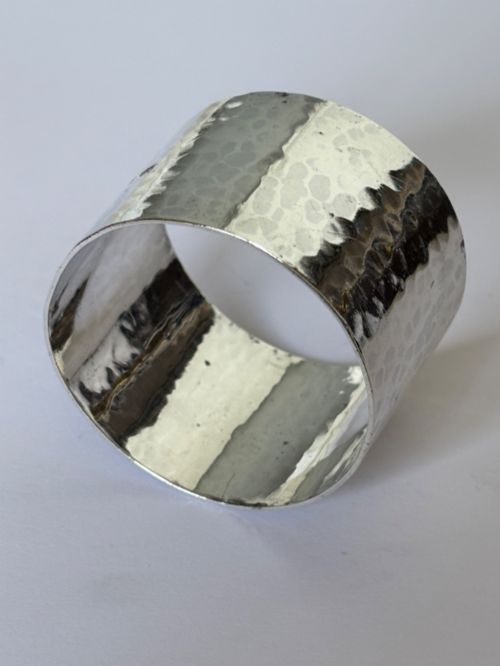
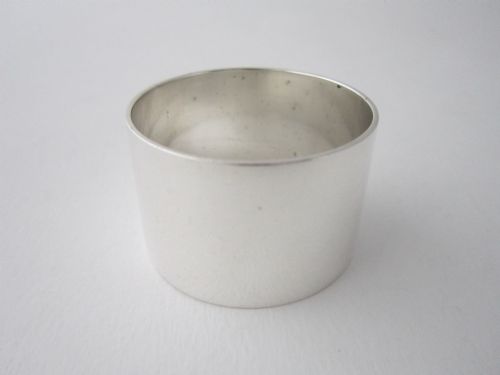
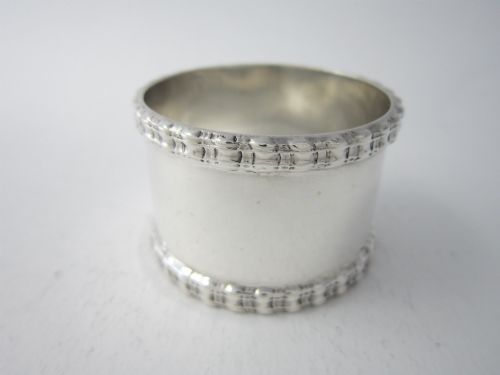
Makers utilised various forms, including novelties modelled as horse shoes, belt buckles, stirrups, and shields. Standard circular bands sit alongside hammered surfaces and decorated borders.
What varies in quality
Quality rests on the depth of the metalwork, the clarity of hallmarks, and the ambition of the design. Standard circular stamped bands differ significantly from heavy cast novelties or hand-hammered Arts and Crafts items.
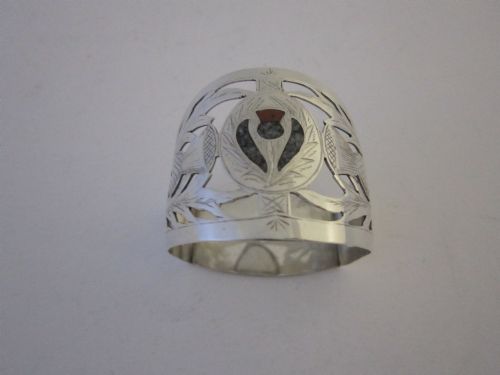
The presence of original fitted presentation cases and matching sets elevates an assembly above scattered single pieces. Skilled application of enamel work and flush-set stones also separates standard production from finer studio output.
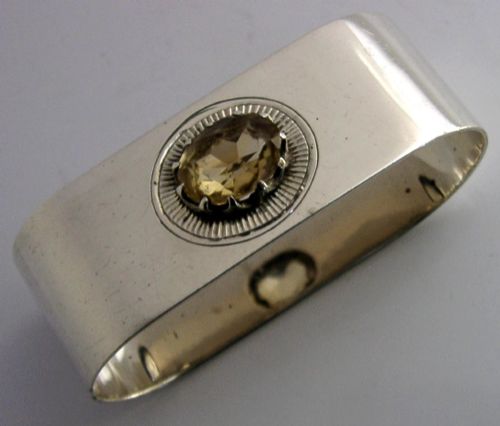
Materials represented include sterling silver, silver plate, pewter, enamel, agate, citrine, silk, velvet, leather, and hardwood.
Albert Edward Jones·C.T. Burrows & Sons·Guild of Handicraft·Liberty & Co·Mappin & Webb·R. E. Stone·David Andersen
The Antique Serviette Holders Glossary
- Napkin ring
- A small circular band used to identify and store an individual's table napkin between meals. These pieces often feature engraved monograms or decorative chasing.
- Napkin clip
- A device featuring a spring mechanism or hook to secure a serviette to a diner's clothing. These items were popular during the Victorian and Edwardian periods.
- Guilloche enamel
- A decorative technique where intricate geometric patterns are machined into metal before translucent enamel is applied. This method creates a shimmering, layered colour effect.
- Hallmark
- An official stamp applied by an assay office indicating metal purity, the maker, and the year of manufacture. British pieces typically show city marks like Birmingham or Chester alongside the lion passant.
Antique Serviette Holders: Frequently Asked Questions
What is the difference between rings and clips?
Napkin rings are small bands that encircle rolled cloth to hold it on the table between meals. Clips fasten the linen directly to a collar or clothing during dining.
Both forms served the same household purpose of keeping linen clean and assigned during multi-course meals.
Are cased sets harder to find?
Sets preserved in their original fitted leatherette or velvet-lined boxes appear less frequently than loose single items. They often originate from high-end retailers or presentation gifts.
The boxes themselves provide useful storage and frequently bear retailer stamps on the silk interior lids.
How do I date an unmarked piece?
Dating relies heavily on style cues, such as the heavy ornamentation of Victorian examples versus clean geometric lines of Art Deco pieces. Maker marks and assay office symbols offer the most precise chronological clues.
When hallmarks are absent, construction methods and materials help narrow the manufacturing era.
What materials were used besides silver?
While sterling silver and silver plate dominate, makers also utilised pewter, turned hardwood, and continental silver standards. Enamel, agate, and citrine appear as decorative embellishments.
Fitted presentation boxes incorporate exterior leatherette and interior silk or velvet linings.