
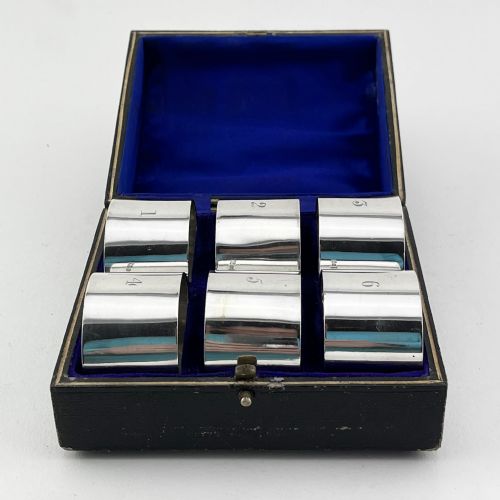


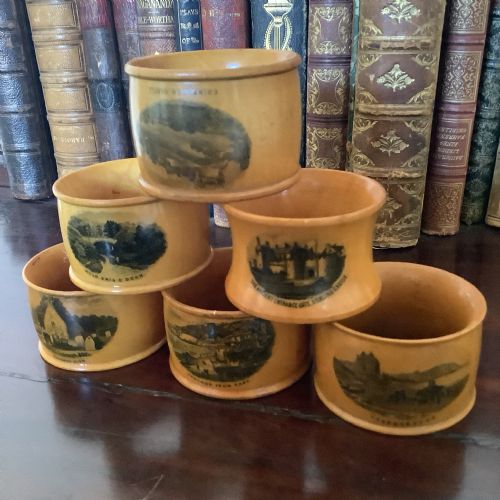


Set of Napkin Rings
When setting a formal table, a set of napkin rings brings coordinated polish and historic character to the dining room.
Set of Napkin Rings
A set of napkin rings provides a matching group of domestic tabletop accessories designed to identify personal table linen during meals. When searching for a set of napkin rings, buyers encounter collections spanning from the late Victorian and Edwardian eras through the George V period and into the Art Deco years of the twentieth century.
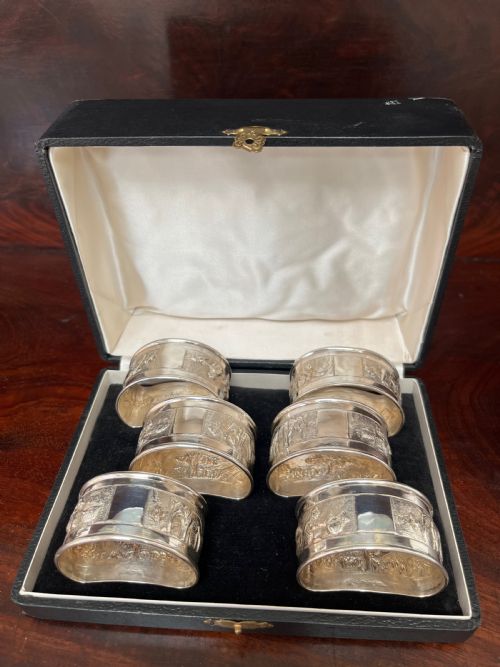
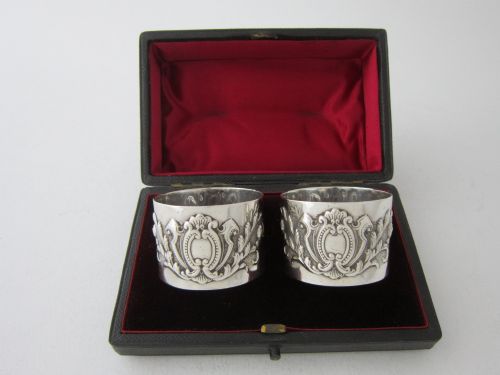
The most common formations found on this page are matched groups of four or six pieces, frequently resting in their original fitted presentation cases lined with silk, velvet, or satin. These domestic accessories appear in solid sterling silver, silver plate, and occasionally alternative materials such as turned hardwood.
Materials and construction
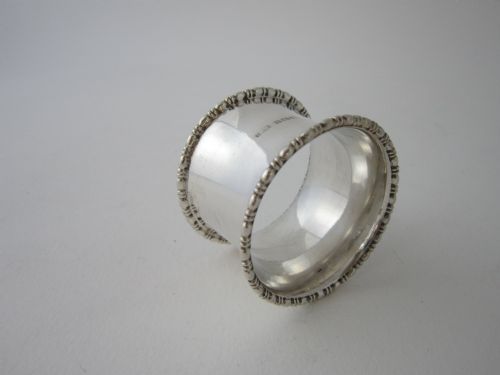
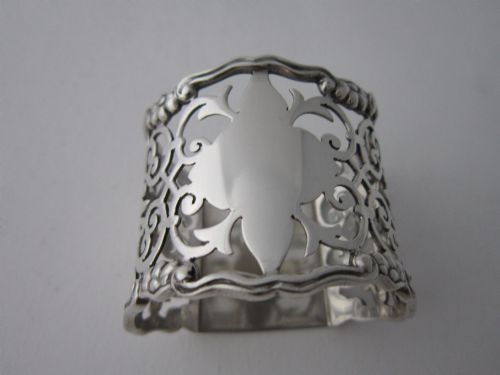
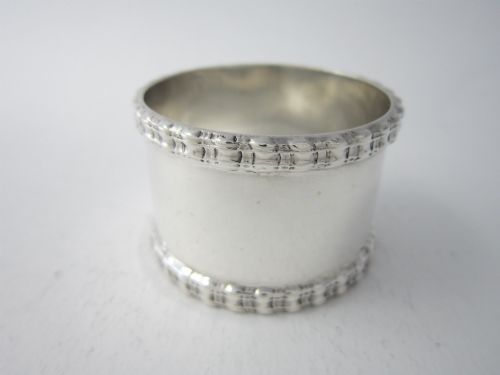
Metals dominate the construction of these tabletop accessories, utilising solid sterling silver or base metals coated in silver plate. Silversmiths formed the cylindrical or oval bands from sheet metal, joining the seams and applying decorative elements such as applied wire rims, hand-engraving, or engine-turning.
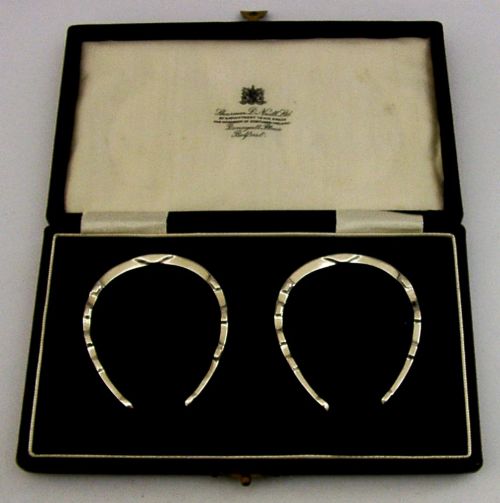
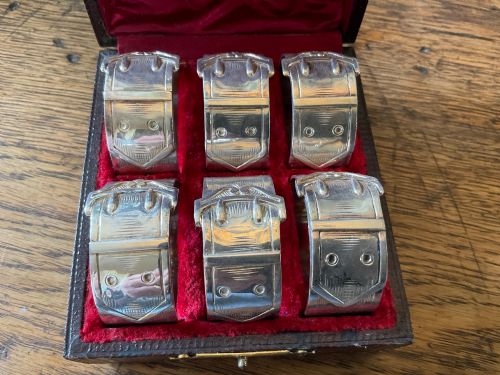
Specialist manufacture extends to novelty forms modelled as horseshoes, stirrups, or belt buckles, requiring individual casting and hand-finishing. Wooden variants involve precision turning on a lathe, utilising materials like Mauchline ware to produce decorative turned surfaces.
Fitted storage forms an integral part of the manufacturing process, with boxes constructed from wood or card covered in leatherette and lined internally with plush velvet, silk, or satin to protect the polished metal surfaces.
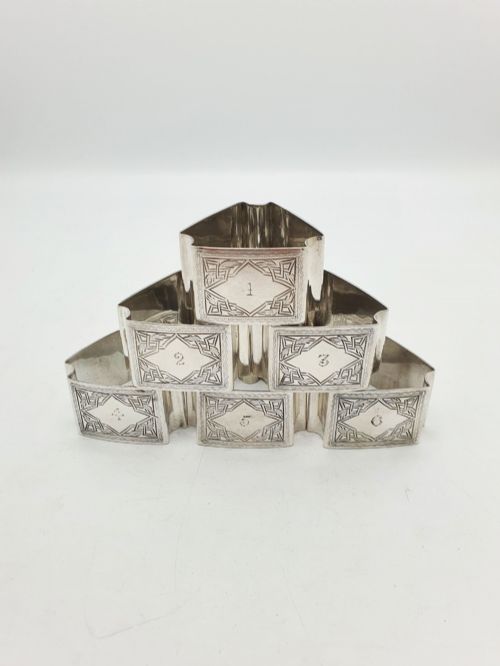
Dinners gained conversational charm when guests hunted for their exact number stamped into a gleaming row of silver bands.
Assessing quality
The distinction between standard utility items and finer examples rests upon the weight of the metal and the crispness of the workmanship. Heavier gauge sterling silver provides a substantial tactile feel, whereas lighter items or thin silver plate show greater vulnerability to distortion through handling and cleaning.
Artistic execution dictates the desirability of decorated pieces, separating mass-produced stamped patterns from hand-engraved designs or complex cast novelty shapes like stirrups and horse shoes. The survival of matching numbers across a full group adds cohesion, indicating that the pieces remain together as originally conceived.
The presence and condition of the original fitted case, particularly an intact silk, velvet, or satin lining with a secure closure, elevates the completeness of the set for collectors.
C.T. Burrows & Sons·Tiffany & Co·Cartier·Guild of Handicraft·David Andersen·Cooper Brothers
The Set of Napkin Rings Glossary
- Sterling silver
- A silver alloy containing 92.5 percent pure silver and 7.5 percent other metals, usually copper, ensuring structural durability for daily handling. This standard underpins the majority of better-quality antique tableware.
- Silver plate
- A base metal substrate, such as copper or nickel silver, coated with a thin layer of pure silver. This technique offered an affordable alternative to solid precious metal for dining sets.
- Assay office
- An official body charged with testing the purity of precious metals and stamping items with hallmarks. Birmingham, London, Sheffield, and Chester marks frequently appear on British examples.
- Engine-turned
- A decorative technique involving precision geometric patterns mechanically engraved into the metal surface. This finish provides texture and reduces the visibility of minor handling marks.
- Mauchline ware
- Souvenir woodware produced in Scotland, often featuring photographic transfers or specific turned designs. These items represent the non-metallic variations found in domestic table settings.
Set of Napkin Rings: Frequently Asked Questions
How were napkin rings used?
These domestic accessories were allocated to individual diners at the start of a multi-course meal or utilised across successive days to hold personal linen between launderings. Numbered sets ensured guests retained their designated place and napkin throughout family gatherings.
Beyond practical dining use, matched groupings functioned as giftware for weddings, christenings, and anniversaries, often preserved within fitted presentation boxes when not active on the dining table.
How do I care for silver rings?
Regular handling helps maintain a natural sheen, but periodic polishing with a soft cloth and proprietary silver cleaner removes tarnish accumulated from atmospheric exposure. Avoiding abrasive pads preserves delicate hand-engraved details and engine-turned patterns.
When not displayed on the dining table, storing the pieces within their original fitted cases lined with velvet or silk protects the metal from dust and accidental scratching.
How can I date a set?
British sterling silver items feature hallmarks that include assay office symbols, date letters, and maker marks, allowing precise chronological identification. Comparing the encoded letter against standard hallmarking tables reveals the exact year of manufacture.
Stylistic indicators also help determine age, as Victorian and Edwardian examples often display ornate floral engraving or heavy borders, while Art Deco items favour geometric engine-turning and minimalist profiles.
Are cased sets more desirable?
Sets accompanied by their original fitted presentation cases generally attract greater interest from collectors and gift buyers. The presence of tailored compartments lined in silk, satin, or velvet indicates high-status retail origin and keeps the matching components secure.
Storage boxes also preserve the exterior finish of the metal over decades, reducing wear and maintaining the integrity of matched groupings like numbered sets of six or four.