
Antique Napkin Rings
These antique napkin rings range from Victorian silver to Art Deco cases, offering a functional piece of dining history.
Antique Napkin Rings
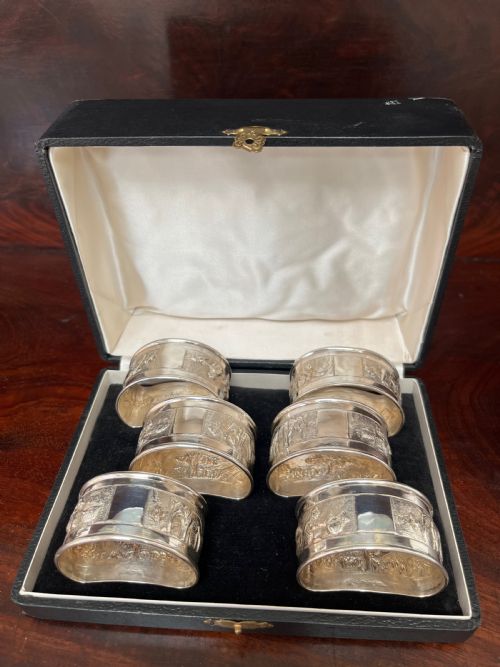
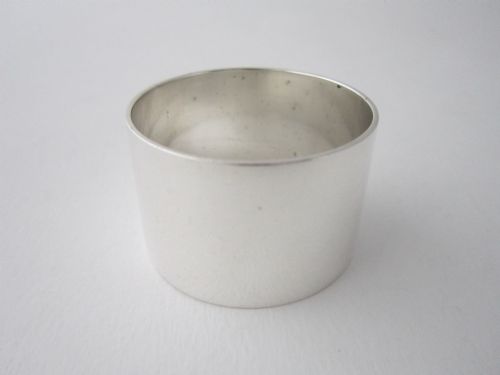
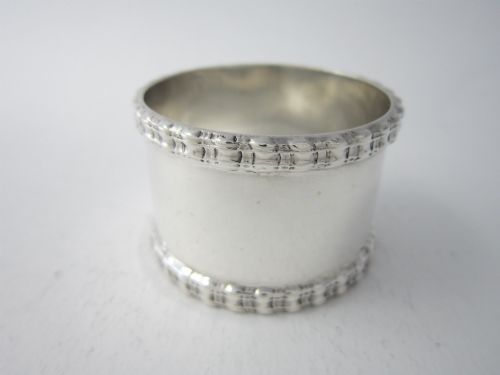
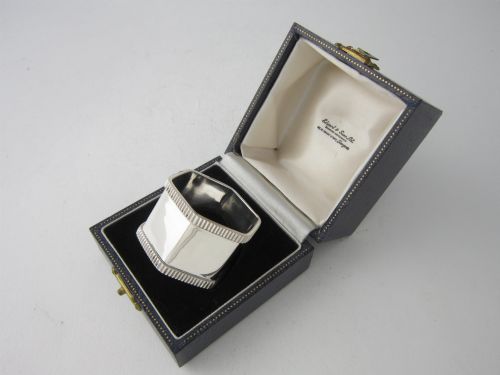
Antique napkin rings appear in various forms, from single items to sets of four, six, or twelve for the dining table. Many survive in original fitted cases lined with silk, velvet, and leatherette, often grouped as christening sets alongside matching cutlery.
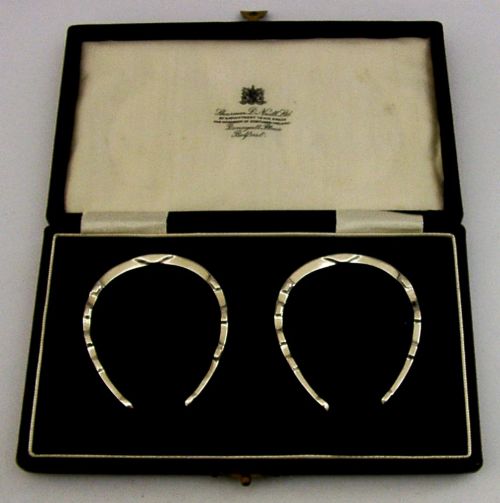
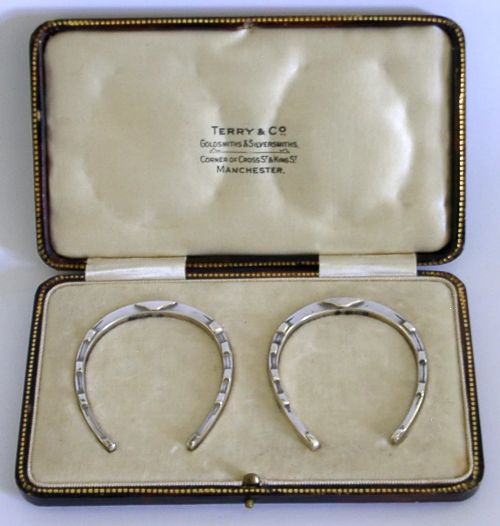
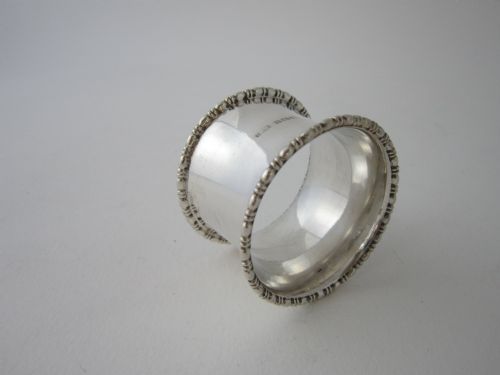
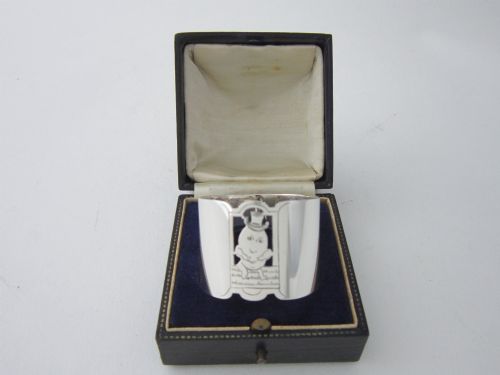
The selection spans the late nineteenth and early twentieth centuries, covering Late Victorian, Edwardian, George V, and Art Deco periods. Individual rings and matched pairs frequently feature numbers, figural designs, or specific motifs like horse shoes and belt buckles.
Materials and Construction
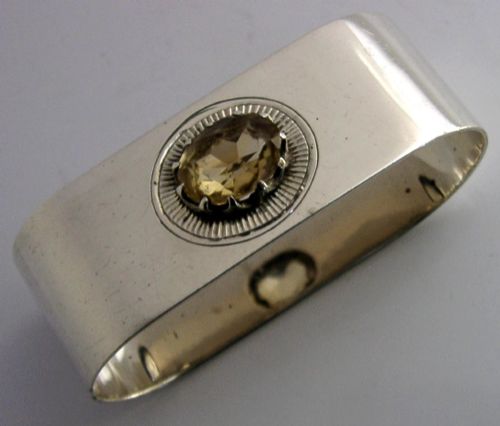
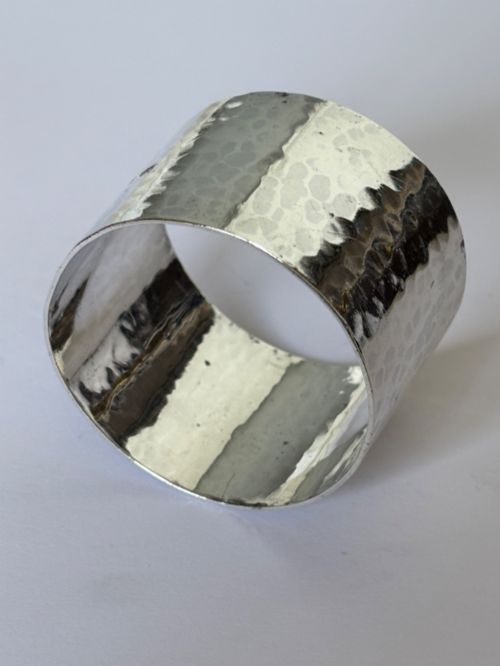
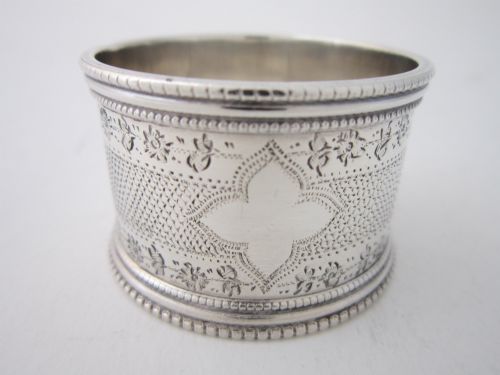
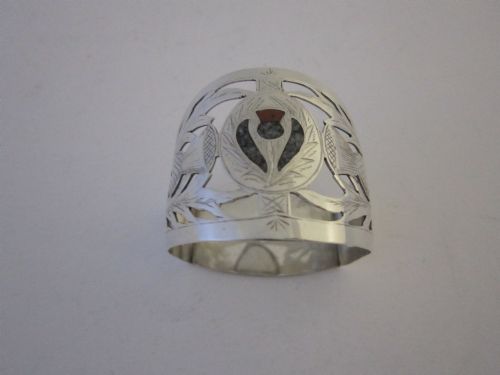
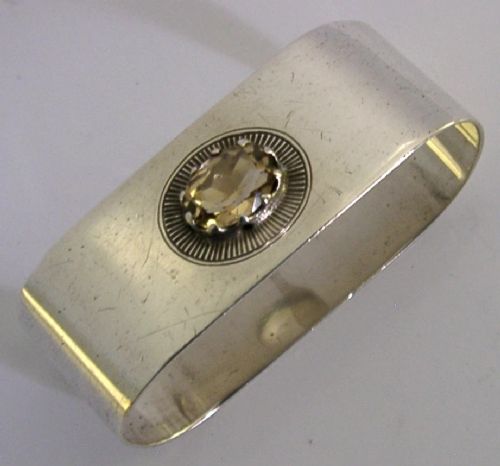
Silversmiths utilised sterling silver and silver plate as the primary metals, shaping them through techniques such as hammering, piercing, engine turning, and casting. Some pieces incorporate decorative details in enamel, agate, citrine, and turned hardwood.
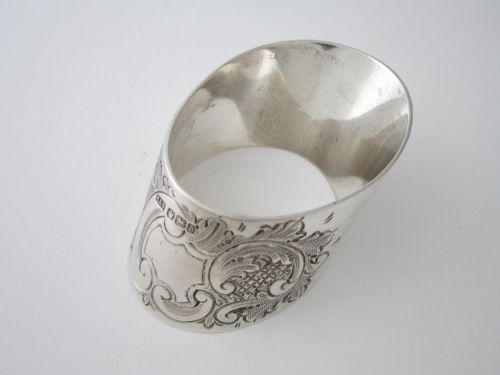
Fitted presentation boxes employ materials like leatherette, silk, and velvet to house individual pieces or complete sets securely. Maker marks, town marks, and date letters are typically stamped directly into the metal body.
Evaluating Quality and Craftsmanship
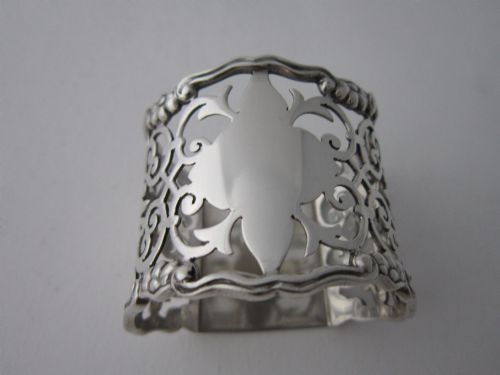
The distinction between standard production and finer work lies in the weight of the metal and the depth of the ornamentation, such as hand-chased grape and vine motifs or pierced openwork. Maker attribution significantly influences value, with recognised workshops and designers commanding greater interest.
The survival of original fitted cases with intact silk and velvet linings adds substantially to the completeness and desirability of a set. Matching sets, particularly numbered series in original boxes, reflect higher original investment than assembled groups.
Albert Edward Jones·C.T. Burrows & Sons·Liberty & Co·Archibald Knox·Mappin & Webb·Tiffany & Co·Asprey & Co·R. E. Stone·Cartier
The Antique Napkin Rings Glossary
- Sterling silver
- A silver alloy containing 92.5 percent pure silver and 7.5 percent other metals, usually copper, ensuring durability for daily dining use.
- Silver plate
- A base metal coated with a thin layer of silver through electroplating or older techniques, offering the appearance of solid silver at a different cost.
- Hallmark
- A series of official marks stamped on precious metals indicating the maker, assay office, standard of purity, and year of manufacture.
- Engine turned
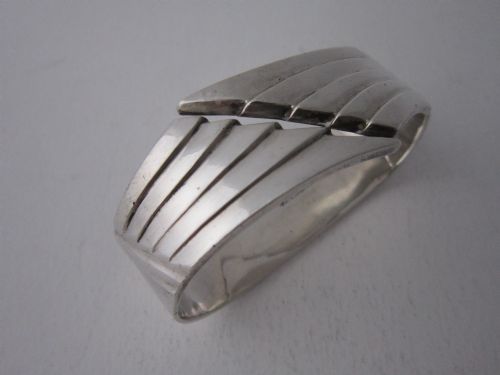
- A geometric pattern mechanically engraved into metal surfaces using a lathe, popular on George V and Art Deco pieces.
- Pierced work
- Metal cut through to create decorative openwork patterns, common in Edwardian and Victorian designs.
Antique Napkin Rings: Frequently Asked Questions
Were napkin rings always used in sets?
While many were sold individually or in pairs for daily family use, larger cased sets of four, six, or twelve were produced for formal dining.
Numbered sets helped household members keep track of their designated rings between weekly laundering.
What does a Birmingham hallmark mean?
The anchor symbol indicates that the piece was tested and hallmarked at the Birmingham assay office in England.
Additional letters and symbols nearby reveal the exact year of manufacture and the silversmith responsible.
How can I tell the period without a hallmark?
Stylistic indicators such as heavy Victorian cast grape motifs, Edwardian pierced work, or geometric Art Deco lines offer strong chronological clues.
Construction methods and the materials used in the original presentation case also help narrow down the decade of production.