
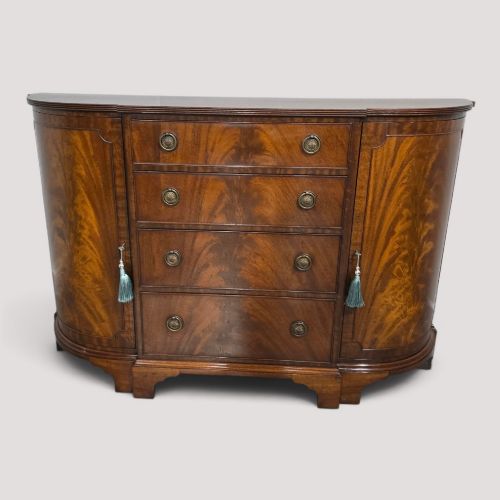
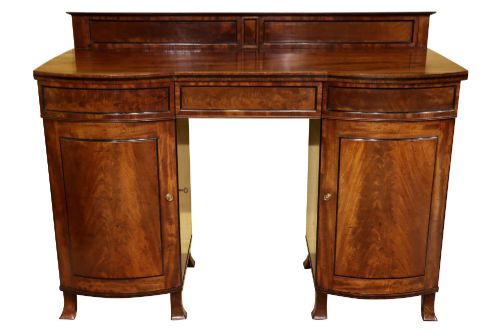
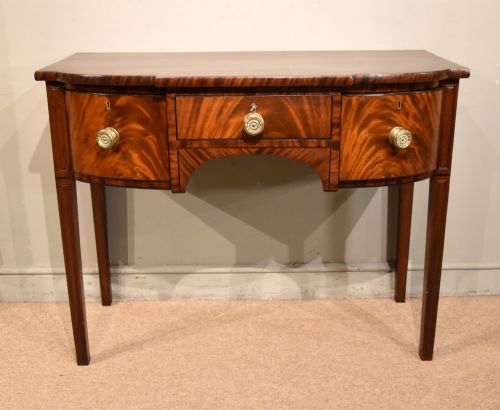
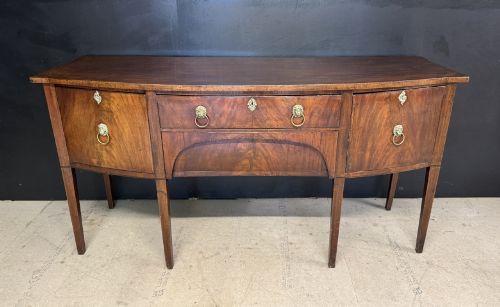

Bowfront Dining Server
A bowfront dining server brings curving elegance to a dining room, offering substantial storage for silver and linen.
Bowfront Dining Server
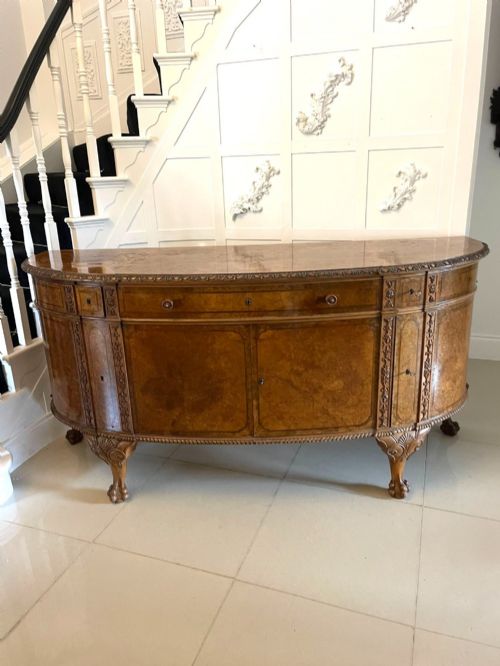
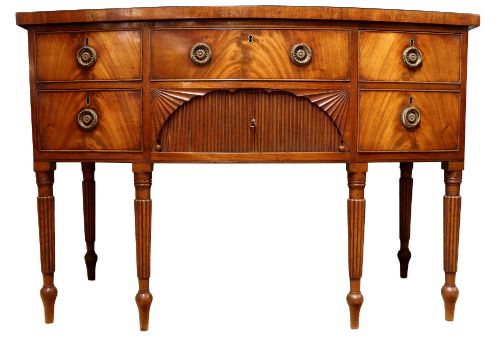
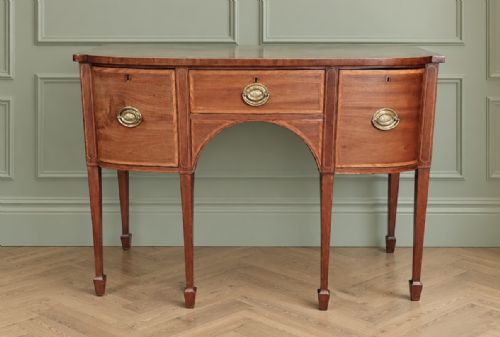
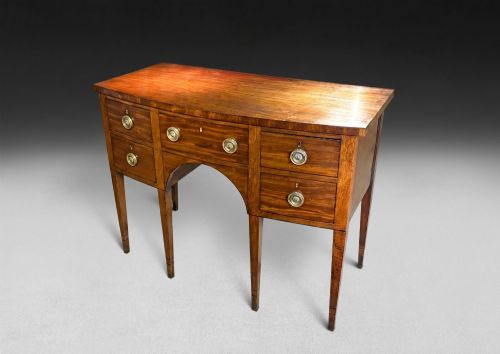
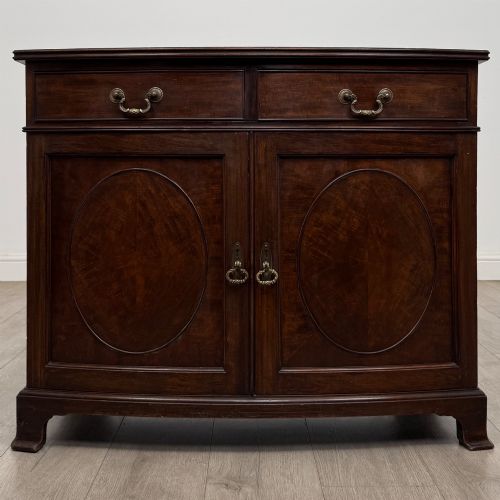
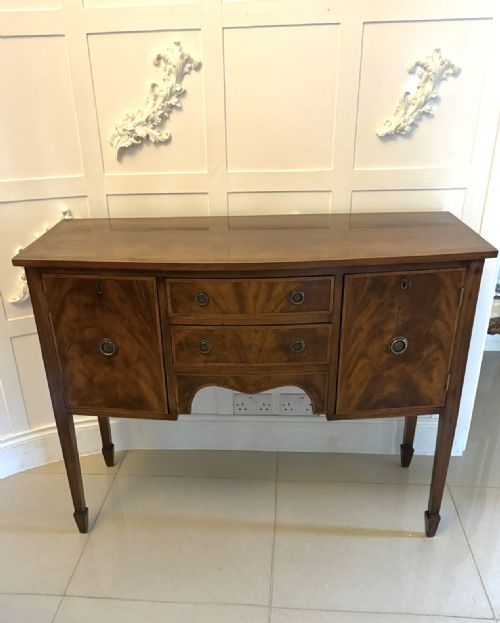
A bowfront dining server stands as a primary storage and display piece in traditional dining rooms, appearing primarily across Georgian, Regency, and Edwardian periods. These pieces take the form of sideboards, side tables, and side cabinets characterised by a gently curved front profile.
The versions most commonly met on this page span the late eighteenth century into the early twentieth century, reflecting revival tastes alongside original period pieces. Makers of these eras designed them to command dining spaces while keeping serving wares neatly organised.
How they were made
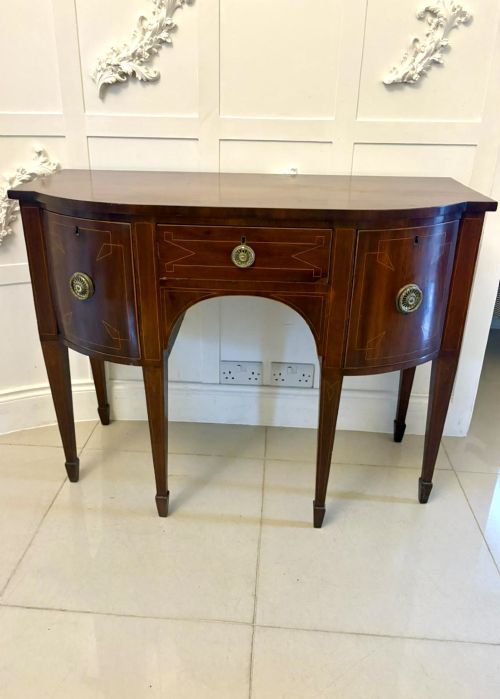
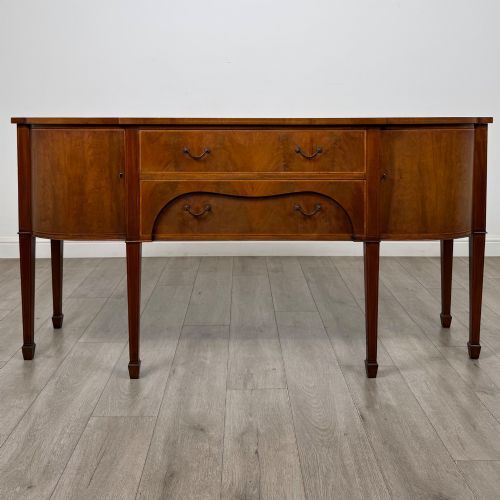
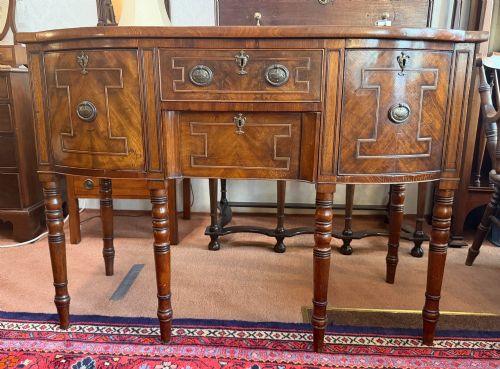
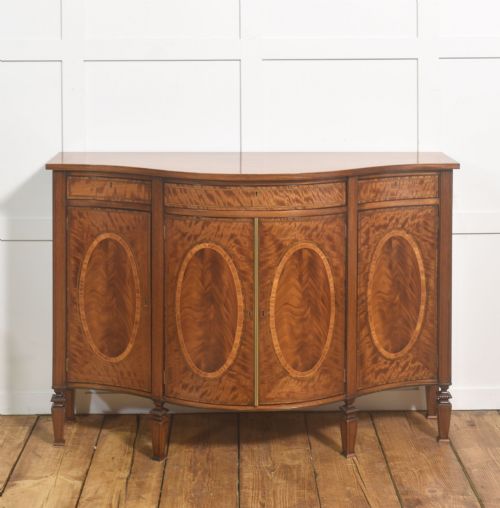
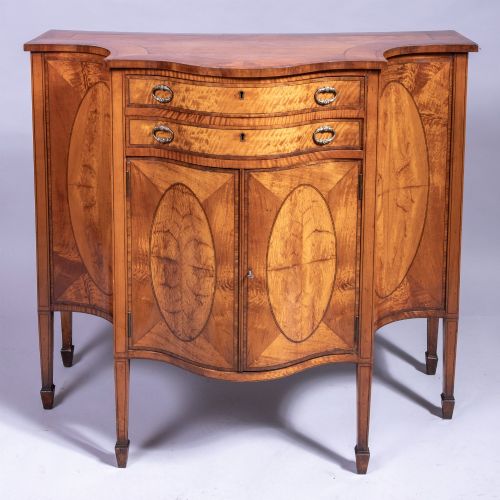
Cabinet makers utilised solid mahogany and flame mahogany veneer as the primary structural foundations, often highlighting the timber with boxwood and satinwood inlay. These contrasting woods create delicate stringing and geometric borders along the curved drawer fronts and top edges.
Brass handles and mounts provide functional accents, while skilled joinery allows the curved frame to maintain structural integrity over centuries of use.
Curved drawers demand immense patience from the carpenter, who had to bend solid timber without snapping the grain.
What varies in quality
The distinction between tiers rests largely in the choice of timber and the precision of the inlay work. Finer examples display carefully selected flame mahogany veneer matched symmetrically across the curved drawers, paired with intricate boxwood and satinwood stringing.
Proportion and execution define the upper range, where the sweep of the bowfront integrates seamlessly with tapered legs or pedestal supports without awkward transitions.
The Bowfront Dining Server Glossary
- Bowfront
- A convex curved front profile that projects outward from the centre. This shape softens the room and distinguishes these servers from flat-fronted furniture.
- Flame mahogany
- A distinctive wood veneer grain pattern resembling flickering flames. It appears on finer cabinet doors and drawer fronts to catch the light.
- Crossbanding
- A narrow strip of veneer laid perpendicular to the grain of the main surface. It forms a decorative border around the edge of a top or drawer.
- Stringing
- Thin inlaid lines of contrasting light wood used to outline panels and drawers. It adds delicate linear detail to mahogany surfaces.
- Pedestal sideboard
- A form featuring distinct flanking cabinet pedestals joined by a central serving table section. This grand layout appears frequently in Regency designs.
Bowfront Dining Server: Frequently Asked Questions
Where did they put a bowfront dining server?
These servers stood against the dining room wall to hold heavy silver platters, serving dishes, and household linens during large meals.
Servants used the surface to plate food and pour drinks before bringing them to the main dining table.
How do I tell Georgian from Edwardian pieces?
Georgian pieces rely on subtle proportions and authentic period construction from the eighteenth and early nineteenth centuries.
Edwardian items often reflect Sheraton Revival or Georgian Revival influences with brighter satinwood inlay and distinct twentieth-century secondary woods.
What wood are most of these made from?
Mahogany forms the primary timber for the vast majority of these servers, chosen for its deep red-brown tone and durability.
Cabinet makers enhanced the grain using flame mahogany veneer alongside lighter boxwood and satinwood details.
How do I style a bowfront server today?
Position the server flat against a dining room or hallway wall where the curved front can draw the eye without blocking traffic.
Place lamps, ceramics, or silver trays on top to use the surface for modern entertaining and display.