

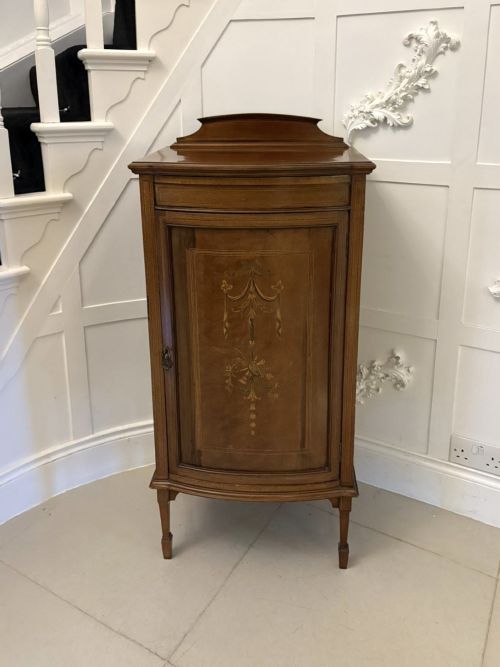
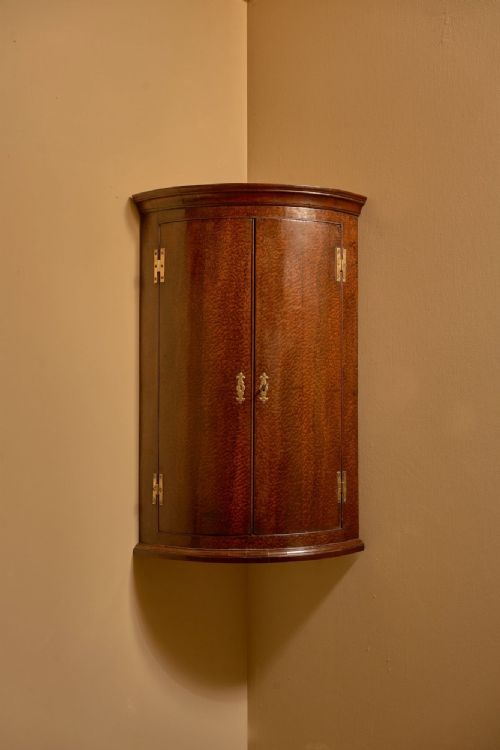
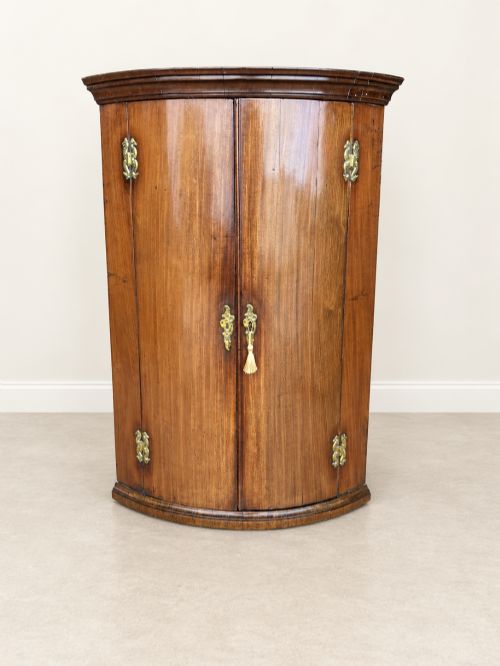
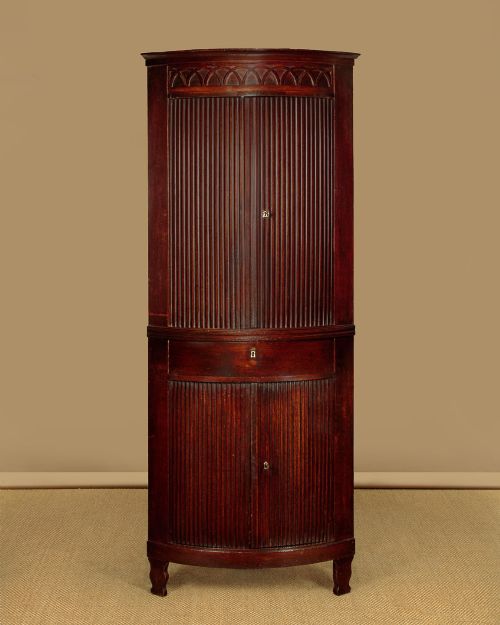

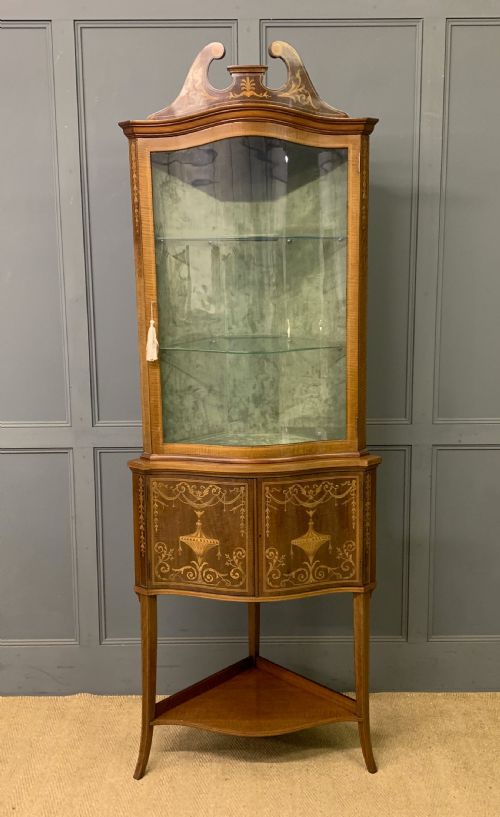
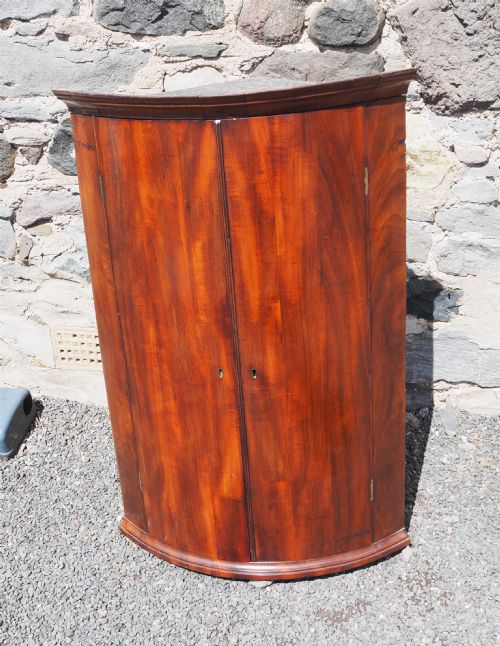
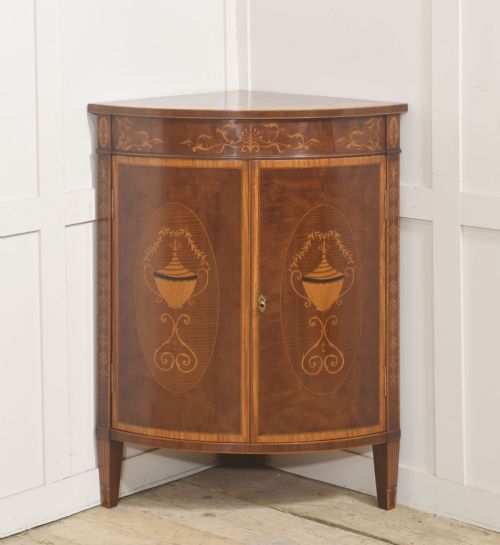
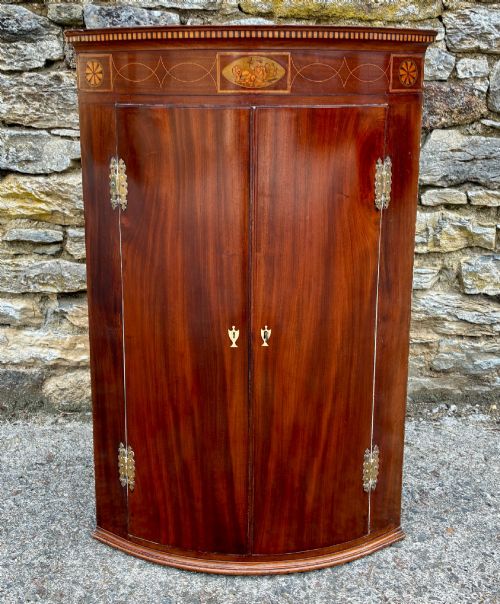
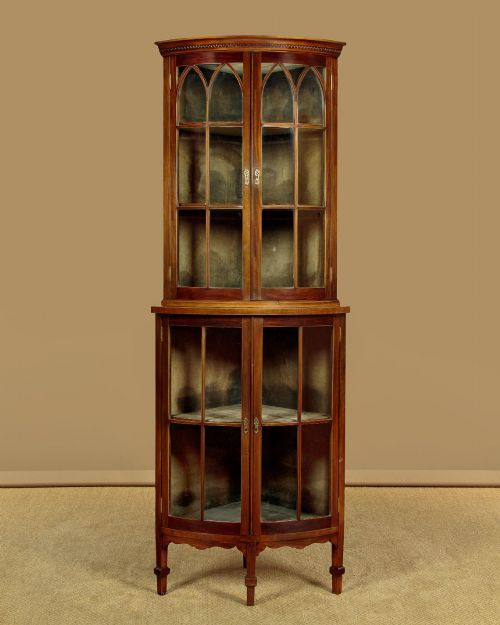
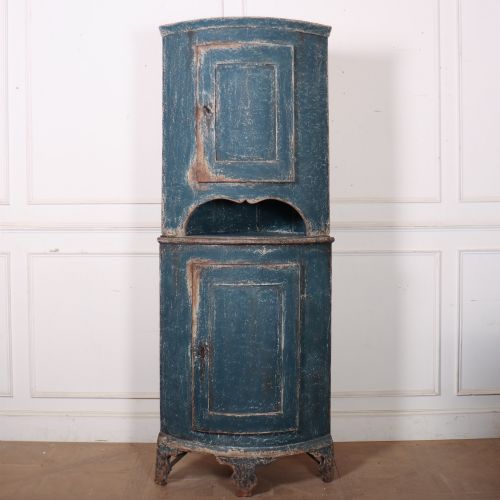
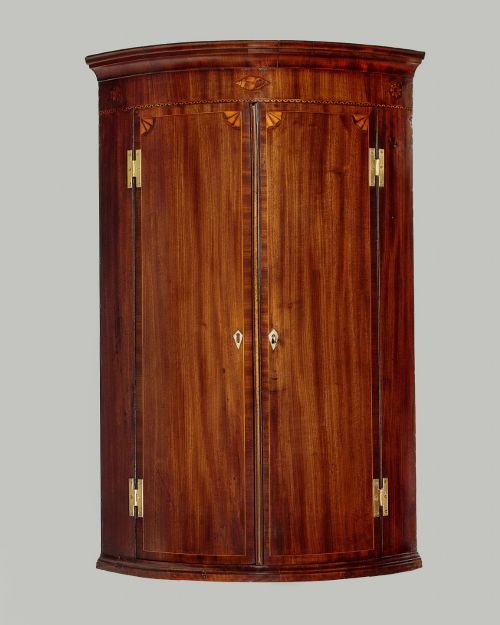
Bowfront Corner Cabinet
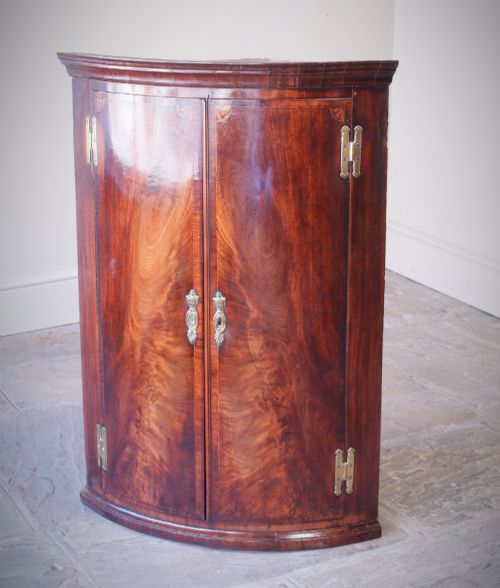
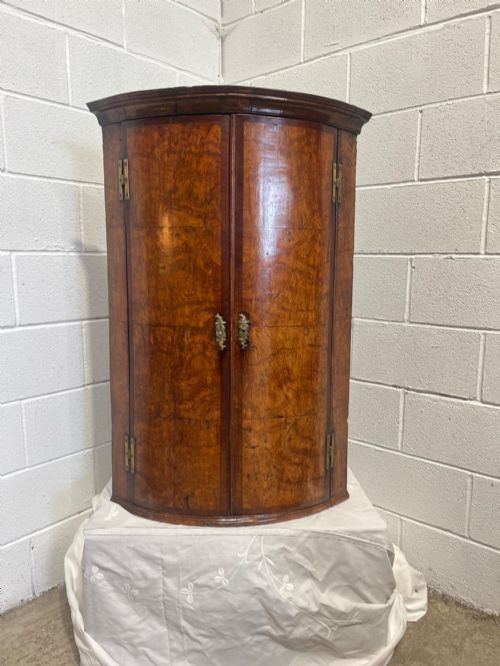
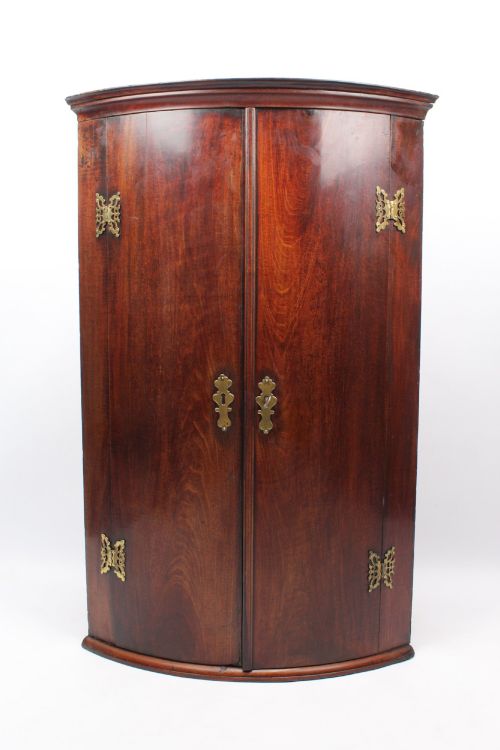
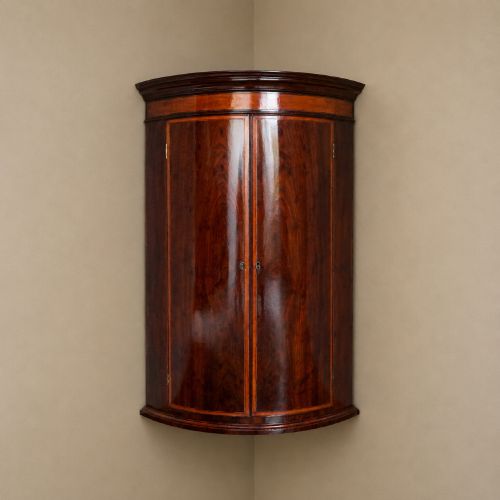
A bowfront corner cabinet turns an awkward room junction into a display space with its curved door front.
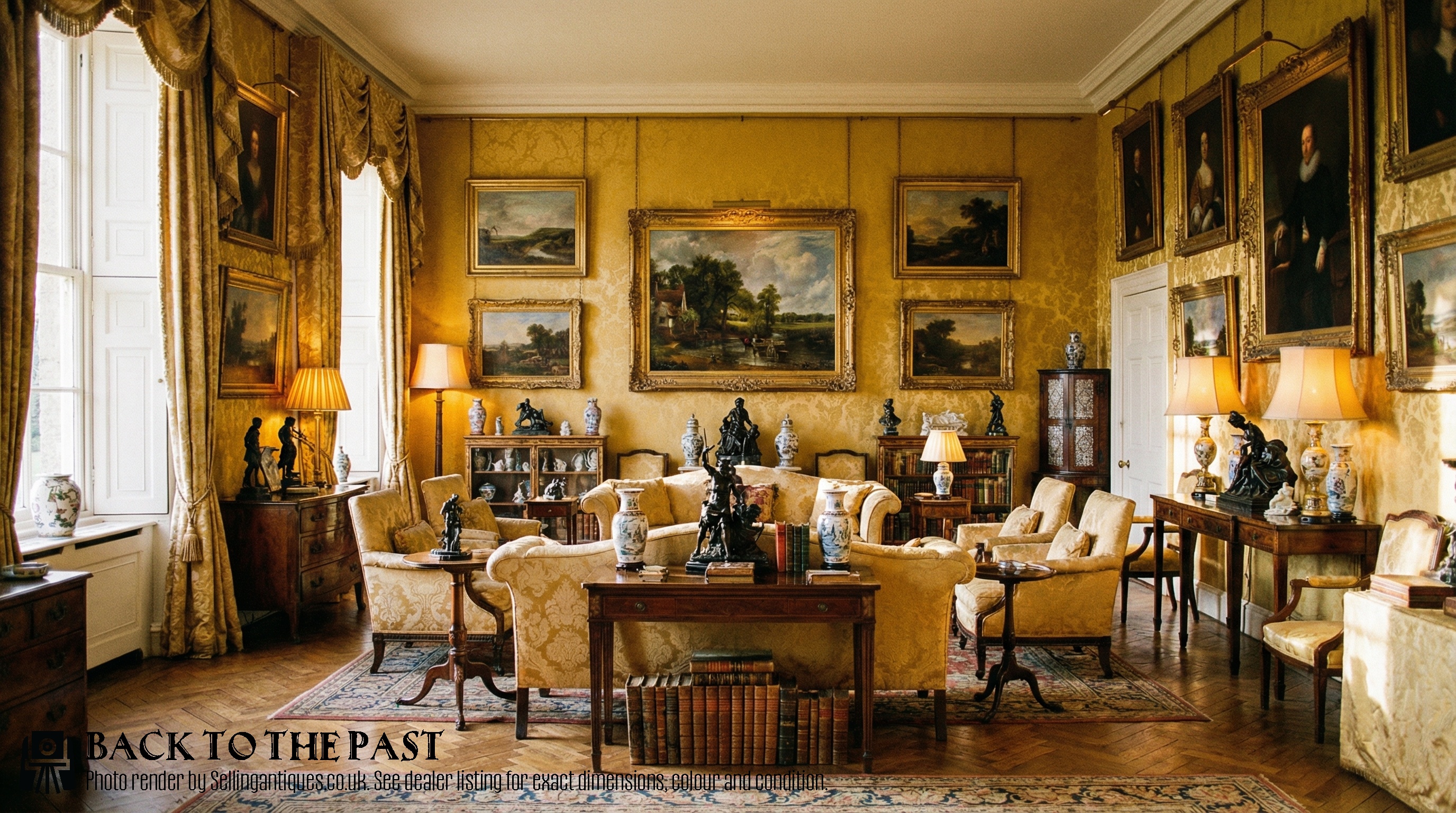
Bowfront Corner Cabinet
When you search for a bowfront corner cabinet, you are looking at fitted storage designed to occupy the ninety degree angle of a room while projecting a rounded, convex front forward into the space. The pieces you meet on this page span several centuries of British and continental cabinet making, crossing periods from the Georgian era through to the Edwardian and later twentieth century.
The format divides principally between hanging wall cupboards and taller standing or double height versions that rise from the floor. Oak and mahogany dominate the timber choices, often finished with stringing, marquetry, or painted Chinoiserie lacquer depending on the prevailing style of the period.
While many are single door cupboards intended for tableware or documents, the selection also includes glazed display cabinets and smaller dwarf pieces suited to modern interiors. Each version uses the curved frontage to soften the hard geometry where two walls meet.
How They Were Made
Makers constructed the curved bow front either by bending solid timber over heat or by laminating and shaping layers of wood to hold the convex radius. Mahogany, oak, walnut, and elm form the structural carcasses, frequently faced with figured veneers like plum pudding mahogany, flame mahogany, or burr oak.
Surface decoration relies on brass H hinges and escutcheons alongside intricate inlay work using boxwood, satinwood, and darker stringing. Japanned and painted pieces receive multiple layers of lacquer finished with hand applied motifs in the Chinoiserie taste.
Bowfront Corner Cabinet Retail Price Guide 2026
Typical asking prices for bowfront corner cabinet among the pieces listed under this phrase on Sellingantiques today, from the lower quarter to the upper quarter. They describe what is for sale here now, not the wider market.
Some eighteenth century cabinet makers cleverly hid extra spice drawers inside the curved carcase to surprise the unwary guest.
What Varies in Quality
The skill of the cabinet maker shows in the integrity of the curved door frame and how truly the convex doors shut against the rebate without warping over time. Timber selection marks the difference between plain utility boards and heavily figured veneers chosen specifically for their dramatic grain patterns.
Decoration separates standard workshop production from finer examples through the precision of inlaid stringing, hand cut marquetry, and the quality of original brass hardware. Painted and japanned surfaces vary from simple folk art execution to detailed, multi layered orientalist scenes.
Maurice Adams
The Bowfront Corner Cabinet Glossary
- Bowfront
- A convex, outwardly curved front profile on a cabinet or chest that softens angular room geometry. It requires advanced woodworking skill to build so that the doors maintain their curved fit.
- Japanned
- A European imitation of East Asian lacquerwork created using layered varnishes and metallic dust. Artisans baked and polished the surface to achieve a dark, glossy finish often decorated with raised motifs.
- Marquetry
- The art of forming decorative patterns using thin veneers of different coloured woods, shells, or ivory. Craftsmen fit these pieces together like a jigsaw puzzle before gluing them onto the main carcase.
- Stringing
- Thin strips of contrasting wood inlaid into narrow channels cut into the surface of a piece. It creates delicate linear borders that frame drawer fronts and cabinet doors.
Bowfront Corner Cabinet: Frequently Asked Questions
How did people use these cabinets?
These cabinets served primarily to store table china, glassware, tea caddies, and important documents in domestic parlours and dining rooms. The elevated hanging versions kept valuable tableware safely out of the reach of household foot traffic and pests.
Taller standing or double height models provided larger storage capacity while filling unused corner space. Their curved fronts allowed them to project into the room without blocking narrow walkways.
Where should I place one in my home?
A bowfront corner cabinet fits naturally into any empty ninety degree room angle where straight furniture leaves awkward gaps. Hanging wall versions mount securely above sideboards or desks to draw the eye upward and utilise vertical wall space.
Standing and dwarf variations anchor empty corners in hallways, dining rooms, or drawing rooms. Their curved glass or wooden doors bounce ambient light into darker parts of the interior.
How do I tell a Georgian piece from a later one?
Georgian examples, spanning the eighteenth and early nineteenth centuries, typically feature traditional timber construction with hand cut dovetails and native woods like oak and figured mahogany. Their proportions and inlay patterns reflect neoclassical or Chippendale design influences of the period.
Later Victorian and Edwardian revivals often incorporate machine sawn elements, standardised brassware, and stylistic nods like Sheraton Revival details. Examining the interior secondary timbers and construction marks helps confirm the manufacturing era.