

Bowed Front Dresser
A bowed front dresser offers curving elegance and practical storage, drawing the eye with its gently rounded profile and disciplined proportions.
Bowed Front Dresser
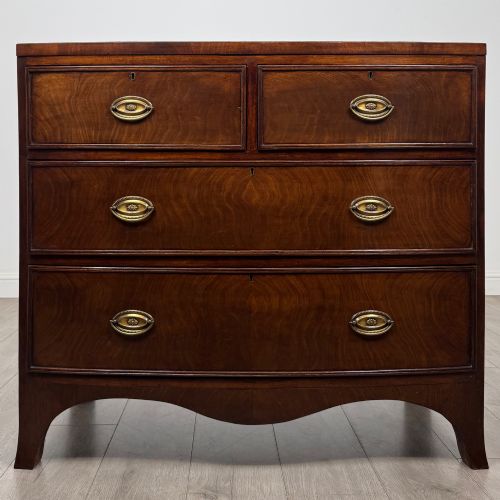
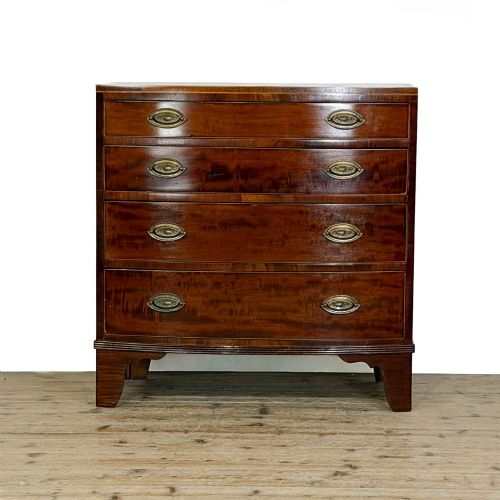
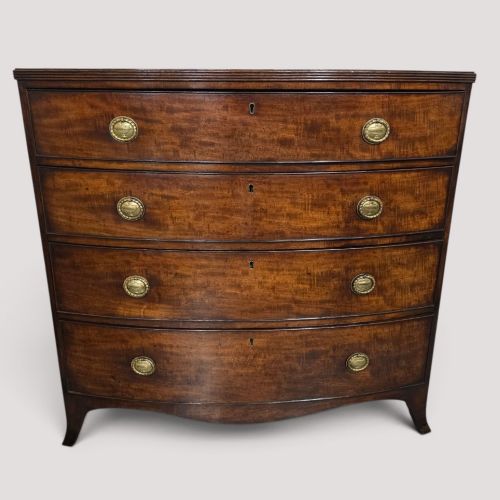
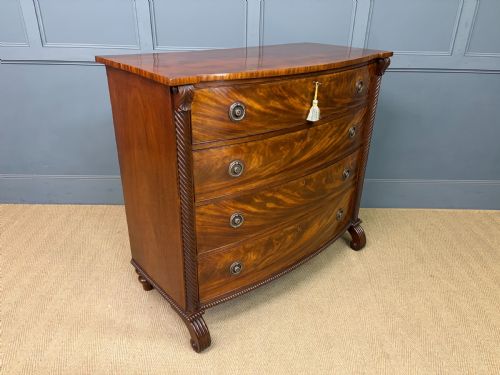
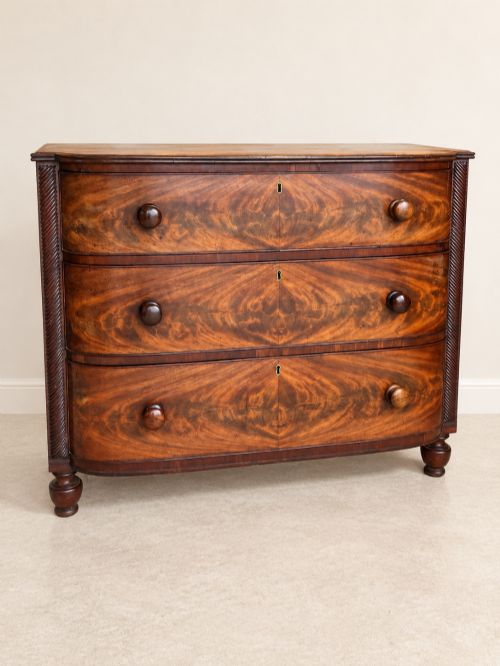
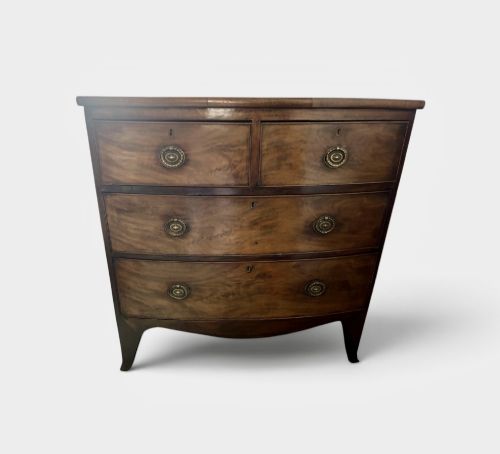
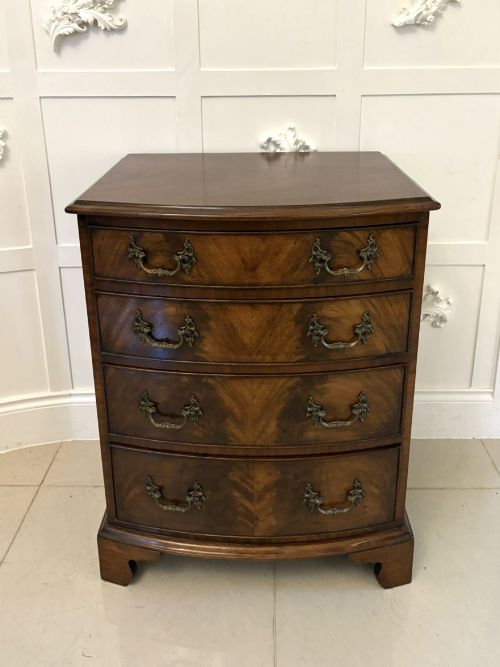
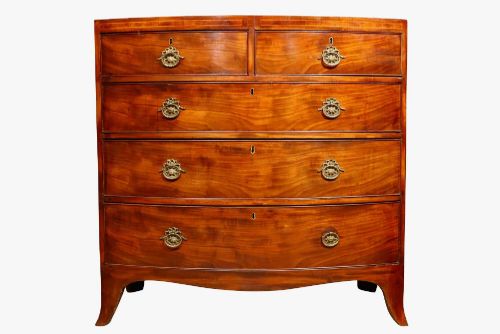
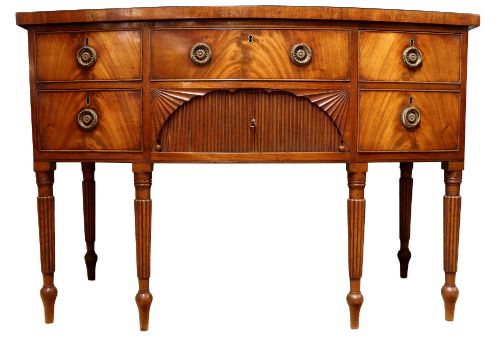
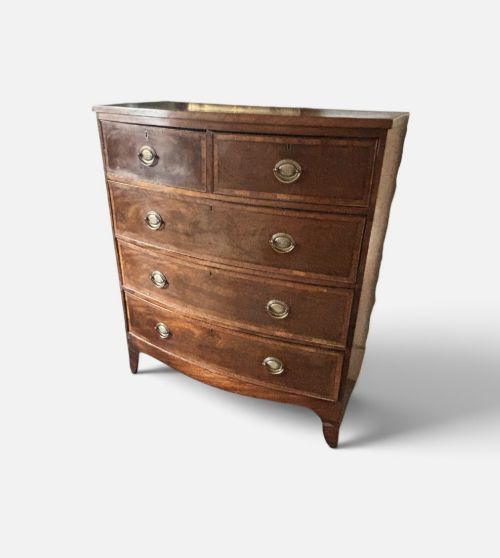
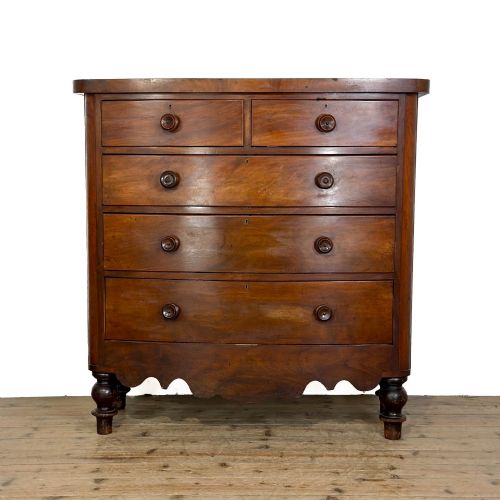
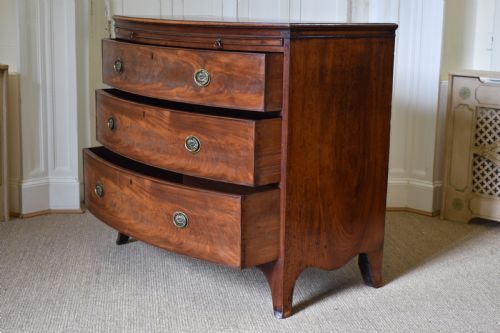
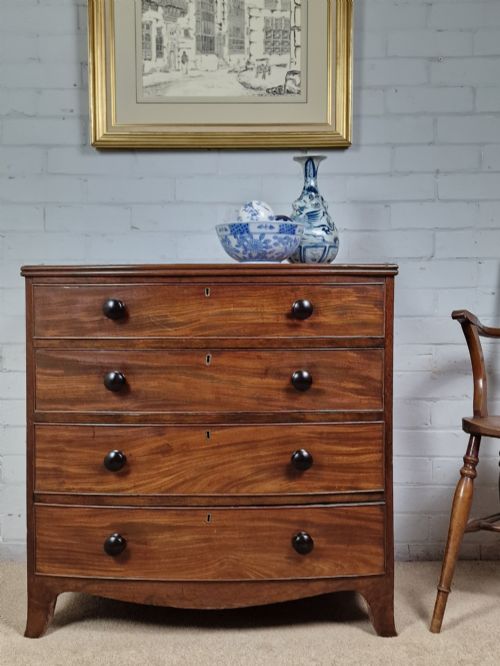
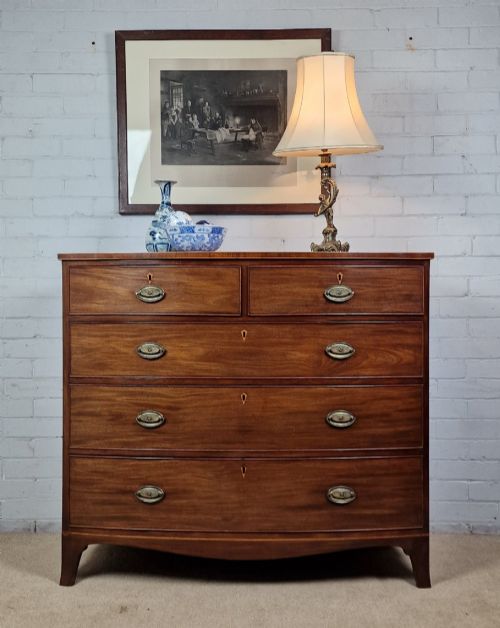
A bowed front dresser typically manifests as a chest of drawers or sideboard featuring a convex curved facade that softens the rigid lines of traditional case furniture. These pieces appear in forms ranging from compact four-drawer chests to larger sideboards originating across the Georgian, Regency, and Victorian periods.
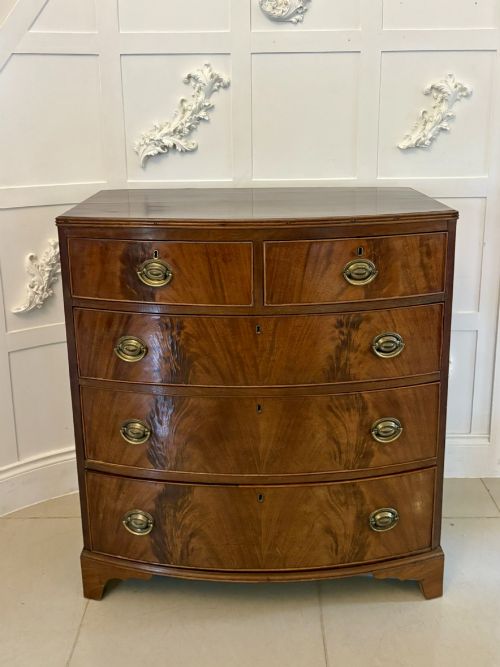
The most common version met on this page is the mahogany chest of drawers, often constructed during the George III or Regency eras. Makers utilised the sweeping curve to catch light differently across the room, combining decorative presence with deep interior capacity.
How they were made
Cabinetmakers constructed these pieces primarily using solid pine or secondary timbers for internal framing, overlaid with figured mahogany, flame mahogany veneer, or walnut. Satinwood crossbanding and brass drawer pulls provided contrasting borders and functional detail to the curved drawer fronts.
Curving the timber required specialised bending techniques or careful cutting of solid stock to maintain structural integrity along the radius. Drawers were individually fitted to follow the precise arc of each unique frame.
Listings feature mahogany, flame mahogany veneer, satinwood, walnut, pine, and brass across Georgian, Regency, and Victorian periods.
What varies in quality
Quality rests heavily on the grain selection of the timber and the crispness of the curved joinery. Pieces featuring matched flame mahogany veneer or delicate satinwood crossbanding demonstrate superior craftsmanship compared to plain timber surfaces.
Proportion and scale dictate the upper tier of the range, particularly smaller examples where maintaining the bowed curve in a neat footprint demands high skill. Drawer linings and secondary woods reveal the underlying care taken during construction.
The Bowed Front Dresser Glossary
- Crossbanding
- A narrow strip of veneer laid perpendicular to the grain of the main surface. It creates a defined border around the curved edges of drawer fronts.
- Flame mahogany
- Timber cut from the branch junction of the tree to produce a flickering, fiery grain pattern. This highly decorative veneer appears on finer period pieces.
- Graduated drawers
- Drawers that decrease in depth from the bottom to the top of the chest. This arrangement creates a balanced visual weight.
- Secret drawer
- A concealed compartment built into the frieze or upper section of the piece. It opens through a hidden mechanism.
- Sideboard
- A long low dining room cabinet used for serving food and storing linen. These pieces occasionally feature the signature curved front.
Bowed Front Dresser: Frequently Asked Questions
What periods do these pieces come from?
The pieces span the Georgian, Regency, and Victorian eras, alongside a number of Edwardian and early twentieth-century examples.
Design details and timber choices shift across these periods, moving from eighteenth-century restraint to the bolder flame mahogany veneers of the nineteenth century.
How do I care for mahogany surfaces?
Keep wooden surfaces away from direct sunlight and steady heat sources to prevent the veneer from drying or cracking.
Apply natural beeswax periodically and buff gently with a soft cloth to maintain the depth of the polish.
Are these pieces suitable for smaller bedrooms?
Many examples are produced in compact proportions specifically designed to fit domestic spaces without dominating the room.
The rounded front profile also reduces sharp corners in tighter hallways and sleeping quarters.
How do I identify Regency pieces?
Regency items often display pronounced flame mahogany grain, brass ring handles, and sometimes contrasting satinwood crossbanding.
The overall aesthetic draws upon neoclassical influences with clean structural lines.