

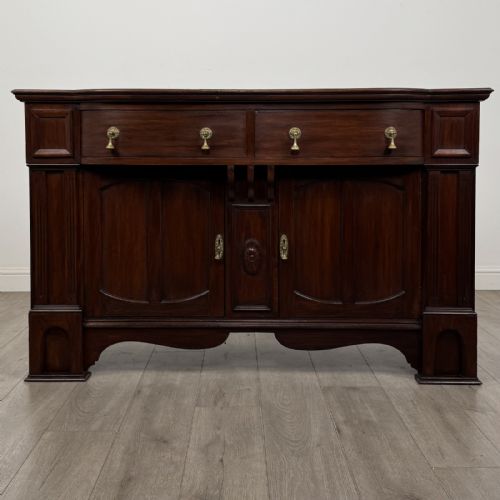
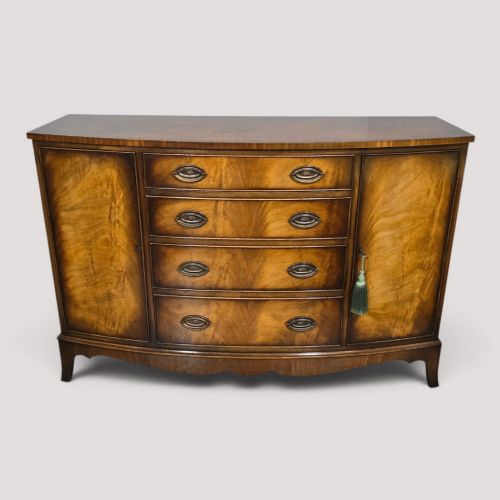
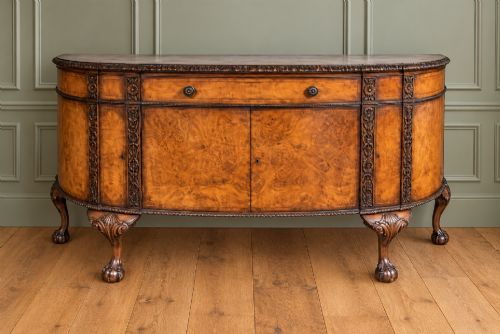
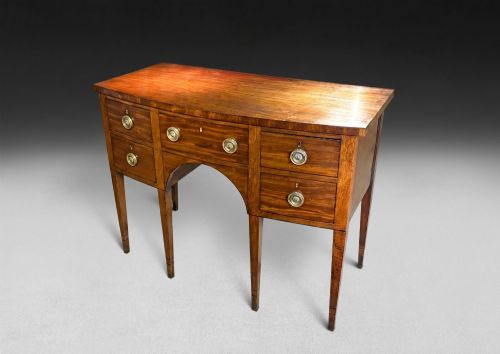
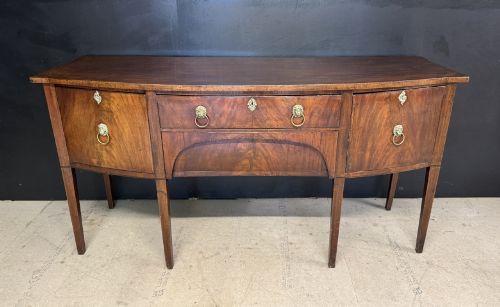
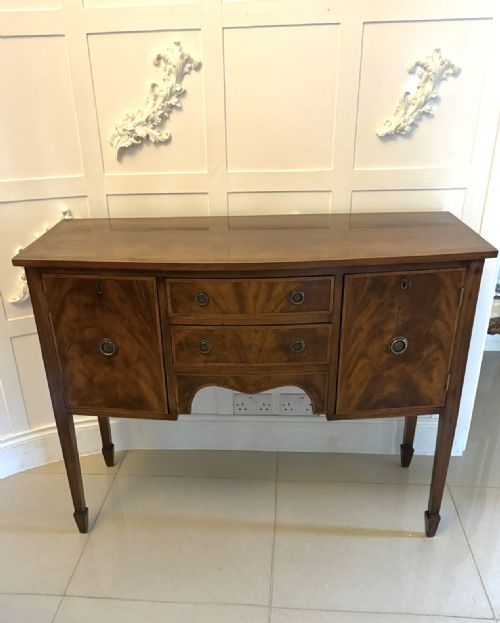
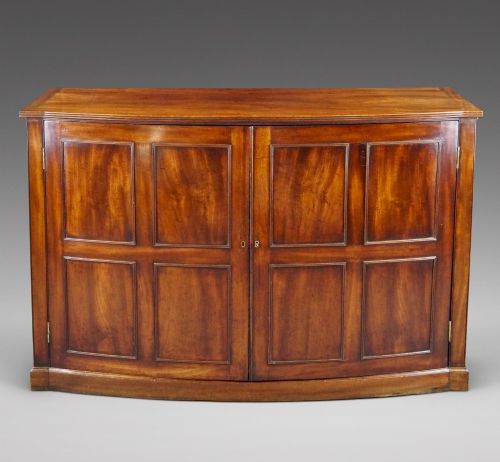


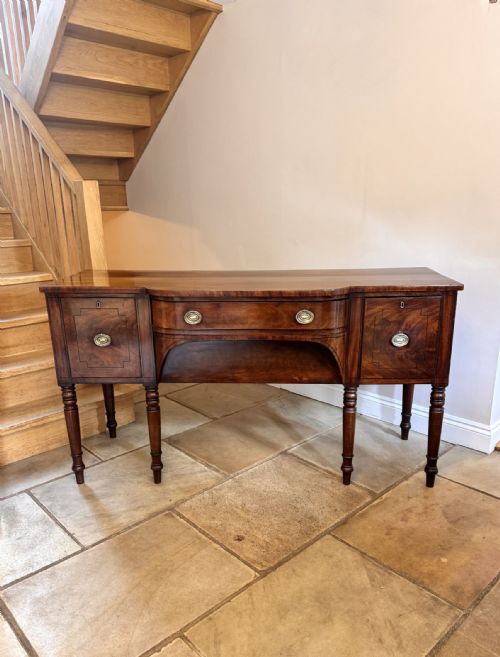
Bow Front Wooden Sideboard
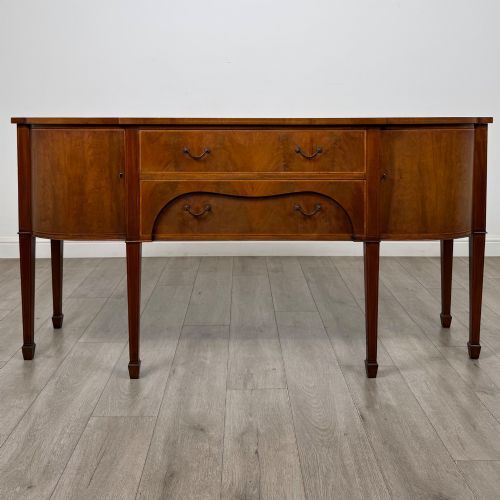
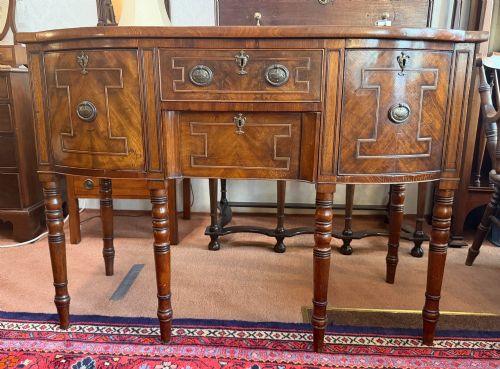
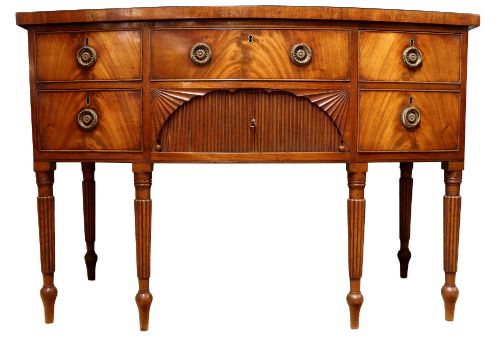
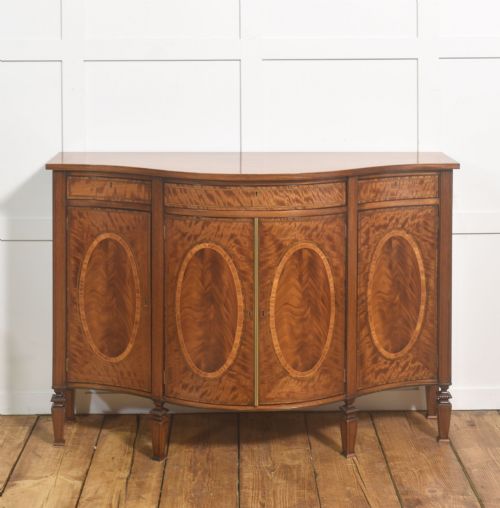
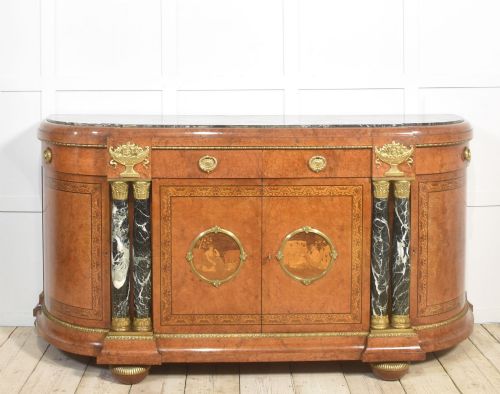
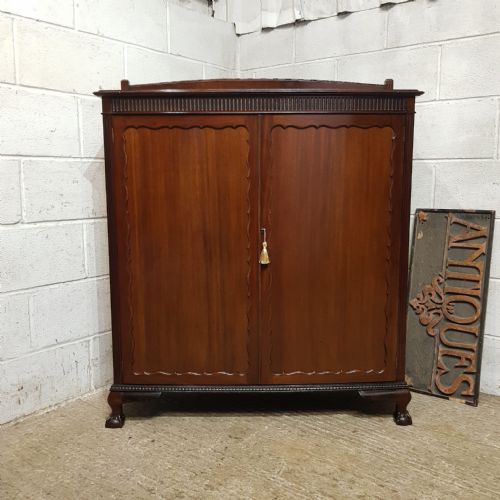
A bow front wooden sideboard brings curved elegance and ample dining room storage, uniting Georgian proportion with rich timber grain.
Bow Front Wooden Sideboard
A bow front wooden sideboard presents a gently rounded sweeping facade designed to soften dining room corners while offering deep interior storage capacity. These serving pieces trace their origins predominantly through the Georgian, Regency, and Edwardian periods, appearing in forms ranging from compact side servers to large six-legged cabinets.
The version most commonly met on this page is constructed from mahogany, often displaying the warm figuring of the wood alongside delicate stringing or marquetry. Alongside traditional sideboards, the selection encompasses related buffet cabinets, dressers, and smaller commodes that share the characteristic convex curve.
Makers and designers of these centuries shaped timber to balance utility with reception room display, creating surfaces suitable for holding silver, linen, and dining ware. The enduring appeal lies in this combination of generous internal space and a refined, curved footprint.
Materials and Construction Techniques
Cabinet makers relied heavily on solid mahogany and flame mahogany veneers, applying them over secondary timbers to achieve deep reddish-brown tones and striking surface patterns. Workshops utilised boxwood and satinwood for contrasting stringing and geometric or floral inlay, defining the edges of drawers and cupboards with precision.
Curving the front timber required specialist woodworking methods, including steam bending or the careful construction of laminated core rails to hold the convex shape stable over time. Brass hardware, such as ring pulls and escutcheons, completed the construction, fastened securely to drawer fronts that followed the sweep of the bow.
Bow Front Wooden Sideboard Retail Price Guide 2026
Typical asking prices for bow front wooden sideboard among the pieces listed under this phrase on Sellingantiques today, from the lower quarter to the upper quarter. They describe what is for sale here now, not the wider market.
Materials appearing across the inventory include brass fittings, boxwood stringing, satinwood inlay, and flame mahogany veneers.
Distinctions in Quality and Craftsmanship
The distinction between standard utility pieces and the finest examples rests on the choice of timber and the precision of the decorative inlay. Superior sideboards display carefully matched veneer grains across the curved drawer fronts, ensuring the pattern flows naturally rather than appearing assembled from mismatched scraps.
Hand-cut dovetail joints on drawer construction and the integration of original brass mounts indicate higher workshop standards. The crispness of satinwood or boxwood stringing and the retention of smooth, functional drawer runners further separate master cabinet work from simpler provincial output.
The Bow Front Wooden Sideboard Glossary
- Bow front
- A convex curved cabinet facade that swells outward in the centre, softening the linear geometry of dining room furniture. This shape requires advanced woodworking skill to maintain structural stability.
- Stringing
- Thin inlaid lines of contrasting timber, such as boxwood or satinwood, set flush into the primary wood surface. It provides delicate linear borders around drawer fronts and tabletops.
- Flame mahogany
- A veneer cut from the fork of the mahogany tree where branches meet the trunk, producing a distinctive flickering flame pattern. Cabinet makers reserved this timber for principal display surfaces.
- Marquetry
- Decorative patterns formed by fitting together thin veneers of various woods, shells, or metals into a background panel. It adorns Edwardian and Georgian revival pieces with pictorial or floral designs.
Bow Front Wooden Sideboard: Frequently Asked Questions
How were these sideboards used?
These pieces served primarily in dining rooms to store silverware, linens, and serving dishes while providing a surface for displaying platters and pouring drinks during meals.
Their substantial internal capacity made them central to the organisation of formal domestic hospitality.
How do I date a bow front sideboard?
Dating relies on observing timber choices, leg styles, and decorative details like inlay or brass hardware. Georgian examples often feature tapered legs, while Edwardian revivals incorporate richer marquetry and lighter satinwood highlights.
Construction methods inside the drawers also provide clear clues to the period of manufacture.
How do I style a sideboard at home?
A bow front sideboard functions well as a focal point in a dining room, hallway, or living space. Pairing the timber top with ceramic lamps, mirrors, or trays balances the curved silhouette.
The internal cupboards offer practical storage for contemporary tableware or media items.
What is the difference between a sideboard and a buffet?
While the terms often overlap, a buffet traditionally emphasises lower storage and serving space, sometimes incorporating a marble top or a more compact footprint. Sideboards generally feature a longer arrangement of drawers and cupboards.
Both formats utilise the curved bow front design seen in these listings.