
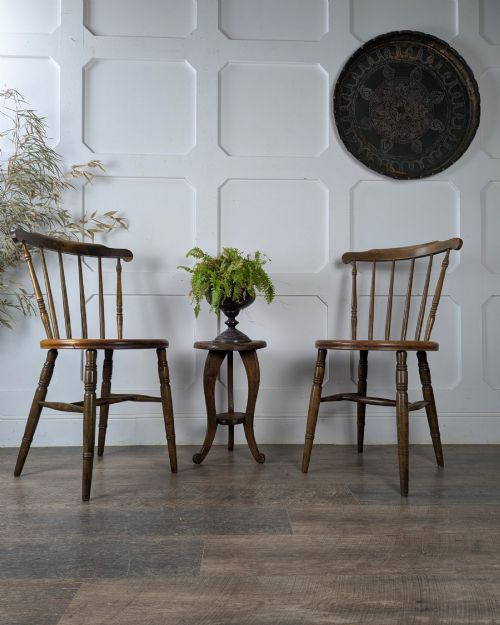
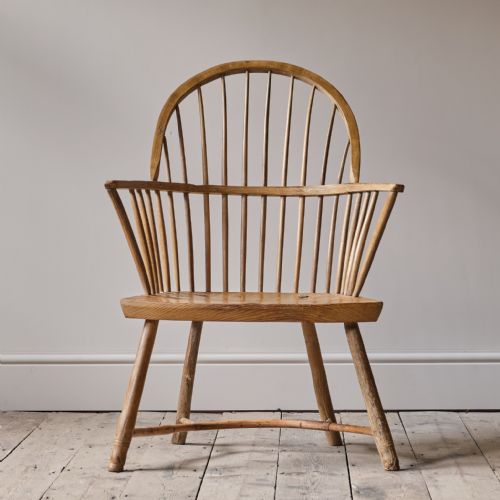
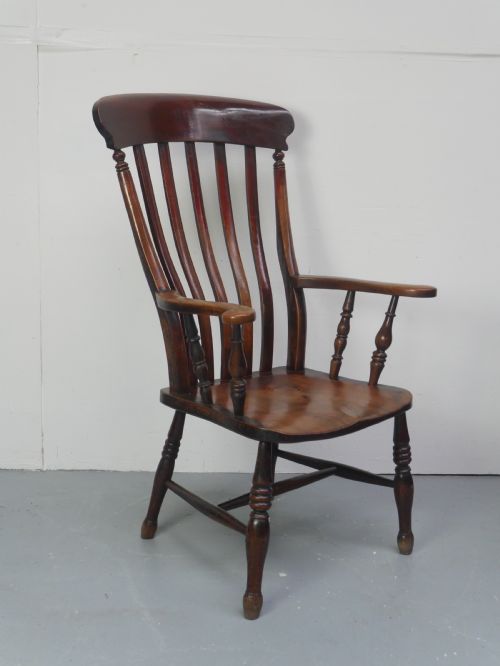

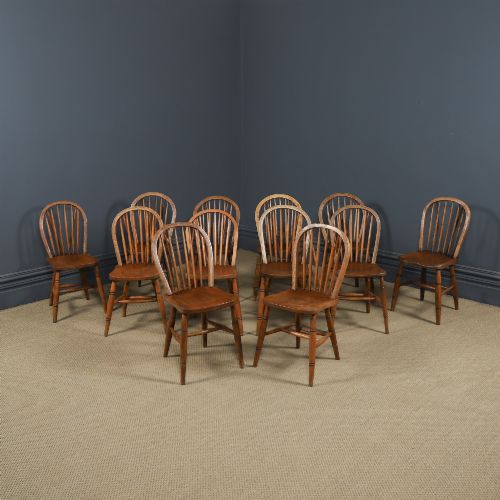


Bow Back Dining Chairs
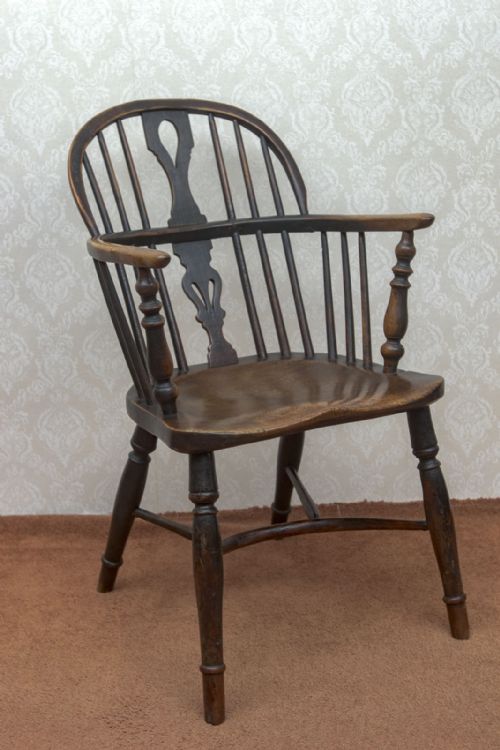
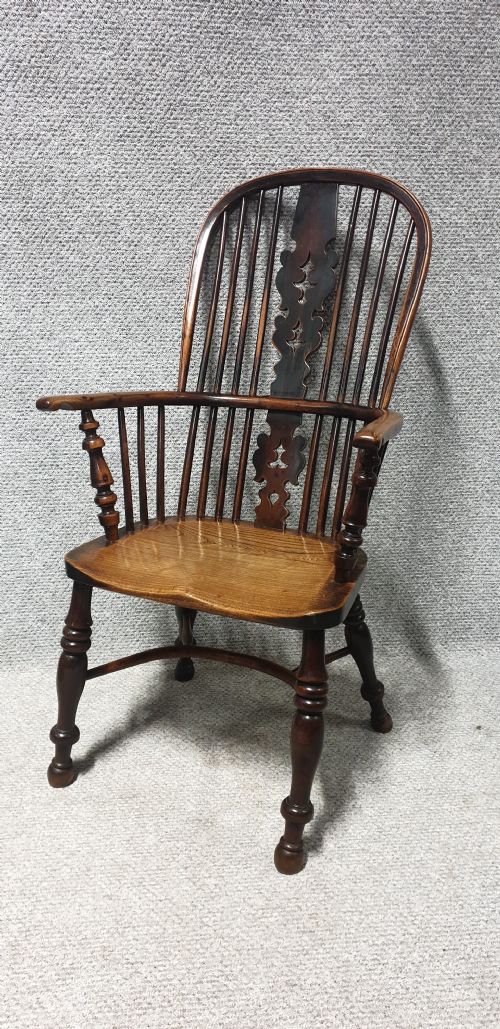
Bow back dining chairs bring sturdy vernacular character to the table, combining solid timber seats with steam-bent supports built to endure.
Bow Back Dining Chairs
Bow back dining chairs encompass robust vernacular seating forms, spanning single dining chairs and generous armchairs designed for daily use. When buyers search for bow back dining chairs, they encounter pieces originating from the eighteenth, nineteenth, and early twentieth centuries, reflecting enduring domestic traditions.
The selection ranges from individual pairs and sets of four up to larger dining sets of eight, ten, twelve, or sixteen pieces. Regional British styles dominate, including English Country, Edwardian Country, and Georgian forms which bridge the gap between farmhouse kitchens and formal dining rooms.
Materials and construction methods
Construction relies heavily on traditional English hardwoods, with elm, ash, beech, and yew selected for their strength and flexibility. Turners and joiners combined these timbers, frequently pairing resilient elm seats with steam-bent ash or yew for the characteristic curved backs.
Makers utilised contrasting woods within single pieces, pairing pale ash spindles with darker elm seats or incorporating alder and oak. Surface finishes range from natural polished timber grains to painted applications found on select stick back examples.
Materials recorded across the inventory include elm, ash, beech, yew, oak, mahogany, fabric, and alder.
Assessing quality and craftsmanship
Quality separates through the selection and figure of the timber, particularly in the grain of the elm seat and the choice of yew or ash for the bent components. Superior examples display harmonious matching across larger sets, whereas mixed timber sets reflect utilitarian origins.
The crispness of the turning on spindles and legs, alongside the tightness of the wedged joints in the seat, distinguishes accomplished workshop production from simpler vernacular work.
The Bow Back Dining Chairs Glossary
- Bow back
- A chair design featuring a continuous bentwood rail that forms the top and arms, providing structural rigidity and support. This curved element defines the silhouette.
- Windsor
- A traditional wooden chair style featuring a solid saddle-shaped seat into which the legs and back spindles are directly wedged. These chairs rely on frame construction rather than upholstery.
- Comb back
- A Windsor chair variation where the top rail resembles a traditional hair comb, topped by short spindles extending from a low back rail. This provides extra height and head support.
- Stick back
- A chair design characterised by plain vertical spindles supporting the back rail without intricate shaping or splats. It represents a clean vernacular aesthetic.
Bow Back Dining Chairs: Frequently Asked Questions
How do I clean wooden chairs?
Dust regularly with a soft dry cloth to prevent grit accumulation on the timber surface. Apply traditional beeswax periodically to nourish the wood and maintain a gentle lustre without building up heavy residues.
Avoid placing these chairs near direct heat sources or in damp environments, as fluctuations in temperature cause natural timbers to expand, contract, and potentially split.
Are these chairs comfortable for dining?
Traditional saddle-shaped wooden seats are contoured for supportive upright sitting during long meals. Adding loose fabric pads can increase softness if desired.
Armchair versions offer wider proportions and natural arm rests, making them suitable as carvers at the head of a dining table.
How do I date a wooden chair?
Examine the tool marks, timber species, and construction techniques under the seat to identify period characteristics. Hand-turned spindles and adzed seat bottoms indicate earlier vernacular craftsmanship.
Compare the timber patina, wear patterns around the footrests, and assembly methods with documented examples from Georgian, Victorian, or Edwardian eras.
Can I mix different wood tones?
Combining chairs with varied timber tones, such as elm, ash, and yew, creates an authentic country interior aesthetic. Historical sets often evolved over time rather than matching uniformly.
Unified forms, such as hoop backs or stick backs, anchor the group visually even when individual wood grains and patinas differ across the set.