



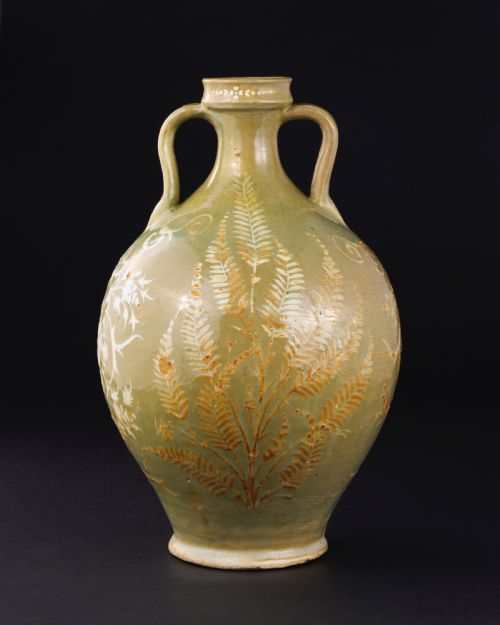


Botanical Ceramic Urn
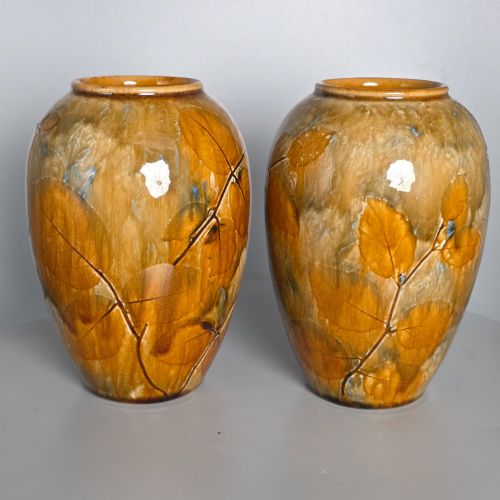
A botanical ceramic urn brings floral and foliate motifs directly into interior spaces through enduring clay and porcelain forms.
Botanical Ceramic Urn
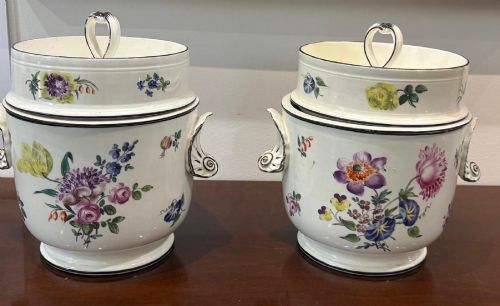
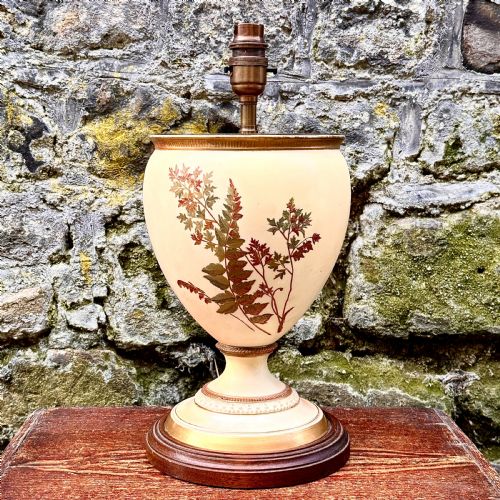
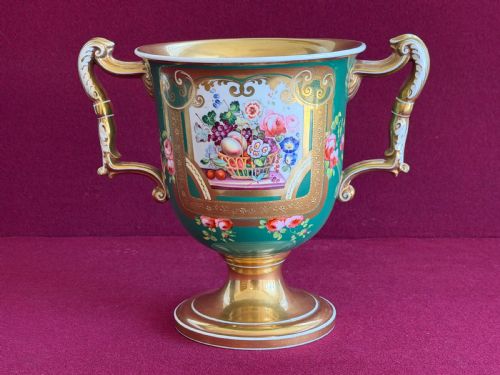
A botanical ceramic urn unites plant-based decoration with classical vessel shapes, appearing across periods from the Regency era through to the twentieth century. These pieces take various forms including lidded pails, jardinieres, and pedestals, often finished with hand-painted foliage or moulded leaf patterns.
Makers utilised earthenware, stoneware, and porcelain as the foundation for intricate botanical painting and glazed finishes. Examples range from English creamware ice pails to Japanese stoneware and Austrian porcelain creations.
Collectors encounter Victorian iterations alongside Edwardian art pottery and earlier Georgian designs. The selection spans diverse stylistic movements such as Art Nouveau, Aesthetic Movement, and Neoclassical Revival.
Materials and production methods
Potters shaped clay bodies on the wheel or pressed them into moulds to create traditional vessel profiles. Materials like porcelain and earthenware provided smooth white grounds suited to detailed botanical illustration.
Craftsmen applied polychrome enamels and underglaze colours by hand to depict naturalistic floral sprays and leaves. Gilding and gold leaf often accented the rims, handles, and foot rings of finer presentation pieces.
Specialised techniques such as majolica glazing and pate-sur-pate added rich texture and depth to the plant motifs. Firing in kilns secured the vitreous glazes and fixed the pigments permanently into the ceramic surface.
The selection includes table lamps, lidded pails, and loving cups decorated with hand-painted leaves and flowers.
Assessing craftsmanship and finish
The precision of the hand-painted botanical detailing separates standard production wares from exceptional studio and factory pieces. Master painters achieved subtle tonal variations and botanical accuracy that lesser hands missed.
The quality of the ceramic body and the uniformity of the glaze application indicate the standard of manufacture. Finer pieces display crisp moulding on relief elements and skilful integration of handles and pedestals.
The reputation of the manufactory or decorator influences the standing of an individual urn. Established makers maintained strict standards for their porcelain bodies and enamel firing.
Royal Doulton·Royal Worcester·H and R Daniel·Meissen·Minton·Makuzu Kozan·Spode·Doulton Lambeth·Flight Barr and Barr·Ernst Wahliss·Royal Dux Bohemia
The Botanical Ceramic Urn Glossary
- Creamware
- A fine-grained earthenware with a pale yellowish-white glaze, developed in England during the eighteenth century. This light body provided an ideal neutral background for painted floral decoration.
- Majolica
- A type of earthenware covered with an opaque tin-glazed enamel and painted in bright colours. It became particularly popular during the nineteenth century for vibrant plant and animal forms.
- Jardiniere
- An ornamental pot or stand designed to hold growing plants or flowers. These large vessels frequently featured botanical reliefs or painted garden scenes.
- Ewer
- A large jug with a wide spout and a handle, often paired with a basin. In ceramic collections, decorative versions served purely ornamental roles with painted floral motifs.
- Celadon
- A term for ceramics denoting a pale green glaze resembling jade. This finish originated in East Asia and inspired later European ceramic interpretations.
Botanical Ceramic Urn: Frequently Asked Questions
What is a botanical ceramic urn?
A botanical ceramic urn is a decorative vessel made from clay or porcelain featuring painted or moulded plant designs. These pieces function primarily as ornamental display items rather than utilitarian containers.
They reflect changing design tastes across different centuries, incorporating styles from Neoclassical Revival to Art Nouveau. The category encompasses various forms including vases, pot pourri jars, and jardinieres.
How were these urns used historically?
Historically, these vessels served as decorative centerpieces in drawing rooms, dining tables, and grand hallways. Some forms like jardinieres held live plants, while others functioned as ice pails or decorative urns.
Many pieces were created purely to display artistic skill and wealth within affluent homes. Their presence added natural motifs and colour to formal interior schemes.
How do I care for an antique ceramic urn?
Antique ceramic urns require gentle dusting with a soft, dry cloth to remove surface particles. Avoid using chemical cleaners or immersing pieces with gilt or delicate enamel decoration in water.
Display them away from direct sunlight and sudden temperature changes to protect the glaze and body. Stable placement prevents accidental tipping of tall pedestal forms.
How can I tell the period of a ceramic urn?
Determining the period involves examining the ceramic paste, glaze characteristics, and stylistic markers. Factory marks stamped or painted on the base often provide a reliable guide to the date of manufacture.
Stylistic details like handle shapes, colour palettes, and framing of the botanical artwork also point to specific eras such as Regency or Edwardian.