




Bokhara Area Rug
A bokhara area rug brings the rich, geometric geometry of Central Asian tribal weaving straight into a room.
Bokhara Area Rug
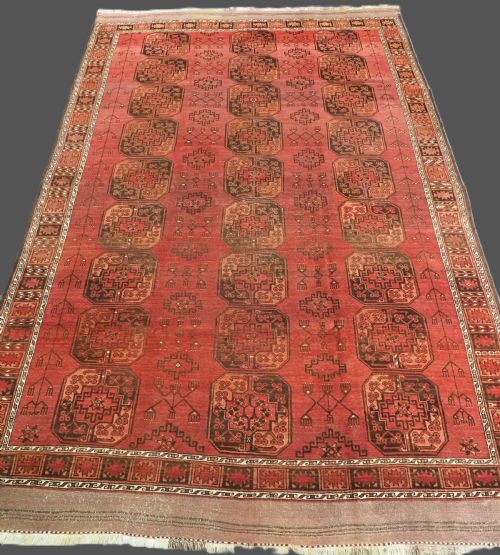
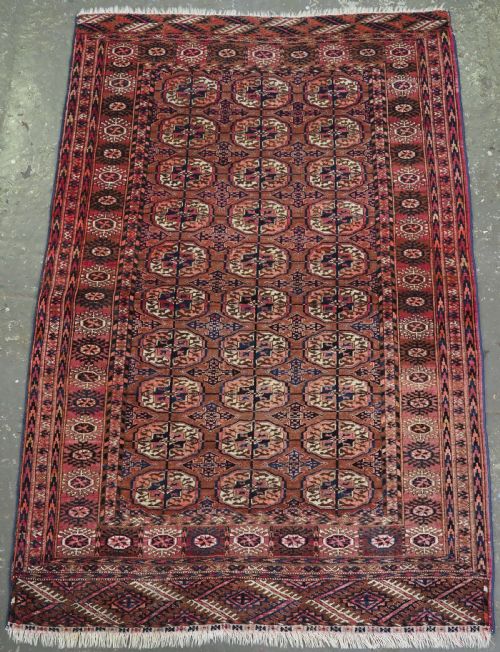
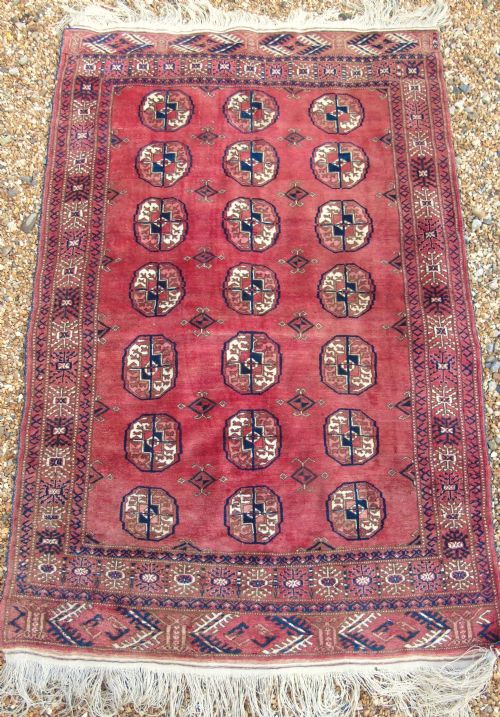
When searching for a bokhara area rug, a buyer encounters tribal and village carpets rooted in Turkmen traditions from the nineteenth and early twentieth centuries. These pieces display distinctive repeating motifs across fields of warm red, burgundy, or gold.
The versions met most often on this page include Tekke and Ersari main carpets, smaller dowry or wedding rugs, and Afghan village adaptations. They range from square formats to exceptionally large room-size carpets.
Originating from Central Asian tribal workshops and the Emirate of Bukhara, these textiles reflect centuries of nomadic design passed down through generations of weavers.
Materials and construction
These rugs are constructed predominantly from wool and cotton, utilising natural animal fibres for the pile and foundation. Weavers knotted soft wool to create thick, hard-wearing surfaces capable of enduring decades of heavy use.
Dyes such as cochineal provide deep highlights against the dominant warm red background colours. The knotting technique yields either fine, dense wedding pieces or heavy-duty utility carpets.
The listings span the period from the 1860s through the 1930s, documenting both nineteenth-century tribal weaving and early twentieth-century Afghan village production.
Separating the finest examples
Quality in these carpets rests on the density of the weave and the fineness of the wool. Smaller dowry pieces frequently exhibit tighter knots and softer materials than standard floor coverings.
Colour depth also separates the grades, with cochineal highlights and rich, even madder-based red tones creating greater visual resonance. Condition and pile retention further distinguish master-woven rugs from standard village output.
The Bokhara Area Rug Glossary
- Gul
- The primary octagonal medallion motif repeated across the field of a Turkmen carpet. Different tribal groups developed their own distinct variations of this geometric ornament.
- Tekke
- A major Turkmen tribe known for producing finely knotted carpets featuring orderly rows of guls. Their work forms the backbone of traditional central Asian rug production.
- Ersari
- A principal Turkmen tribe whose weavers created carpets with broader designs and varied medallion structures. Their rugs often display a more relaxed geometric freedom than those of the Tekke.
- Dowry rug
- A smaller textile woven by a bride as part of her marriage possessions. These pieces typically receive finer knotting and more careful detailing.
- Beshir
- A sub-group of Ersari carpets recognised by larger scale designs and occasional use of prayer formats or pictorial elements. They originate from the Amu Darya river region.
Bokhara Area Rug: Frequently Asked Questions
Where were these rugs made?
These textiles originate from Central Asia, specifically the tribal regions associated with Turkmen groups and the Emirate of Bukhara. Many were produced by nomadic or village weavers.
They reflect traditional designs that were later traded through urban centres and exported internationally, particularly via Russian markets.
How do I identify a Tekke rug?
Tekke rugs are distinguished by orderly rows of primary octagonal guls set against a deep red or burgundy field. They often feature complex geometric secondary ornaments in the borders.
Fine wool and precise knotting characterise the traditional output of this specific Turkmen group.
What is a dowry rug used for?
Dowry rugs were created by young women as part of their traditional marriage preparations in tribal communities. These smaller pieces served both as personal possessions and ceremonial items.
Because of their intended personal significance, they frequently display finer weaves and softer wool than large utility carpets.
Are these rugs durable for daily use?
Many examples are heavy-duty and hard-wearing, designed originally for daily floor use in country houses and village settings. Wool piles provide natural resilience against foot traffic.
Lighter dowry or wedding pieces, however, benefit from placement in lower-traffic areas to preserve their finer structure.