


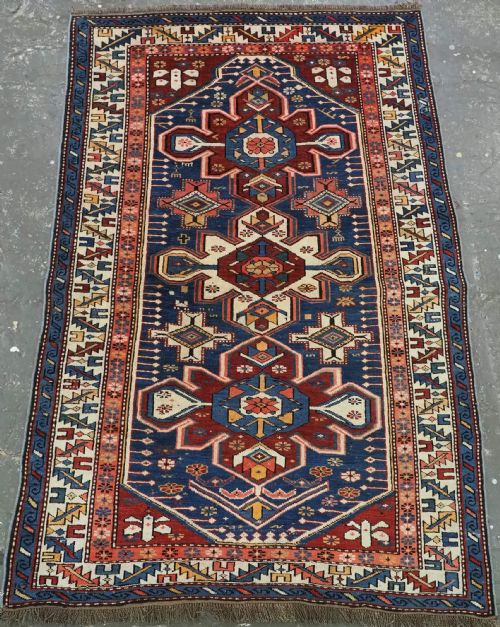


Red Geometrical Rug
These red geometrical rugs unite centuries of weaving traditions from Anatolia, the Caucasus, and Central Asia.
Red Geometrical Rug
A red geometrical rug brings together tribal and village floor coverings defined by angular motifs and dominant crimson tones. When you search for a red geometrical rug, you encounter pieces originating from Ottoman, Caucasian, and Turkmen workshops spanning the eighteenth, nineteenth, and early twentieth centuries.
The selection here encompasses various formats including area carpets, village runners, and specific prayer rugs featuring mihrabs and medallions. These textiles draw on centuries of regional iconography, translated through the hands of nomadic and settled weavers alike.
The most prevalent examples on this page date from the Victorian era and the decades immediately following, moving from 1750 through to 1920. Each piece reflects the specific aesthetic vocabulary of its origin, whether that is an Anatolian Ladik or a Central Asian Turkmen carpet.
How they were made
The construction of these floor coverings relies primarily on hand-spun wool foundations and pile, occasionally supported by cotton warps and wefts. Weavers employed hand-knotting techniques to build dense, durable structures capable of withstanding generations of daily use.
Colour derives from natural dyes applied to local wool fibres, producing deep reds and contrasting secondary hues that age gracefully. The interaction between these traditional dyestuffs and hand-spun materials generates the characteristic visual depth seen across the surviving pieces.
Keep an eye out for hidden rams' horns woven into the prayer arches, placed there to ward off trouble.
What varies in quality
Quality in these textiles rests upon the precision of the knotting and the integrity of the underlying wool. Tighter structures and finely spun materials produce surfaces that hold their definition and handle frequent foot traffic with resilience.
The sophistication of the palette and the clarity of the angular design execution further distinguish the pieces. Harmonious dye combinations and balanced proportions separate standard village work from exceptional examples of tribal weaving.
The Red Geometrical Rug Glossary
- Mihrab
- The arched niche found in prayer rugs, often indicating the direction of prayer towards Mecca. On these pieces, the arch guides the viewer's eye through the central field.
- Medallion
- A central ornamental motif positioned in the middle of the rug field. This geometric centrepiece anchors the surrounding field patterns and borders.
- Warp
- The vertical threads stretched lengthwise on the loom before knotting begins. These foundational threads support the entire weight of the knotted pile.
- Weft
- The horizontal threads passed across the warp threads after each row of knots is secured. They bind the structure together widthwise and maintain stability.
- Kilim
- A flat-woven carpet or rug produced without a pile by tightly interweaving warp and weft strands. This technique creates a lightweight, reversible textile with sharp geometric patterning.
Red Geometrical Rug: Frequently Asked Questions
How do I clean a wool rug?
Regular gentle vacuuming without a beater bar removes loose grit before it settles into the wool pile. Professional specialist cleaning remains necessary for deeper maintenance.
Harsh chemical detergents and excessive water damage natural wool fibres and traditional dyes. Surface spots require immediate blotting with a dry cloth rather than vigorous rubbing.
Where were these rugs woven?
The pieces originate across Anatolia, the Caucasus, and Central Asia, encompassing regions such as Ushak, Shirvan, and Turkmenistan. Village workshops and nomadic camps produced distinct local variations.
Each geographical area developed its own specific palette, knotting density, and geometric vocabulary. These regional markers help identify the provenance of individual carpets.
Are these rugs suitable for high traffic?
Hand-knotted wool construction provides natural durability that handles regular movement across domestic floors. Lighter formats like prayer rugs suit lower-traffic spaces or wall hanging.
Placing a quality underlay beneath the carpet prevents slippage and absorbs daily friction. This extra layer protects the wool foundation from premature wear.
How do I date an old rug?
Dating relies on examining material wear, dye characteristics, and stylistic shifts in the geometric motifs. Structural analysis of the foundation threads offers further clues to age.
Comparing knot types and regional designs against established historical examples narrows the period of production. Subtle irregularities in natural dyes often point towards nineteenth-century origins.