
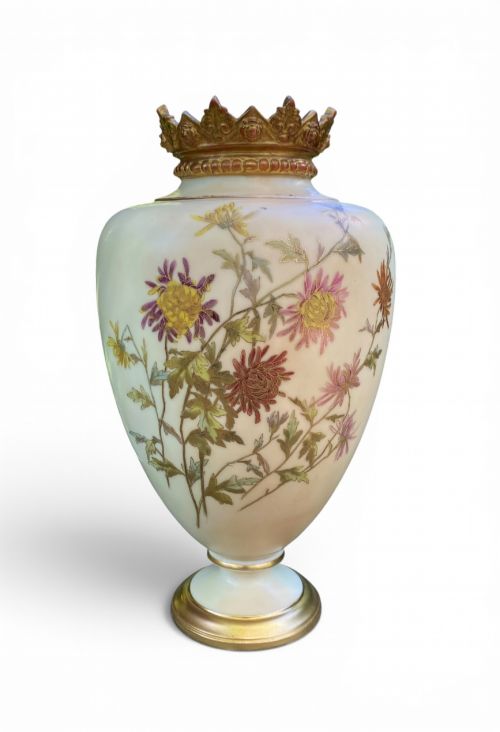


Blush Ivory Ceramic Vase
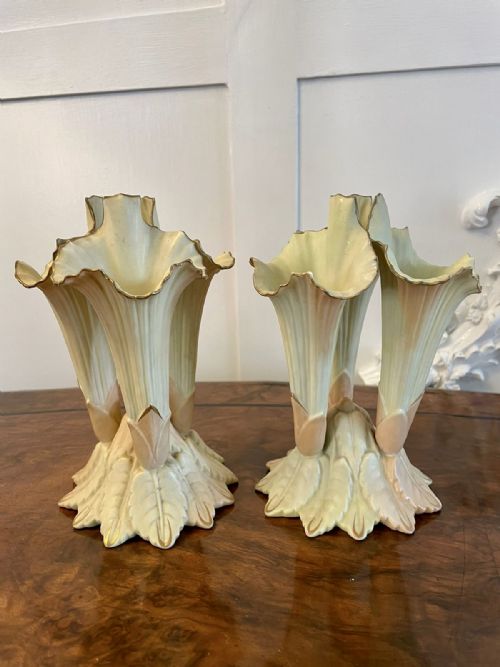
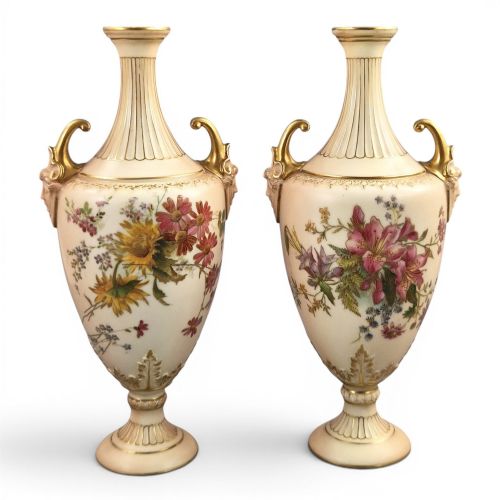
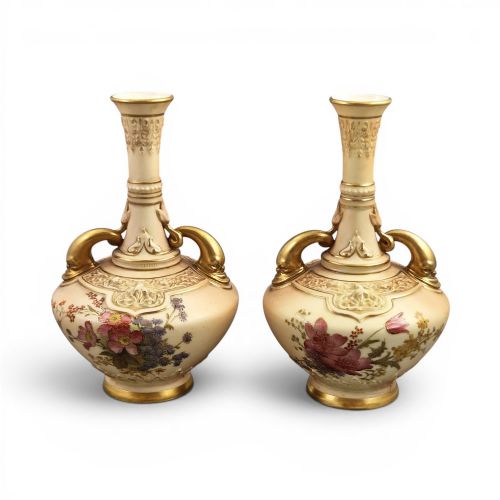
A blush ivory ceramic vase brings soft, warm tones and delicate hand-painted flora to a room, offering a distinct nineteenth and twentieth-century British aesthetic.
Blush Ivory Ceramic Vase
A blush ivory ceramic vase represents a specific chapter in British decorative ceramics, spanning the late nineteenth century into the twentieth century. These pieces encompass Edwardian and Victorian eras, alongside the Victorian Aesthetic Movement, capturing a period of refined domestic ornamentation.
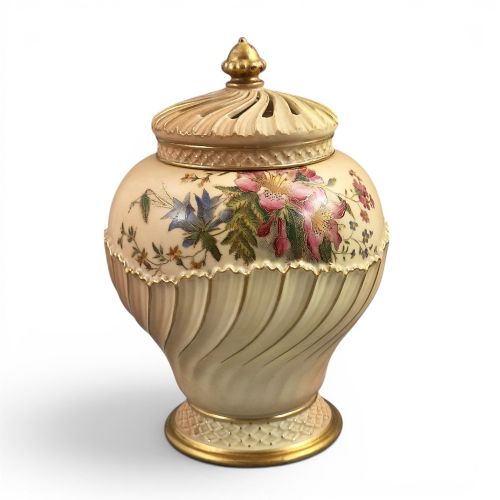
Buyers searching for a blush ivory ceramic vase typically encounter ewers, spill vases, and pot-pourri jars alongside standard vase forms. The selection also includes decorative urns, loving cups, and figural pieces produced during these periods.
The dominant origin in this group is Royal Worcester, accompanied by Locke & Co., showcasing the output of esteemed British kilns. These manufactories defined the soft, creamy-pink ground ceramic aesthetic that collectors seek today.
How they were made
Makers utilised fine porcelain bodies coated in a soft-toned glaze that yielded the characteristic matte or satin blush ivory surface. This pale ground served as a canvas for hand-painted floral motifs, frequently featuring chrysanthemums and roses.
Artisans applied gilt, gold leaf, and ceramic enamel to accentuate handles, rims, and structural details. Pierced handles and moulded forms such as dolphins or storks added sculptural depth to the porcelain bodies.
The selection spans Victorian, Edwardian, and nineteenth-century periods, focusing heavily on porcelain vessels finished with gilt and enamel.
What varies in quality
Quality rests in the crispness of the porcelain moulding and the delicacy of the hand-painted botanical decoration. Skilled artists executed floral subjects with subtle tonal shading that elevated standard production wares into notable examples.
The sophistication of supplementary ornamentation, including pierced gilt handles and structural elements like crown covers or figural supports, separates standard items from the finest pieces.
Royal Worcester·Locke And Co·Jas Stinton·E Raby
The Blush Ivory Ceramic Vase Glossary
- Blush ivory
- A soft, creamy-pink ceramic glaze developed in the late nineteenth century. It provided a muted matte background for hand-painted floral decoration.
- Ewer
- A large jug with a wide spout and a curved handle, often produced as a decorative ornamental piece rather than for practical use.
- Pot-pourri jar
- A covered vessel designed to hold dried fragrant plant material. These jars frequently feature pierced covers to allow scents to diffuse into a room.
- Gilt
- A thin layer of gold applied to the ceramic surface. It highlights handles, rims, and moulded details.
- Ovoid
- An egg-shaped vessel form commonly found in nineteenth-century ceramic jars and vases. This curved profile provided a wide surface area for floral painting.
Blush Ivory Ceramic Vase: Frequently Asked Questions
What is a blush ivory ceramic vase?
A blush ivory ceramic vase is a decorative porcelain vessel featuring a soft, pale pinkish-cream matte glaze. These pieces date primarily from the late nineteenth and early twentieth centuries.
They are distinguished by delicate hand-painted floral subjects, often enhanced with gilding and intricate moulded details such as handles or pierced covers.
How were blush ivory vases used?
These pieces served as ornamental mantel and tabletop items within Victorian and Edwardian homes. Pot-pourri jars additionally functioned to scent domestic spaces with dried botanicals.
Larger ewers and urns were displayed on pedestals or sideboards as symbols of refined taste and contemporary interior fashion.
How do I date an antique blush ivory vase?
Dating relies on maker marks, shape numbers, and registration ciphers stamped or painted on the underside of the porcelain. Stylistic cues such as Victorian Aesthetic Movement motifs or Edwardian forms also provide chronological bounds.
Individual artist signatures and date codes stamped into the ceramic body offer precise manufacturing years for many pieces.
How do I care for antique porcelain?
Dust these decorative items gently with a soft, dry cloth to prevent accumulation on textured surfaces and gilt details. Avoid using water, chemical cleaners, or abrasive materials that can damage the delicate glaze and gold leaf.
Display the pieces away from direct sunlight and areas prone to heavy temperature fluctuations to preserve the painted decoration.