


Ivory Porcelain Ewer
These ivory porcelain ewer examples bring nineteenth and early twentieth-century ceramic artistry straight to your sideboard.
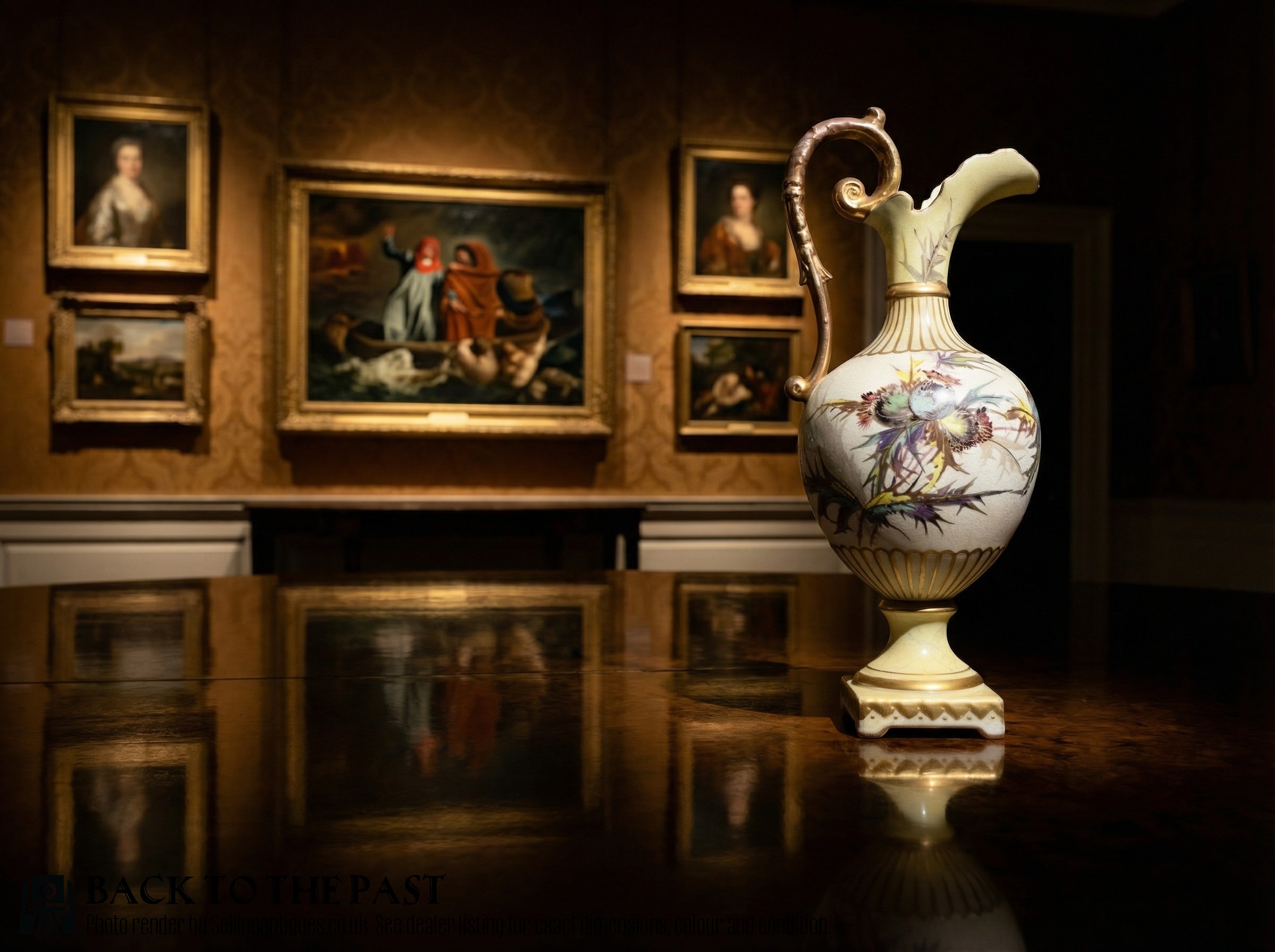
Ivory Porcelain Ewer
An ivory porcelain ewer takes the classic form of a water pitcher and translates it into fine ceramic for display. These pieces span the Victorian and Edwardian eras, predominantly bearing the signature palette and marks of the Royal Worcester pottery.
The inventory on this page centres on decorative jugs, pedestal ewers, and vases finished with soft ivory glazes. Collectors encounter various forms, from wine ewers and cleft jugs to large Empress ewers designed as decorative centerpieces.
Makers utilised porcelain bodies shaped into graceful handled vessels, often pairing the pale ceramic ground with rich metallic detailing. Such objects reflect the refined aesthetic tastes of late nineteenth and early twentieth-century households.
How they were made
Potters shaped fine porcelain into curving vessel forms, applying a characteristic ivory glaze to create a soft, matte background. This delicate ceramic body provided the ideal canvas for subsequent surface decoration.
Craftsmens applied gold leaf, gilding, and gold gilt accents by hand to handles, rims, and moulded relief patterns. Ceramic enamel colours were then added over the glaze, often depicting floral motifs before a final firing fixed the design.
Listings span the Victorian and Edwardian eras, ranging from 1880 to 1920.
What varies in quality
Quality rests in the crispness of the moulded detail and the delicacy of the hand-painted enamel work. Pieces featuring intricate gilding and well-preserved puce factory marks demonstrate superior artistic execution.
The balance of the form and the subtlety of the blush ivory shading distinguish finer examples from standard production. Larger ewers and matched pairs typically represent the higher tier of these ceramic productions.
Royal Worcester
The Ivory Porcelain Ewer Glossary
- Blush ivory
- A soft, matte cream-coloured glaze developed by Victorian potteries to mimic the warmth of real ivory. This finish became a signature background for delicate floral hand-painting.
- Puce mark
- A factory stamp printed in purple or brownish-red underglaze to date and authenticate Royal Worcester ceramics. These symbols allow collectors to determine the exact year of production.
- Pedestal ewer
- A water pitcher raised upon a distinct footed base or pedestal. This form elevates the vessel for decorative display rather than utilitarian use.
- Gilding
- The application of fine gold leaf or gold paint to ceramic surfaces. It accentuates handles, rims, and moulded motifs with a metallic sheen.
Ivory Porcelain Ewer: Frequently Asked Questions
What is an ivory porcelain ewer?
An ivory porcelain ewer is a decorative ceramic pitcher finished in a soft cream glaze, primarily produced during the Victorian and Edwardian periods. These vessels were designed for ornamental display rather than serving water.
Most examples in this category originate from the Royal Worcester factory, featuring elaborate handles and hand-painted details.
How do I date an ivory ewer?
Dating relies heavily on factory marks printed on the underside of the porcelain, particularly puce-coloured date codes used by Royal Worcester. Stylistic details like Victorian moulding or Edwardian shapes also help narrow down the decade.
Examining the type of gilding and enamel palette provides further clues regarding the exact period of manufacture.
Were these ewers used for water?
Despite retaining the traditional shape of a water jug, these pieces served primarily as decorative art objects for drawing rooms and mantelpieces. The delicate gilding and soft enamel work make them unsuitable for practical daily use.
Wealthy households displayed them as pairs or centrepieces to showcase refined taste.
How should I display an antique ewer?
Place your ewer on a stable surface away from direct sunlight and high-traffic areas where it might be knocked over. Because of the delicate gold leaf and enamel, keep them out of damp environments.
Pairing a single ewer with matching pedestal vases creates a balanced historical arrangement on a sideboard.