


Blue Wool Rug Cushion
These blue wool rug cushion pieces transform nomadic weaving into domestic seating.
Blue Wool Rug Cushion
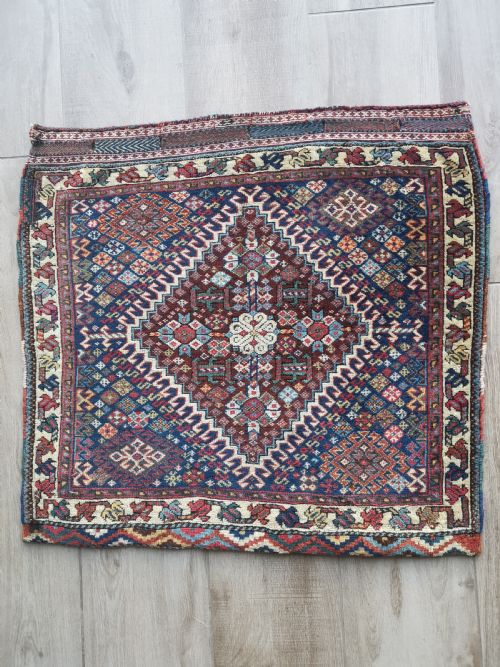
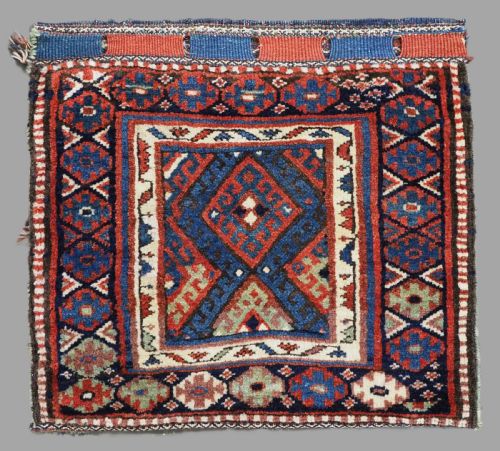
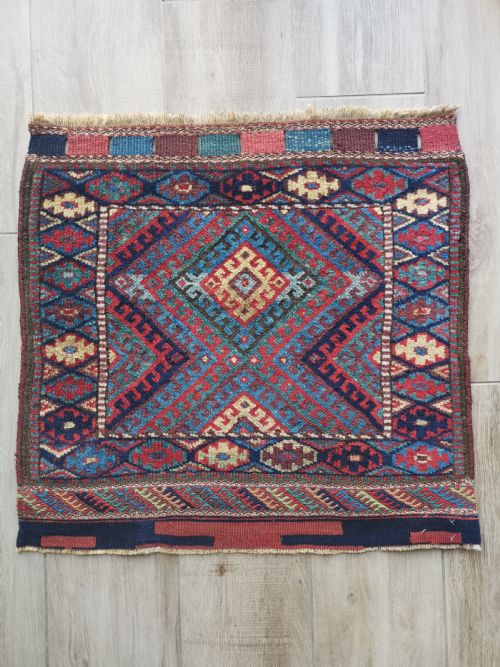
A blue wool rug cushion takes historical tribal weaving and repurposes it into a soft furnishing for the home. When searching this phrase, buyers examine utilitarian objects such as saddlebags, bag faces, seating mats, and wheat sacks that have been adapted into cushions. These items originate from various nomadic and village groups, including Kurdish, Qashqai, Shahsavan, and Afshar tribes, dating from the early nineteenth century through to the early twentieth century.
The most common form encountered here is the bag face or half-saddlebag repurposed as a cushion front, often paired with a plain weave back. Pieces span several decades, featuring periods like the nineteenth century, 1800, 1860, 1870, 1880, 1890, 1900, and 1920. Styles lean heavily towards tribal aesthetics, including Persian tribal, Kurdish tribal, Shahsavan tribal, and Anatolian tribal designs.
Materials and construction
These textiles rely primarily on wool, hand-spun wool, and cotton, occasionally incorporating goat hair for durability in structural areas. The threads are coloured using natural and vegetable dyes, producing characteristic depth and variation across the surface.
Techniques range from plain weave backs to soumak work and banded weft construction, depending on the tribal group and the original function of the textile. Weavers utilised traditional flatweave and pile methods suited to nomadic life before these items were converted into cushions.
Listings feature items from the nineteenth and early twentieth centuries, spanning 1800 to 1920.
Assessing quality
Quality rests in the handle of the wool and the clarity of the dye work. Hand-spun wool utilising natural and vegetable dyes yields a luminous surface that ages characterfully, whereas lesser examples lack this visual depth.
The precision of the tribal motifs, whether birds, dragons, or boteh designs, distinguishes standard utility pieces from finer artistic examples. Intricate structures like soumak work require greater technical skill than basic flatweaves.
The Blue Wool Rug Cushion Glossary
- Bagface
- The front decorative panel of a nomadic saddlebag. These panels frequently survive independently of their original rear compartments.
- Soumak
- A supplementary weft wrapping technique that creates a durable, textured surface. It often appears on Shahsavan tribal pieces.
- Yastic
- A small rectangular rug or cushion cover traditionally used in Anatolia for leaning against. They typically display regional village patterns.
- Boteh
- A stylised floral motif resembling a pear or almond shape. This pattern appears frequently in Afshar and Persian tribal weaving.
- Kilim
- A flatwoven textile produced without a pile. These structures form the lightweight backs and sides of nomadic bags.
Blue Wool Rug Cushion: Frequently Asked Questions
What is a blue wool rug cushion?
It is a decorative soft furnishing created from historical tribal textiles such as saddlebag faces and seating mats. These items repurpose nomadic weaving into domestic seating.
The materials typically include hand-spun wool dyed with natural substances. They reflect the utilitarian craft of various nineteenth and early twentieth century tribal groups.
How were these tribal bags used?
Nomadic groups utilised bags and sacks for transporting possessions across harsh terrain. Animals carried these textiles during seasonal migrations.
Over time, many of these utilitarian panels became separated from their original pairs. Modern makers convert the surviving decorated faces into cushions for domestic interiors.
How do I care for a textile cushion?
These historical wool items require gentle handling to preserve the natural fibres and vegetable dyes. Professional cleaning suited to antique textiles is recommended.
Avoid placing them in direct sunlight to prevent fading. Occasional gentle vacuuming through a mesh screen helps remove dust without damaging the weave.
How are the periods identified?
Experts date these items by examining the wool quality, dye composition, and structural characteristics. Stylistic conventions specific to particular tribal regions also indicate a timeframe.
Pieces range across the nineteenth and early twentieth centuries. Structural evidence such as hand-spinning methods helps narrow down the era of production.