



Blue Wool Kelleh Carpet
A blue wool kelleh carpet gives a room a deep centre of traditional Persian or Caucasian tribal weaving.
Blue Wool Kelleh Carpet
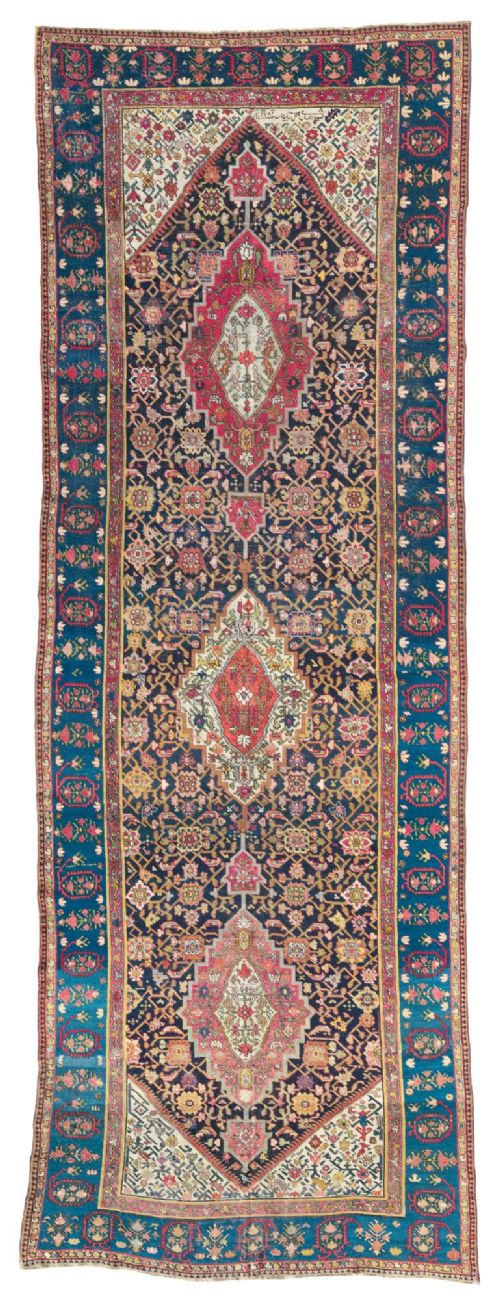
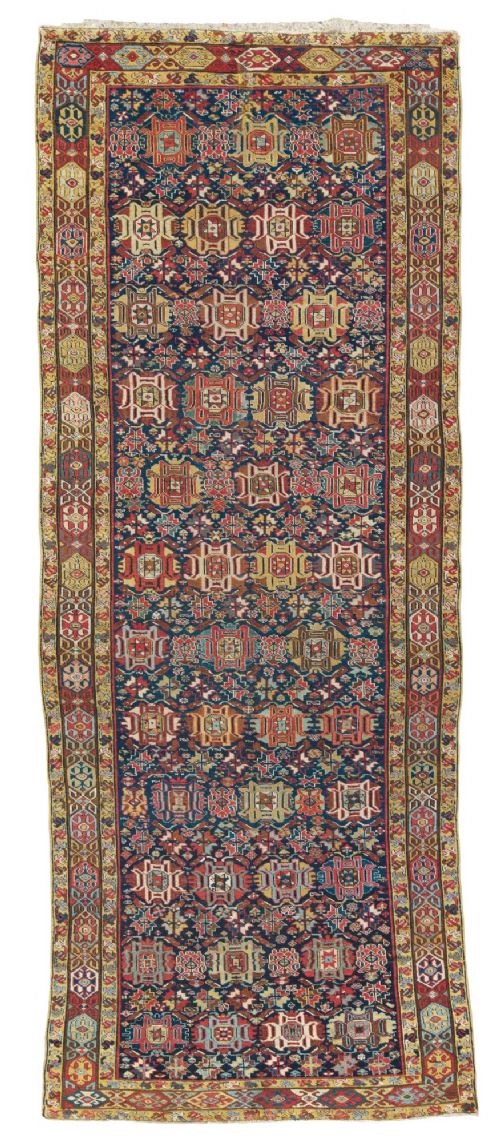
A blue wool kelleh carpet is a long, narrow format rug rooted in Persian and Caucasian tribal weaving traditions. These pieces include examples from Kurdish, Malayer, Bidjar, and Karabagh regions, spanning from the mid-nineteenth century through the early twentieth century.
The format is distinctly elongated, functioning effectively as a long rug or corridor runner. Designs range from the tree of life and boteh motifs to geometric crab patterns along the Harshang border.
These carpets reflect the traditional methods of nomadic and village weavers across Persia and the Caucasus. They bring substantial length and heritage design to interior floors.
How they were made
Construction relies on hand-spun wool and cotton foundations, knotted by hand in workshops and nomadic camps alike. The use of durable wool pile ensures resilience under foot traffic over generations.
Dyers utilised natural materials to achieve the rich blue tones characteristic of these textiles. Weavers combined traditional regional iconography, such as dragon borders and geometric medallions, into the structural weave.
Blue Wool Kelleh Carpet Retail Price Guide 2026
Typical asking prices for blue wool kelleh carpet among the pieces listed under this phrase on Sellingantiques today, from the lower quarter to the upper quarter. They describe what is for sale here now, not the wider market.
Some weavers included wandering dragon borders to ward off mischief along the hallway.
What varies in quality
Quality rests in the precision of the knotting and the crispness of the regional design, whether a harshang border or a luri tribal motif. Finer examples maintain structural integrity and clear iconography across their extended length.
The depth and variation of the blue wool dyes influence the visual weight of the carpet. Superior pieces show careful handling of traditional patterns by weavers from origins such as Bidjar or Karabagh.
The Blue Wool Kelleh Carpet Glossary
- Kelleh
- A large, elongated format of carpet traditionally used in Middle Eastern interiors as a room-size runner or long rug. It sits between standard rugs and full room carpets in proportion.
- Boteh
- A recurring almond or pear-shaped motif representing a floral shoot or cypress tree, frequently seen in Persian and Kurdish weaving. This symbol carries deep traditional significance in oriental carpets.
- Harshang
- A traditional crab pattern design found within the borders of Persian carpets, particularly associated with northwest regions like Zanjan. It creates a distinctive frame around the central field.
- Kazak
- A style of Caucasian rug known for bold geometric designs and saturated primary colours. These pieces originate from specific weaving traditions in the Caucasus mountain region.
Blue Wool Kelleh Carpet: Frequently Asked Questions
Where should I place a kelleh?
A kelleh fits well in long hallways, narrow reception rooms, or alongside a large bed. Its extended format was originally designed for the perimeter of formal Persian rooms.
Ensure the floor space allows the full length of the carpet to lie flat without folding at the edges.
How do I clean a wool kelleh?
Vacuum gently without using a rotating brush roll to protect the hand-spun wool pile. Professional rug cleaning is recommended for deep maintenance.
Avoid excessive moisture and direct harsh chemicals which can damage natural dyes.
Are these carpets authentic antiques?
The pieces listed date from the mid-nineteenth century to the early twentieth century. They originate from traditional weaving centres in Persia and the Caucasus.
Materials such as hand-spun wool and cotton foundations confirm their historical manufacture.
What is a tribal kelleh?
A tribal kelleh is woven by nomadic or village groups such as Kurdish, Qashqai, or Luri weavers rather than in city workshops. These rugs feature more geometric and spontaneous interpretations of traditional motifs.
The regional wool and local dyeing traditions give each tribal piece a distinct character.