



Herati Pattern Runner Rug
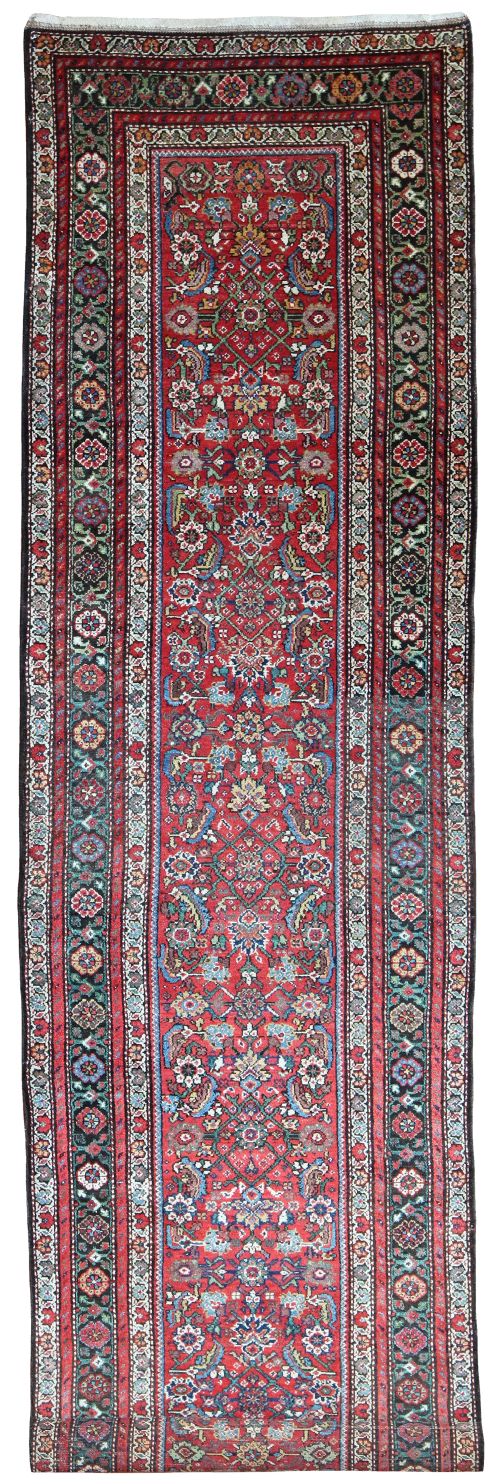
A herati pattern runner rug brings traditional Persian craftsmanship and intricate geometric floral motifs directly into narrow hallways and galleries.
Herati Pattern Runner Rug
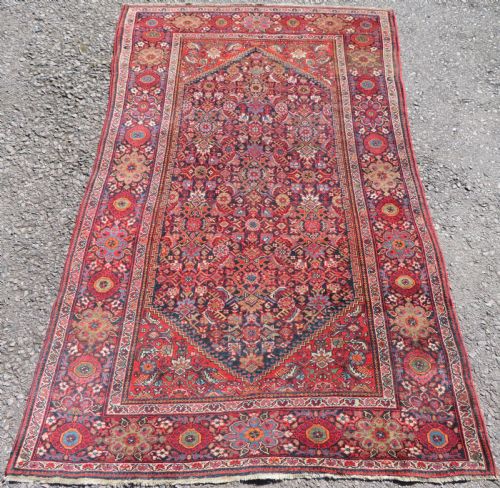
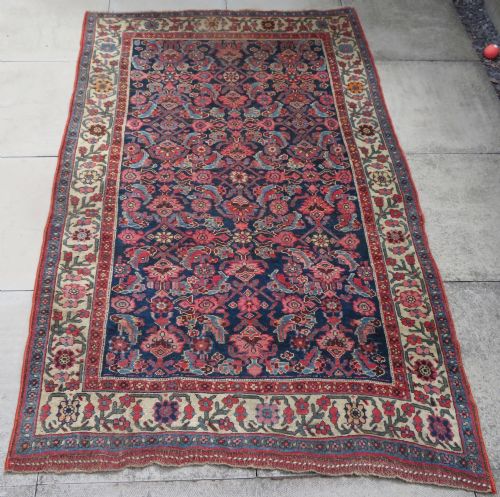
When you examine a herati pattern runner rug, you are looking at elongated floor coverings originating from various Persian weaving traditions. These pieces feature the classic herati motif, which typically pairs a central floral rosette with surrounding leaves enclosed inside a diamond trellis lattice.
The selections span from the latter half of the nineteenth century through the early decades of the twentieth century. You will encounter tribal village productions alongside room-sized carpets and long kelhs created across different Persian regions.
Regional variations appear frequently among the pieces, encompassing Malayer, Bidjar, Senneh, Ferahan, and Baluch workshops. Each region adapts the repeat heratti design through distinct colour palettes and knotting densities.
How they were made
Weavers constructed these textiles almost entirely using wool pile knotted onto cotton foundations. The wool provides resilience for high-traffic corridors while the cotton warps and wefts allow for structural stability across extended runner formats.
Dyers utilised natural materials to achieve deep saturated tones that hold their character across generations of use. Hand-spinning the wool introduced subtle variations in texture and yarn thickness that distinguish these older floor coverings from modern machine-made equivalents.
What varies in quality
Knot density and precision of the drawing dictate the distinction between standard village pieces and finer workshop examples. Tighter knotting permits sharper rendering of the minute geometric details within the lattice design.
The integrity of the foundation and evenness of pile wear determine the structural grade of each carpet. Original edge finishes and complete borders preserve the intended proportions designed by the original weavers.
The Herati Pattern Runner Rug Glossary
- Herati
- A repeating ornamental design composed of a central flower surrounded by four leaves and framed by a rhombus. This motif forms the primary decorative element across many traditional Persian weavings.
- Kelleh
- A distinctive rectangular format longer than a standard room rug but shorter than a full gallery carpet. These proportions suit hallways and narrow reception spaces.
- Seneh
- A style of weaving originating from the town of Sanandaj in western Persia, known for fine execution and delicate floral fields. These pieces frequently employ distinctive weave structures.
- Bidjar
- A heavy, densely knotted carpet type produced by Kurdish tribes in western Persia. They are recognised for exceptional durability and robust foundation structures.
- Pushti
- A small mat format traditionally used as a cushion or small floor covering. These compact textiles often display concentrated tribal designs.
Herati Pattern Runner Rug: Frequently Asked Questions
How do I clean an antique runner?
Gentle surface brushing and professional specialist washing maintain the integrity of the wool pile.
Avoid harsh chemical treatments or immersion washing which can weaken nineteenth-century cotton foundations.
Where should I place a long carpet?
These elongated formats suit hallways, corridors, and narrow gallery spaces where traditional floor coverings add warmth.
Ensure adequate underlay is utilised to prevent slipping and reduce friction against hard flooring.
What is the herati motif?
The motif consists of a stylized rosette enclosed within a diamond lattice accompanied by curved leaf forms.
This repeating geometric arrangement creates an all-over pattern across the field of the textile.
How do I date these textiles?
Dating relies on structural analysis, wool quality, natural dye characteristics, and traditional regional weaving traits.
Comparing knot styles helps place pieces within the nineteenth and early twentieth century periods.