


Hand Knotted Gallery Runner
A hand knotted gallery runner brings scale and character to long corridors, uniting expansive floor spaces with intricate historic patterns.
Hand Knotted Gallery Runner
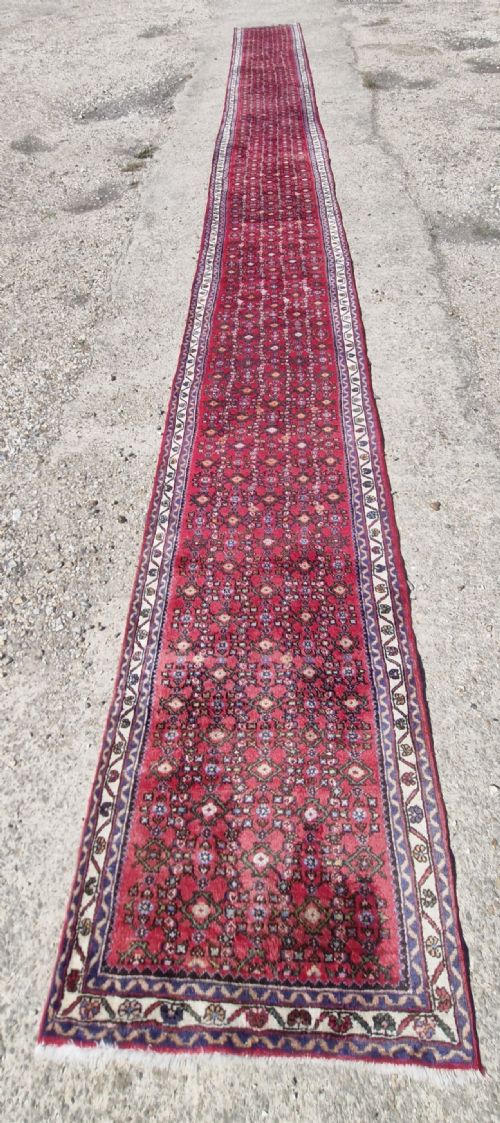
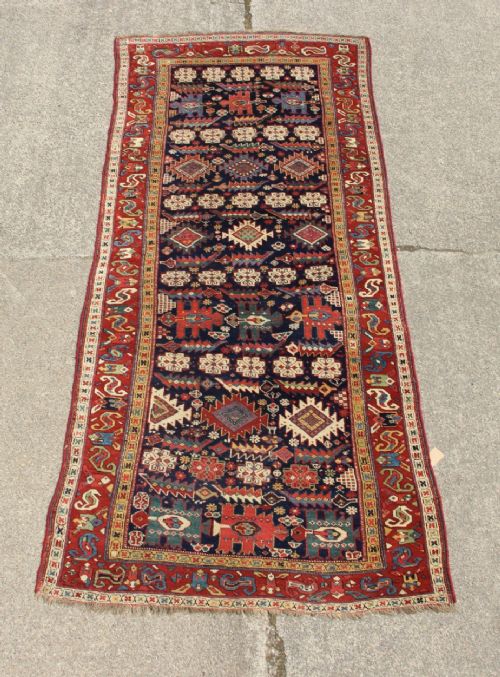
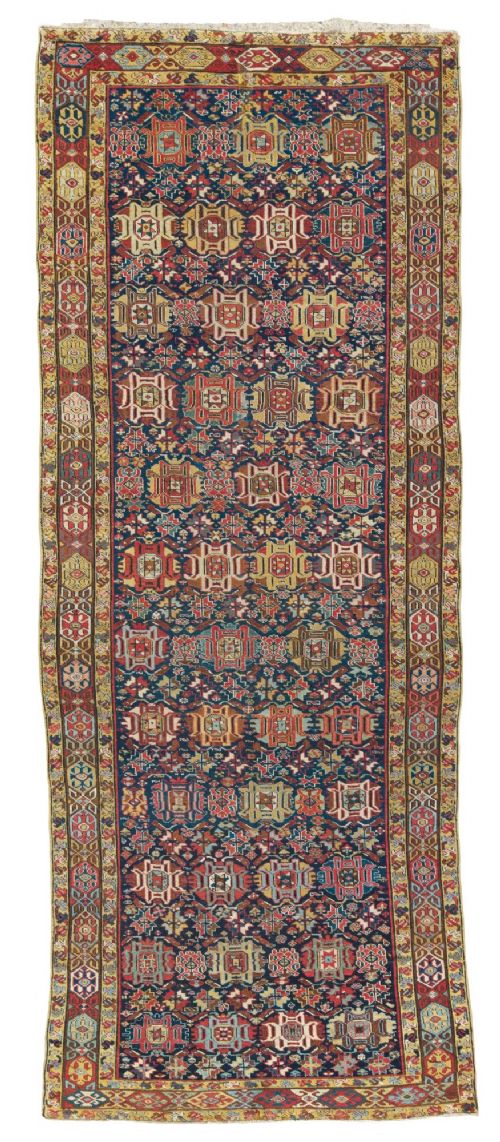
A hand knotted gallery runner is a long, narrow carpet designed specifically for hallways, landings and grand corridors. These pieces originate from Persian tribal and village workshops, spanning the latter half of the nineteenth century into the mid-twentieth century.
Buyers encounter formats ranging from concise nineteenth-century long rugs to exceptionally extended runners stretching over seven metres. Styles lean heavily towards Persian tribal designs, featuring distinct regional aesthetics such as Kurdish, Bidjar, Serapi and Khamseh motifs.
Judging quality and integrity
Quality rests primarily in the tightness of the knotting and the fineness of the hand-spun wool employed across the field. Superior examples maintain structural uniformity along extended proportions without warping or bowing.
The depth and brilliance of the natural dyes separate standard utility pieces from exceptional village and tribal examples. Preserved border details, such as traditional crab patterns or dragon motifs, indicate higher regional artistry.
Some runners stretch to exceptional lengths, requiring remarkable patience from the weaver who sat knotting rows in a dim village home.
The Hand Knotted Gallery Runner Glossary
- Kelleh
- A large format carpet or long rug traditionally proportioned longer than it is wide. This format serves spacious gallery halls.
- Natural Dyes
- Colourants derived from plant, insect and mineral sources rather than synthetic chemistry. They yield harmonious tones that mellow with age.
- Warp
- The vertical foundation threads stretched tightly on the loom before knotting begins. The fringe of the rug forms from these exposed ends.
- Weft
- The horizontal threads passed alternately over and under warp threads to secure each row of knots. This technique locks the pile firmly in place.
Hand Knotted Gallery Runner: Frequently Asked Questions
Where should I place a gallery runner?
These narrow formats suit long hallways, grand corridors and wide landing spaces where floor warmth and visual direction are needed.
They transform empty transitional areas into focal points while protecting underlying floorboards from heavy foot traffic.
How do I care for antique wool runners?
Regular gentle vacuuming without a rotating brush roll prevents dust accumulation in the wool pile. Professional specialist cleaning ensures the natural dyes and fibres remain stable over time.
Rotating the runner periodically balances wear across high-traffic transit zones.
What defines tribal Persian designs?
Tribal designs emerge from nomadic and village weaving traditions rather than urban court workshops. They rely on memory, local symbolism and geometric abstraction.
Motifs often incorporate repeating guls, stylized animals and bold border guards unique to specific tribal groups.
How are periods identified?
Dating relies on stylistic markers, dye chemistry, structural wool characteristics and regional weaving techniques recorded in comparative examples. Natural colour variations and structural wear patterns offer further temporal clues.
Pieces originating in the nineteenth century display distinct palette shifts compared to mid-twentieth-century productions.