




Blue Wool Flatweave
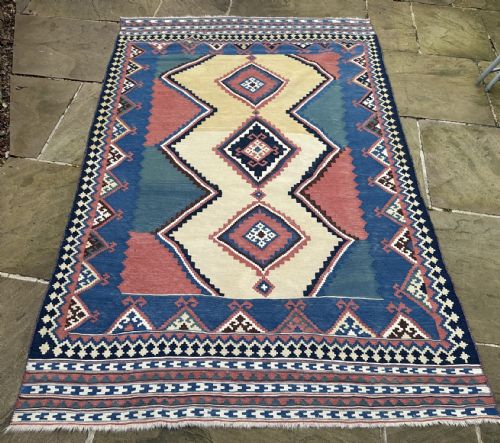
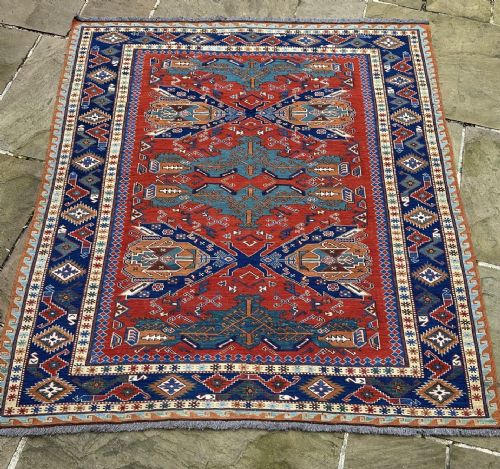
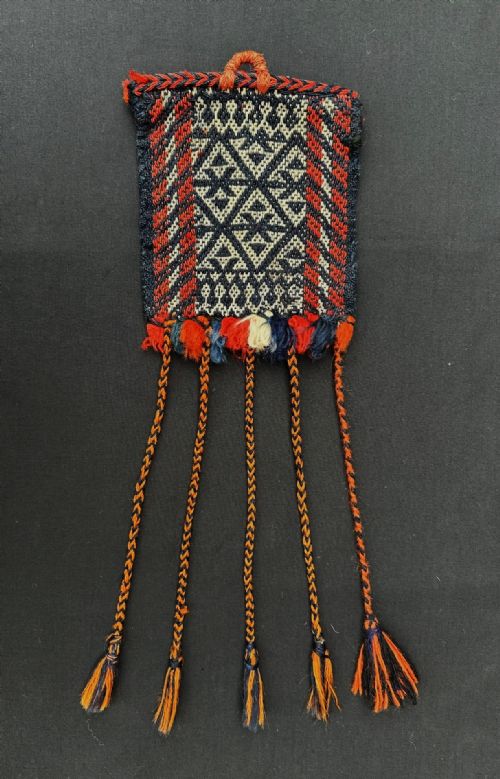
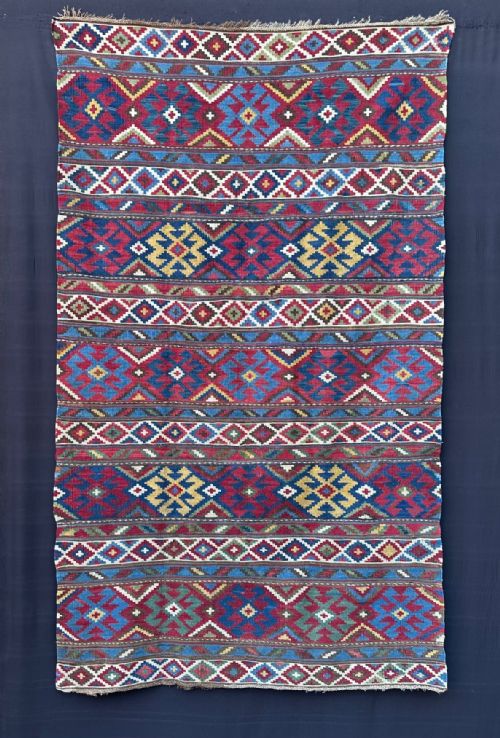
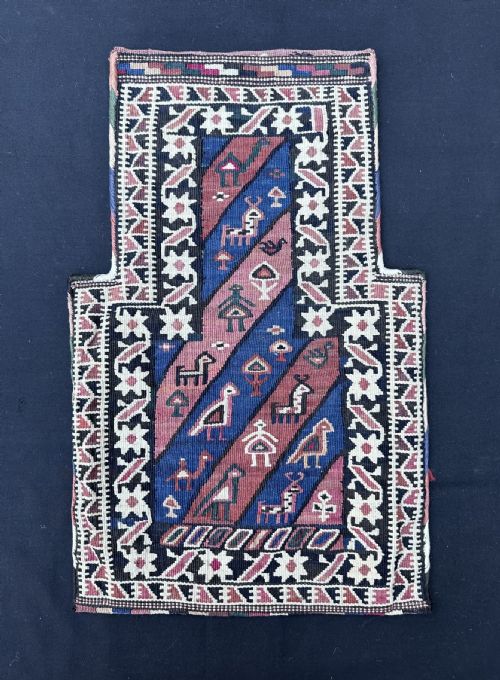
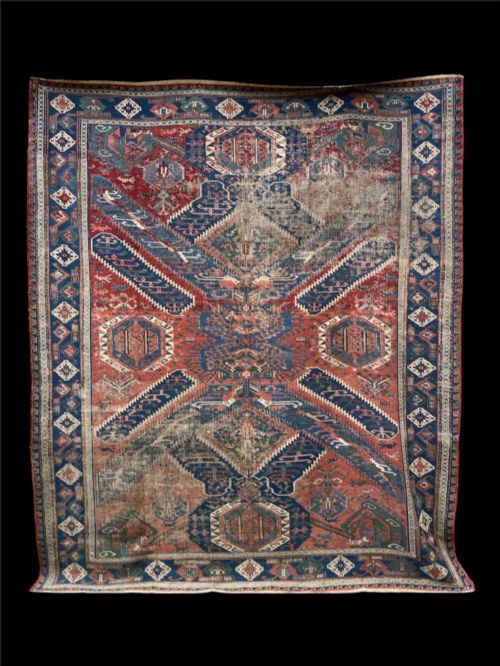
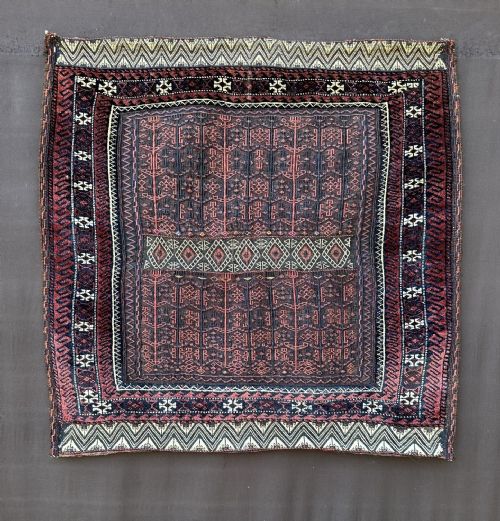
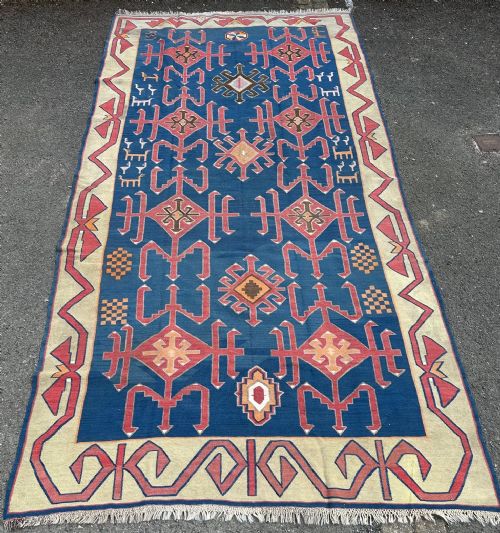
Blue wool flatweave encompasses tribal kilims, salt bags, and flat-woven floor coverings originating from nineteenth and early twentieth-century nomadic workshops.
Blue Wool Flatweave
A blue wool flatweave is a non-pile textile created by nomadic and village weavers across the Caucasus, Persia, Anatolia, and Central Asia. These items include utilitarian objects such as bread sofreh, saddlebags, and utilitarian floor rugs.
The pieces available on this page date predominantly from the late nineteenth century to the mid-twentieth century. Tribal weaving groups including the Afshar, Baluch, Shahsavan, and various Uzbek regions produced these textiles for domestic utility and tribal transport.
Buyers encounter flat-woven kilims, storage bags, and narrow runners bearing regional geometric motifs and traditional tribal iconography. The weave relies on discontinuous weft insertion, producing a flat fabric without a pile surface.
How they were made
Weavers utilised hand-spun wool and occasionally goat hair, working on portable horizontal or vertical looms. Natural and vegetable dyes provided the colour palette, yielding deep blues alongside complementary earthy tones.
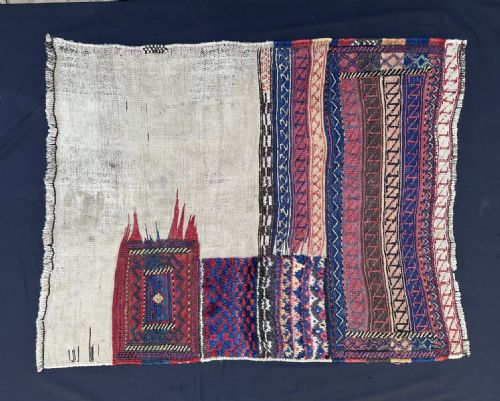
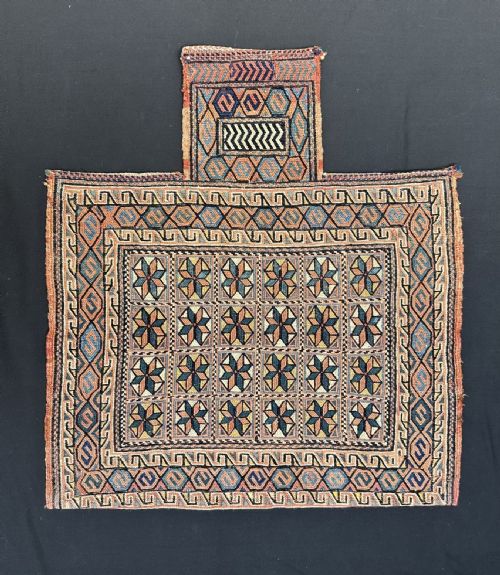
Techniques varied between simple slit-tapestry weave for standard kilims and complex soumak wrapping for structural bags and carpets. Multi-panel construction allowed weavers to create wider carpets by stitching narrow strips together side by side.
The inventory spans production years from the 1870s through to the 1940s in various formats.
What varies in quality
The quality of a flat-woven textile depends on the tightness of the weave and the consistency of the hand-spun wool. Tighter packing of the weft threads creates a more durable fabric that retains its structural integrity over decades of use.
Visual depth in the blue wool flatweave category often relates to the complexity of natural dyeing processes and the precision of geometric pattern execution. Finer tribal pieces display precise alignment in banded designs and complex medallion layouts.
The Blue Wool Flatweave Glossary
- Kilim
- A flat-woven carpet or rug made without a pile by tightly interweaving warp and weft strands. This technique produces a lightweight textile with identical patterns visible on both sides.
- Sofreh
- A woven spread or cloth traditionally utilised for dining, kneading dough, or serving bread within nomadic households. These functional textiles frequently exhibit striking geometric compositions.
- Soumak
- A brocade-like flat-weave technique where coloured weft threads are wrapped around warp threads in specific sequences. This method creates a textured surface with raised patterns and extra durability.
- Mafrash
- A large rectangular storage bag or chest panel used by nomadic tribes for transporting household goods during migration. They are typically constructed in multiple flat-woven or soumak sections.
- Warp
- The stationary vertical threads stretched onto a loom before weaving begins. The weft threads pass over and under these foundational strands to form the fabric.
Blue Wool Flatweave: Frequently Asked Questions
What is a flatweave rug?
A flatweave rug is constructed without a pile by interlacing warp and weft threads directly on a loom. This results in a thin, flexible textile that lies flat on the floor.
Such textiles were traditionally produced by nomadic and village weavers for ease of transport and daily utility. They serve well in modern interiors where low profile rugs are required.
How were tribal salt bags used?
Nomadic tribes utilised salt bags to store and transport coarse rock salt used in daily cooking and animal husbandry. Their dense flat-woven or soumak structures prevented the contents from sifting through.
Today, these smaller bags are often collected as independent textile art pieces. Collectors frequently mount them on walls or display them as decorative accents.
What is a sofreh?
A sofreh is a specialised flat-woven cloth utilised during communal meals or food preparation. nomadic groups laid them directly on the ground for eating or working with dough.
These functional textiles often feature minimalist tribal borders and central fields. Their austere geometric designs suit contemporary minimalist living spaces.
How do I care for antique flatweaves?
Antique flatweaves require gentle treatment, including regular light vacuuming without a rotating brush head. Professional cleaning specific to vintage textiles helps preserve the wool fibres and natural dyes.
Using a quality rug underlay prevents slipping and reduces friction against hard flooring. Keeping them out of direct sunlight prevents the blue wool dyes from fading.