
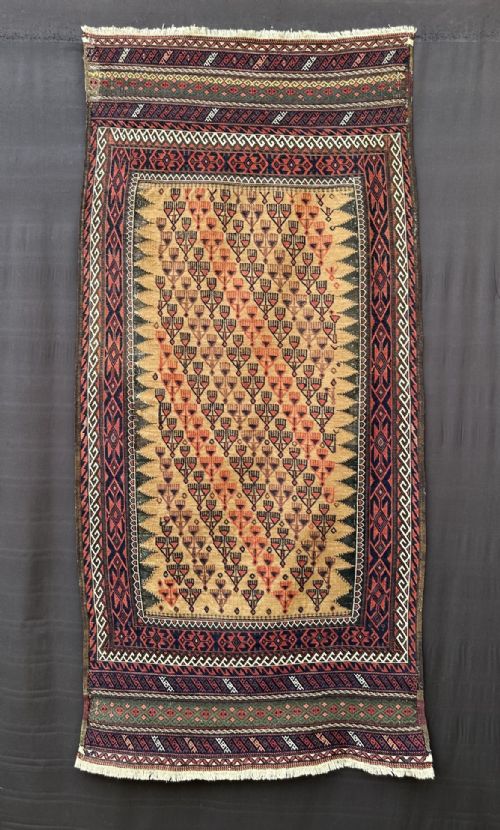
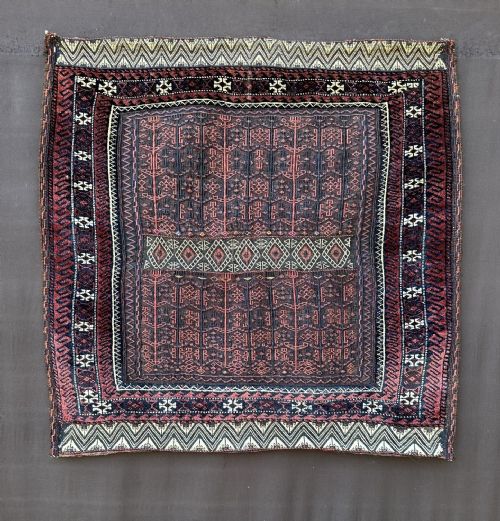
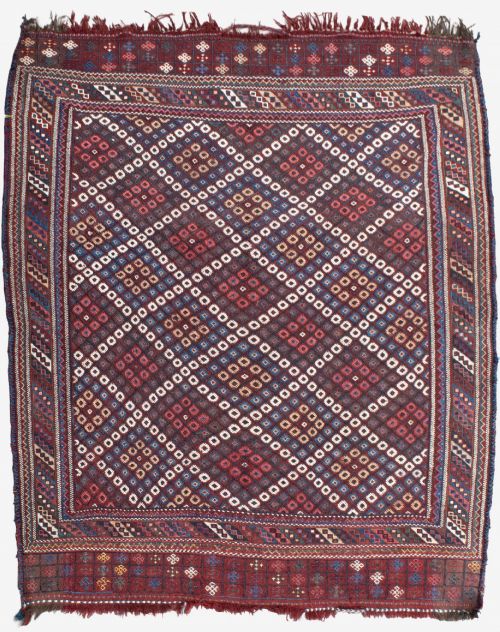


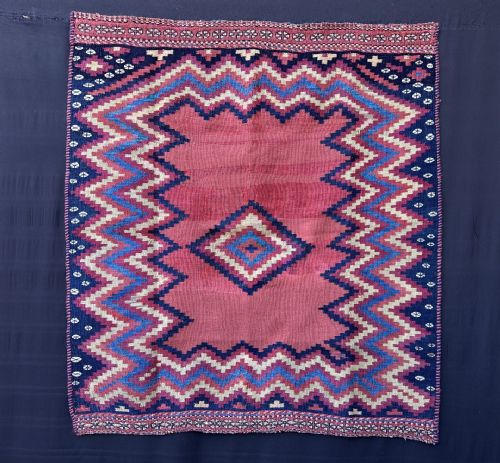


Wool Tribal Sofreh
A wool tribal sofreh is a flatweave textile used for communal dining and bread preparation, prized for its raw geometric artistry.
Wool Tribal Sofreh
When you search for a wool tribal sofreh, you encounter flatweave cloths woven by nomadic and village communities across Persia and Afghanistan. These textiles served domestic functions such as eating cloths or bread spreads rather than floor coverings.
The pieces meeting you on this page span from the late nineteenth century into the early decades of the twentieth century. They originate from specific tribal groups including the Afshar, Timuri, Baluch, Luri, and Bakhtiari.
The forms divide primarily into dining sofreh and bread sofreh, reflecting their original domestic roles within pastoral households. Their designs employ traditional tribal motifs handed down through generations.
How They Were Made
The construction relies fundamentally on wool, frequently supplemented with cotton for foundation warps or structural details, alongside camel hair in select examples. Weavers utilised flatweave techniques to create sturdy, pileless textiles suited to daily utility.
Colour derives from natural dyes applied to hand-spun wool, yielding the rich variations characteristic of nineteenth and early twentieth-century tribal weaving. These organic colourants produce muted, harmonious tones that age with distinct character.
What Varies in Quality
Quality rests upon the tightness of the weave, the handling of the wool, and the precision of the tribal design layout. Finer examples display greater control over the flatweave structure and more intricate geometric patterning.
The depth and complexity of the natural dye palette also distinguish finer pieces from simpler utilitarian cloths. Sofreh displaying exceptional graphic boldness and careful proportioning represent the upper tier of the range.
The Wool Tribal Sofreh Glossary
- Sofreh
- A flatweave textile traditionally used in Persian and Afghan households for spreading meals or preparing bread. These cloths form the central focus of this collection.
- Flatweave
- A textile constructed by interlacing warp and weft threads without knotted pile, creating a smooth surface. This technique produces durable fabrics ideal for portable domestic use.
- Natural Dyes
- Colourants derived from plant, insect, or mineral sources rather than synthetic chemicals. They impart the characteristic varied tones seen in older tribal weaving.
- Warp
- The stationary lengthwise threads stretched tightly on a loom before weaving begins. They form the structural foundation of the textile.
- Weft
- The transverse threads passed horizontally through the warps to create the pattern and fabric. In flatweave textiles, these threads completely cover the warps.
Wool Tribal Sofreh: Frequently Asked Questions
What is a wool tribal sofreh?
A wool tribal sofreh is a flatweave textile made by nomadic and village weavers in Persia and Afghanistan. These cloths functioned primarily as communal dining spreads or bread-making mats.
They are distinguished by their geometric patterns and lack of a knotted pile. Collectors value them for their authentic nomadic origins and direct utility in daily tribal life.
How were these textiles used?
These cloths were laid upon the ground for family or tribal meals, protecting food from dirt and containing crumbs. They were also utilised during the kneading and preparation of flatbread.
Because they served domestic rather than decorative purposes, their designs were rooted in regional tribal traditions. Their portable nature made them essential items for pastoral households.
How do I live with a sofreh?
Many people display these flatweave textiles as wall hangings to showcase their geometric designs and dye variations. They can also be placed on low-traffic floors or tables.
Protecting them from direct sunlight helps preserve the natural dyes used by the weavers. Regular gentle vacuuming without a beater bar keeps the flatweave structure clean.
How do I date a tribal sofreh?
Dating relies on examining the materials, structural characteristics, and natural dye palettes typical of nineteenth and early twentieth-century weaving. Stylistic traits associated with specific tribes also guide dating.
Comparative analysis with documented examples from regions such as Kerman or Khorassan provides further chronological context. Wear patterns and wool preparation reflect the period of production.