


Blue White Earthenware Basin
A blue white earthenware basin brings crisp cobalt decoration and practical ceramic weight straight into a traditional interior.
Blue White Earthenware Basin
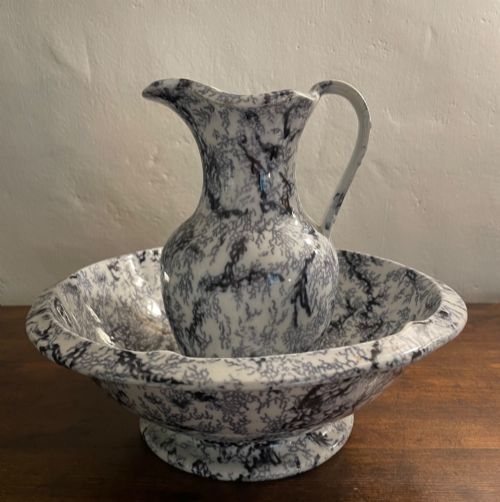
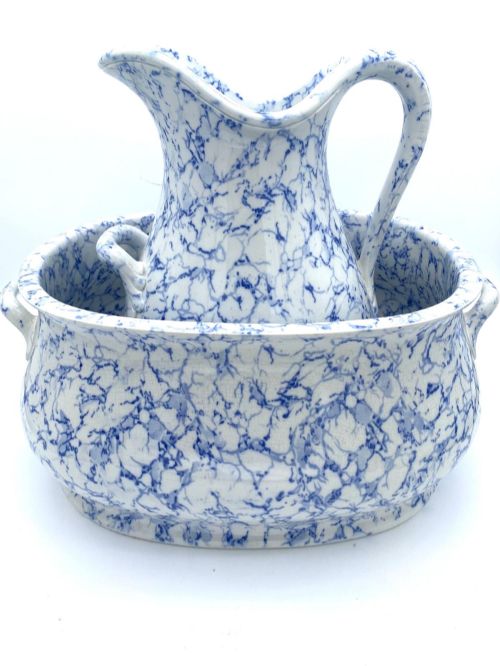
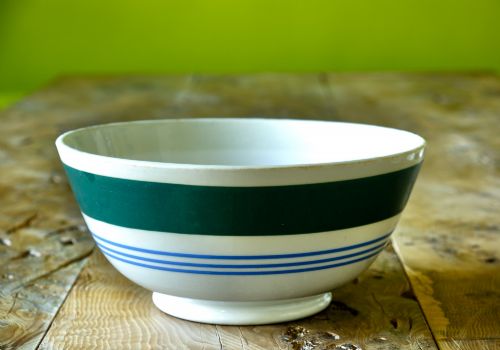
A blue white earthenware basin represents a functional ceramic form shaped for daily washing or display across the eighteenth, nineteenth and twentieth centuries. These vessels appear in forms ranging from large footbaths and toilet basins down to mixing bowls and mess bowls.
The pieces on this page span Georgian, Victorian and Edwardian periods alongside earlier Dutch Delft and French Faience examples. Buyers frequently encounter nineteenth-century Staffordshire items alongside larger footbaths featuring transfer-printed or flow blue patterns.
Makers such as Minton, Spode, Ridgway and Heathcote provide notable examples within the selection, often accompanied by matching water jugs or wash sets. Each item demonstrates the enduring appeal of blue and white ceramic ware in domestic settings.
Materials and methods of production
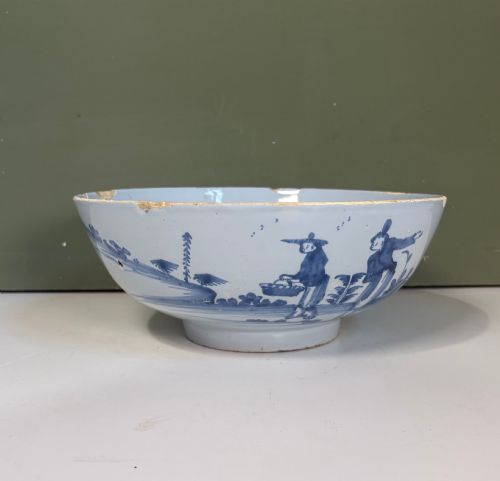
Potters shaped these vessels from earthenware and pearlware bodies before applying tin glaze or clear glaze over cobalt pigment. Tin-glazed examples rely on an opaque white surface painted directly before firing, while later pieces utilise transfer-printing techniques.
Certain vessels receive additional ornamentation such as copper lustre or gold leaf accents applied over the glazed ceramic surface. Firing takes place in traditional kilns, fixing the blue and white pigments deeply into the glaze.
Materials recorded across the selection include standard earthenware, pearlware, tin glaze, copper lustre, and gold leaf highlights.
Distinctions in quality and finish
Quality rests upon the crispness of the transfer-printed pattern and the smoothness of the glaze across large surfaces like footbaths. Earlier pieces show hand-painted brushwork with subtle variations in tone where the cobalt pooled in the ceramic body.
Substantial weight and balanced potting indicate superior manufacture, particularly in large bowls and wash sets intended for heavy daily use. The presence of clear maker marks or distinct patterns elevates the standing of an individual basin.
Minton·Spode·Ridgway·Heathcote·T G Green Pottery
The Blue White Earthenware Basin Glossary
- Earthenware
- Porous pottery fired at lower temperatures, requiring a glaze to achieve water resistance. It forms the core material for the majority of these basins.
- Pearlware
- A refined earthenware developed in the late eighteenth century featuring a bluish glaze that masked the natural cream colour of the clay body.
- Flow Blue
- A nineteenth-century transfer-printing technique where lime or ammonia vapour was introduced into the kiln to blur the cobalt design intentionally. This created a rich, hazy aesthetic popular in Staffordshire wares.
- Tin Glaze
- A lead glaze rendered opaque by the addition of tin oxide, providing a white surface for painted decoration. It is characteristic of early Delft and faience pieces.
- Transfer-Printed
- A method of applying intricate designs to ceramics by pressing a paper sheet printed with metallic oxide onto the biscuit or glazed surface. It allowed complex pictorial scenes to be replicated rapidly.
- Footbath
- A deep, oblong or oval vessel designed for washing feet, frequently utilised as a decorative planter or wine cooler today.
Blue White Earthenware Basin: Frequently Asked Questions
How were these basins originally used?
These vessels served practical domestic roles such as personal washing in bedrooms, mixing ingredients in kitchens, or communal dining in naval messes. Large footbaths held water for bathing feet in formal dressing rooms.
Over time, many of these utilitarian items transitioned into decorative objects used for floral displays or general interior styling.
Can I use an antique basin daily?
Most antique earthenware basins remain structurally sound for gentle daily tasks, though their porous bodies and historic glazes require careful handling. Hand washing preserves the delicate ceramic surfaces and prevents thermal shock.
Harsh modern detergents can damage older glazes, so non-abrasive cleaning methods suit these pieces best.
How do I date a blue and white basin?
Dating relies upon examining the ceramic body, glaze characteristics, and any maker marks stamped or printed on the base. Pearlware bodies and tin glazes typically point towards the eighteenth or early nineteenth century.
Flow blue patterns and heavy ironstone bodies generally indicate mid to late nineteenth-century manufacture under Victorian or Edwardian production methods.
What is the difference between Delft and Staffordshire pieces?
Delft pieces utilise a tin glaze over a softer earthenware body, often showing hand-painted cobalt scenes influenced by Chinese porcelain. Staffordshire wares frequently employ transfer-printing on harder earthenware or pearlware bodies.
Staffordshire pieces also tend to feature maker names and structured patterns like flow blue or scenic landscapes.