
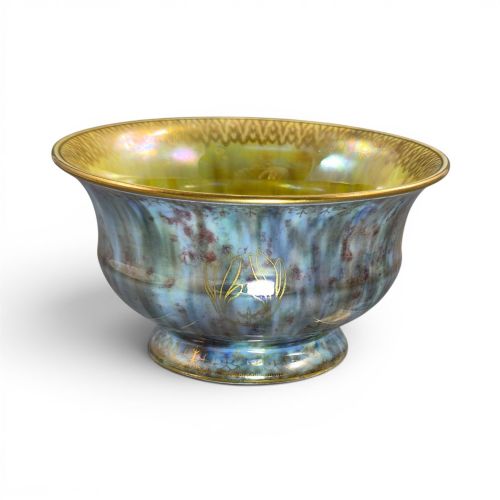


Blue Gold Porcelain Bowl
A blue gold porcelain bowl brings together deep cobalt tones and rich metallic gilding across periods ranging from the eighteenth century to the art deco era.
Blue Gold Porcelain Bowl
When you search for a blue gold porcelain bowl, you encounter a variety of forms including decorative bowls, serving dishes, cachepots, and tea bowls spanning several centuries. These vessels showcase the enduring appeal of contrasting rich blue pigments with metallic gold leaf and gilding.
The pieces listed on this page run from Georgian cabinet items and Regency porcelain to Edwardian punch bowls and intricate Meiji period Satsuma wares. You are most likely to meet decorative bowls and serving vessels featuring cobalt enamel and gilded details.
Makers represented in these categories range from historic English factories like Wedgwood, Coalport, and Worcester to Japanese studios such as Kinkozan Kyoto Satsuma. Each piece reflects the specific decorative tastes of its period, from botanical patterns to dramatic lustre landscapes.
How they were made
Potters shaped the base bodies from ceramic materials including porcelain and earthenware before applying cobalt blue glazes or enamels. This intense blue ground provided the ideal contrasting surface for subsequent metallic decoration.
Craftsmen then applied gold leaf, gilt, or gilding by hand, often firing the pieces multiple times to fuse the metallic lustre permanently to the glaze. Techniques ranged from delicate botanical painting to complex lustre effects requiring precise kiln control.
Moonlit samurai battles and leaping dragons populate these golden bowls, proving that historic potters possessed wonderfully dramatic imaginations.
What varies in quality
The division between standard production and exceptional work rests on the precision of the hand-painting and the depth of the gilding. Superior items display intricate brushwork, such as detailed landscapes or figures, executed with clear control over the cobalt and gold layers.
Overall artistic ambition and the complexity of the design also determine the standing of a piece. Monumental proportions, signed artist works, and specialised decorative techniques distinguish the finest examples from simpler utilitarian vessels.
Wedgwood·Doulton Burslem·Coalport·Kinkozan Kyoto·Royal Worcester·Flight Barr And Barr
The Blue Gold Porcelain Bowl Glossary
- Cobalt Enamel
- A vitreous dark blue colouring applied to ceramic surfaces before or during firing. It provides the deep background tone essential to these designs.
- Gilding
- The application of gold leaf or powdered gold to the surface of porcelain. This technique creates the metallic highlights that contrast with the blue body.
- Lustre
- A type of ceramic glaze that produces an iridescence through the metallic oxides it contains. It catches the light and adds shifting colour dimensions to the vessel.
- Cabinet Bowl
- A small or decorative display vessel intended for visual appreciation rather than heavy domestic use. These pieces often feature fine hand-painted scenes.
- Cachepot
- An ornamental flowerpot holder designed to contain a plain inner pot. They frequently adopt robust forms suitable for interior display.
Blue Gold Porcelain Bowl: Frequently Asked Questions
How do I care for a gilt porcelain bowl?
Wash these delicate vessels by hand using lukewarm water and a mild detergent. Avoid abrasive sponges or harsh chemicals that can wear away the fragile gold gilding over time.
Keep them out of direct sunlight and modern dishwashers to preserve the integrity of the cobalt enamel and metallic surfaces. Gentle handling ensures the longevity of antique decorations.
Were these bowls used for serving food?
Many examples, such as the Georgian serving dishes and punch bowls, were originally designed for dining or social gatherings. Their robust ceramic construction suited functional use during period meals.
Other smaller vessels, including cabinet items and miniature lustre pieces, served primarily as decorative ornaments. Examining the interior wear helps indicate whether a piece saw active table service.
How can I tell the period of a bowl?
Examine the style of the decoration, the form of the ceramic body, and any manufacturer marks stamped or painted on the base. Georgian and Regency pieces often feature distinct hand-painted botanical or topographical scenes.
Later Edwardian and art deco pieces embrace different stylistic movements like Satsuma or lustre finishes. Comparing these stylistic markers to known factory production dates clarifies the era.
What is the difference between porcelain and earthenware?
Porcelain is fired at much higher temperatures, resulting in a dense, vitrified body that is often translucent when held to the light. It provides a smooth, hard surface for detailed blue and gold painting.
Earthenware uses a more porous clay body that requires a complete glaze layer to become impermeable. It generally feels heavier and lacks the fine translucency of true porcelain.