
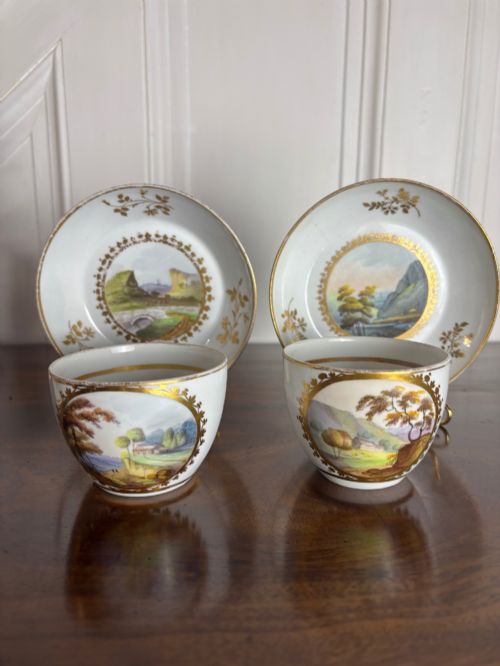
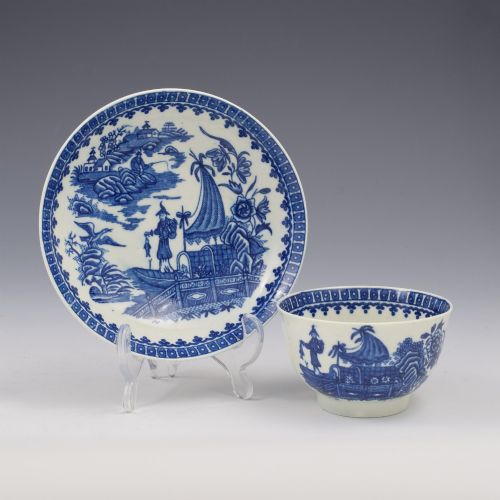


Georgian Tea Bowl Saucer
A georgian tea bowl saucer brings the tactile elegance of eighteenth-century tea drinking directly to your cabinet, offering miniature porcelain studies in period pattern and form.
Georgian Tea Bowl Saucer
When you search for a georgian tea bowl saucer, you encounter small porcelain drinking vessels and matching shallow dishes intended for the consumption of tea during the eighteenth century and the regency period. These sets survive from English manufactories, most notably from Worcester, alongside examples from Derby, Lowestoft, New Hall, Coalport, and Minton.
The objects take the form of handleless tea bowls paired with their saucers, occasionally expanding into trios that include coffee cans. They reflect the domestic rituals of tea drinking when leaves were brewed in porcelain pots and poured into vessels designed to cradle in the palm.
How they were made
Potters utilised soft-paste porcelain, bone china, creamware pottery, and soapstone bodies, shaping them on the wheel or moulding them into fluted and panelled forms. Cobalt glaze provided the deep underglaze blue for painted motifs, while enamel colours added palette variety.
Gilding and gold leaf finished many finer surfaces, applied by hand to borders and floral sprays before being fired in a kiln to bond the precious metal to the glaze.
Drinkers once poured hot tea from the bowl into the saucer to cool it rapidly before sipping.
What varies in quality
Quality rests in the crispness of the porcelain moulding, the delicacy of the potting, and the precision of the hand-painting. Early Worcester and Flight period pieces demonstrate rigorous control in their cobalt blue scale grounds and gilt highlights.
Factory decoration distinguishes standard domestic wares from ambitious service pieces, such as those associated with named bishops or royal patrons. The purity of the porcelain body and the preservation of original gilding dictate the standing of each example.
Worcester·Derby·Lowestoft·New Hall·Coalport·Minton
The Georgian Tea Bowl Saucer Glossary
- Tea bowl
- A small, handleless drinking vessel designed for hot tea before the widespread adoption of handled cups. It requires the drinker to hold the warm porcelain directly.
- Soft-paste porcelain
- An artificial ceramic composition fired at lower temperatures than hard-paste porcelain, possessing a warm, slightly creamy body frequently found in eighteenth-century English wares.
- Cobalt glaze
- An intense blue metallic oxide applied beneath the transparent glaze before firing, remaining stable at high kiln temperatures and creating the characteristic deep blue decoration.
- Flight period
- A chronological phase in the history of the Worcester porcelain factory denoting the management under Martin Flight and his family from the late eighteenth century onward.
- Shanked
- A moulded surface decoration featuring vertical or spiral fluting that creates faceted ribs around the body of a tea bowl or saucer.
Georgian Tea Bowl Saucer: Frequently Asked Questions
How do I date a tea bowl saucer?
Dating relies upon stylistic indicators, factory marks, and the specific composition of the ceramic body, such as soft-paste porcelain characteristic of the eighteenth century. Comparative study of painterly patterns and blue and white printing helps narrow the decade of production.
Changes in factory ownership, such as the transition to the Flight period at Worcester, provide precise chronological markers for pieces bearing specific signatures or characteristic forms.
Why did these tea bowls not have handles?
Early tea drinking followed Asian traditions where handleless bowls allowed the drinker to gauge the temperature of the hot liquid through the thin porcelain wall. This design remained standard across eighteenth-century English manufactories.
Saucers served a dual purpose during this period, often used to cool small amounts of tea poured from the bowl before drinking.
What is a tea trio?
A tea trio consists of a matching tea bowl, saucer, and a coffee can, accommodating the consumption of both popular hot beverages from a single matched set. These composite groups demonstrate cohesive factory decoration across different vessel forms.
They survive less frequently than standard pairs, representing more substantial commissions for domestic tea service.
How should I display porcelain tea bowls?
Displaying these small vessels requires secure cabinet placement away from direct sunlight, utilising small acrylic stands to tilt the saucer upright behind the bowl. This arrangement reveals both the interior painted well of the saucer and the exterior pattern of the bowl.
Maintaining stable ambient humidity protects the historic enamel decoration and gilt surfaces from unnecessary degradation.