

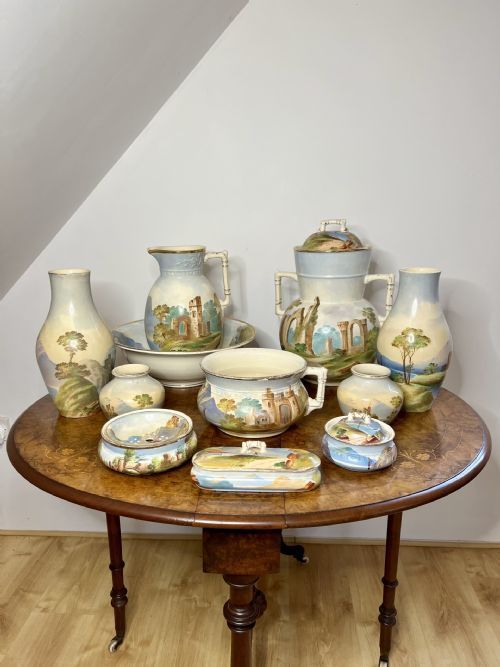


Victorian Blue Wash Basin
These Victorian blue wash basins are functional ceramic fixtures designed for personal hygiene before modern plumbing, offering striking hand-glazed patterns for daily use.
Victorian Blue Wash Basin
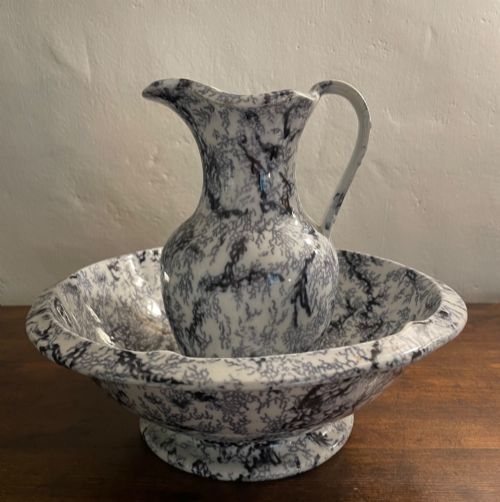
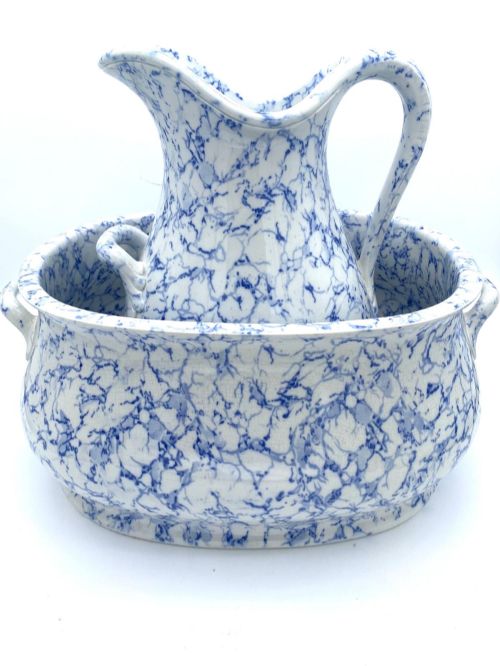
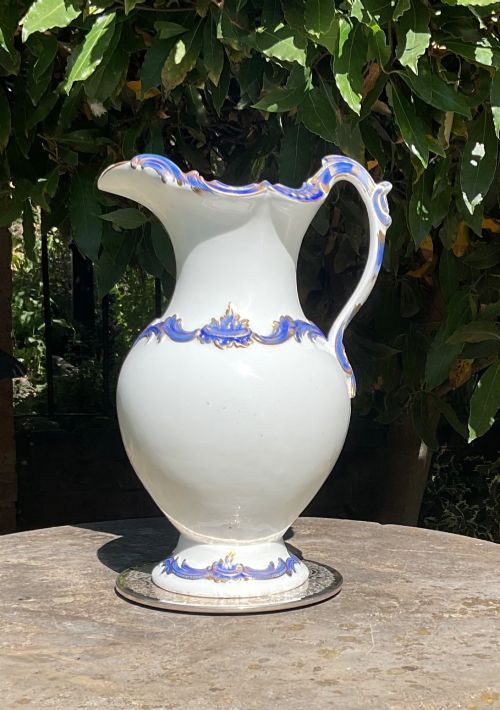
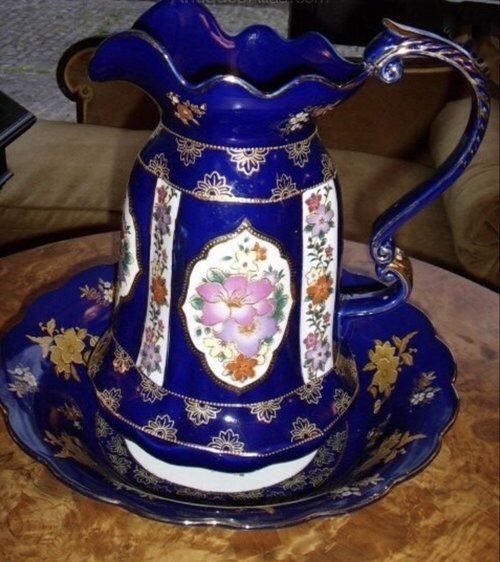
A victorian blue wash basin forms the core of a traditional bedroom washing set, frequently accompanied by a matching water jug or pitcher. You will encounter these sanitary vessels across the nineteenth century and into the Edwardian period, often finished in rich cobalt blue glazes or transfer-printed motifs.
The styles range from early nineteenth-century Staffordshire flow blue pieces and Minton marble patterns to bold Victorian Gaudy Welsh earthenware. These larger basins served as the central bowl on wooden washstands before integrated bathrooms became standard domestic fixtures.
Materials and construction methods
Potters shaped these vessels from earthenware, ironstone, and porcelain, applying thick ceramic glazes to seal the porous clay for holding water. Many examples utilise flow blue transfer printing, where the cobalt colour deliberately bled into the wet glaze during firing to create a soft, hazy aesthetic.
Some refined pieces incorporate delicate gold leaf or gilt highlights painted over the fired glaze to accent floral and marbled patterns. Makers like Minton and Doulton Burslem utilised durable ceramic bodies designed to withstand daily washing routines.
Listings span earthenware, ironstone, and porcelain across the nineteenth and early twentieth centuries.
Assessing craftsmanship and finish
Quality in a victorian blue wash basin lies in the crispness of the transfer printing and the depth of the cobalt blue glaze. Superior potteries achieved an even, smooth ceramic surface free from heavy firing warps or intrusive kiln flaws.
The artistic ambition of the pattern distinguishes standard utility wares from exceptional decorative commissions. Pieces featuring intricate hand-painted details or matched multi-piece sets demonstrate greater ceramic skill than simple utilitarian basins.
Minton·Masons·Doulton Burslem
The Victorian Blue Wash Basin Glossary
- Flow blue
- A nineteenth-century transfer-printing technique where lime vapour was introduced into the kiln to deliberately blur the cobalt blue design. This created a soft, painterly aesthetic across the ceramic surface.
- Gaudy Welsh
- A style of colourful pottery decorated with cobalt blue, copper lustre, and iron-red enamel highlights. It was produced primarily for domestic use in Welsh and English households.
- Ironstone
- A patented hard-pasting ceramic invented to rival true porcelain in durability and strength. It provides a heavy, resilient body well suited for large bathroom jugs and basins.
- Earthenware
- A porous pottery body fired at lower temperatures than porcelain or ironstone. It requires an impermeable glaze to hold water effectively for daily washing.
Victorian Blue Wash Basin: Frequently Asked Questions
What was a victorian blue wash basin used for?
These basins sat upon bedroom washstands to hold water for morning washing and grooming before indoor plumbing became common.
Servants would fill the matching water jug from a larger pitcher or cistern, allowing individuals to wash their face and hands without a bathroom.
How do I date a blue wash basin?
Dating relies on identifying the ceramic body, glaze characteristics, and any factory marks stamped on the underside. Early nineteenth-century pieces often feature flow blue transfer printing, whereas Edwardian examples lean towards brighter white earthenware and simpler floral designs.
Examining the style of the handle and the weight of the ironstone also helps narrow the production window within the broader Victorian era.
Are these basins watertight for daily use?
Most of these ceramic pieces remain fully functional and watertight thanks to their original glazed surfaces. However, historical hairline cracks or chips can develop over time, so careful inspection is sensible if you plan to hold water.
Many collectors prefer to display them dry or use them safely for holding decorative items rather than heavy daily washing.
What is the difference between ironstone and porcelain?
Ironstone is a dense, opaque, and highly durable ceramic developed to resist chipping during heavy household chores. Porcelain is typically finer, more translucent, and traditionally fired at higher temperatures for decorative tableware and sanitary sets.
Both materials appear across nineteenth-century wash sets, with ironstone favoured for robust utility and porcelain reserved for finer finishes.