
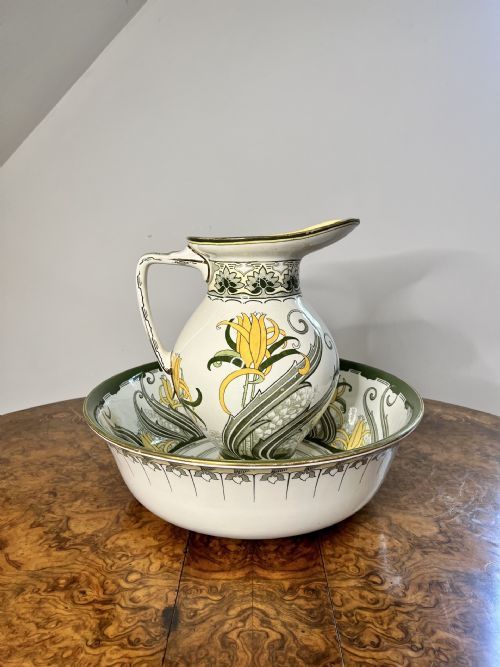
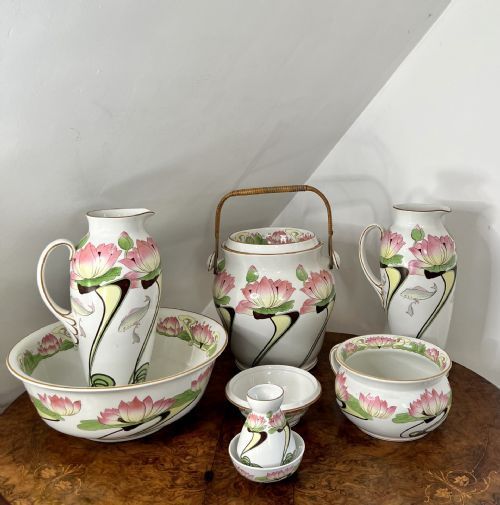


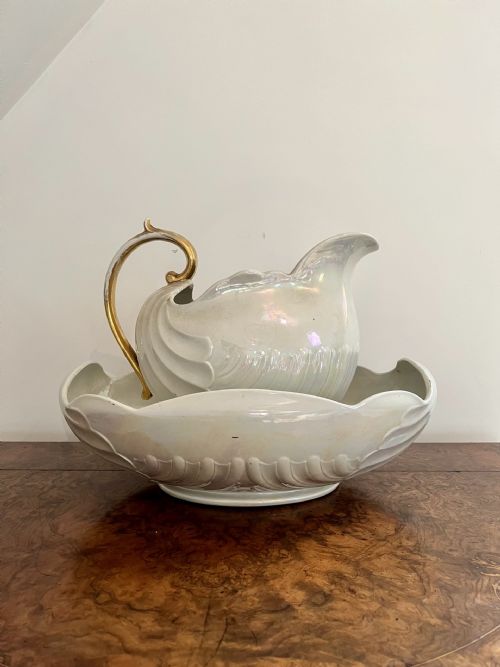

Edwardian Washstand Bowl
These edwardian washstand bowl pieces bring classic ceramic craft to the washroom, offering genuine period charm for traditional interiors.
Edwardian Washstand Bowl
When you search for an edwardian washstand bowl, you find ceramic basins made to sit on wooden washstands before plumbed bathrooms took over homes. These items appear most frequently as part of jug and bowl sets, or broader bathroom and washstand sets.
The pieces on this page span the Edwardian period alongside Victorian and later dates, showing styles from Art Nouveau and Aesthetic Movement to Victorian Chinoiserie. Earthenware and glazed ceramic dominate, alongside porcelain and enamel vessels.
Forms include dedicated wash basins, washware, and chamber pots, often paired with matching jugs. Most examples come from English potteries and makers active around nineteen hundred.
How they were made
Potters shaped these vessels from earthenware or porcelain, applying smooth glazes to seal the porous clay for daily washing use. Many pieces feature printed blue and white patterns or hand-painted decorative motifs.
Some finer examples incorporate gilt or gold leaf detailing along the rims and handles, elevating utilitarian items into decorative chamber pieces. Workshops also paired ceramic bowls with bentwood frames for specialised wash or shaving stands.
Materials recorded across the inventory include earthenware, porcelain, enamel, and gold leaf applied over glazed ceramic surfaces.
What varies in quality
Quality in an edwardian washstand bowl rests on the clarity of the ceramic body and the crispness of the applied glaze or transfer print. Finer porcelain and controlled earthenware firing separate standard utility ware from superior decorative sets.
The presence of named maker marks, such as Doulton Burslem or Shelley, alongside hand-finished gilt details distinguishes standard production items from workshop output of higher distinction.
Doulon Burslem·Medway·mark Jones & Sons·Shelley
The Edwardian Washstand Bowl Glossary
- Earthenware
- A type of pottery made from clay fired at relatively low temperatures, requiring a glaze to become impermeable to water. It forms the body of most everyday washbowls.
- Porcelain
- A hard, fine-grained ceramic fired at high temperatures until vitrified, resulting in a white, non-porous body. It represents the more refined end of washstand ceramics.
- Glaze
- A glassy coating fused to the ceramic body during firing to give a smooth, waterproof finish. It protects the porous clay beneath from water damage.
- Transfer print
- A decoration method where a design is engraved on a copper plate, printed on paper, and transferred onto the ceramic surface. This technique enabled intricate blue and white patterns on washware.
- Gilt
- A thin layer of gold or gold leaf applied to the ceramic surface for decoration. It is typically found along the rims of finer period sets.
Edwardian Washstand Bowl: Frequently Asked Questions
What is an edwardian washstand bowl used for?
These bowls held water for washing hands and faces in bedrooms before running indoor plumbing became standard practice. They sat inside wooden washstands alongside matching pitchers.
Today, buyers use them as decorative planters, umbrella stands, or traditional display items in period bathrooms and hallways.
How do I date an edwardian washstand bowl?
Dating relies on stylistic clues like Art Nouveau curves, Aesthetic Movement motifs, or specific blue and white transfer patterns typical of the era. Maker marks stamped on the ceramic base provide the most reliable chronological anchor.
Pieces range from late Victorian examples through the Edwardian heyday up to the nineteen twenties.
Are these bowls waterproof?
Most pieces feature a glazed ceramic or porcelain body that seals the underlying clay against moisture. This makes them fully capable of holding water for practical use today.
Items with extensive enamel or gilt decoration benefit from gentle hand washing to preserve the surface finish.
What styles are common in these wash sets?
The selection includes traditional blue and white patterns, floral Edwardian motifs, and flowing Art Nouveau lines. Victorian Chinoiserie and Aesthetic Movement designs also appear frequently among the listings.
These varied aesthetic movements reflect the changing tastes of British households across the turn of the twentieth century.