
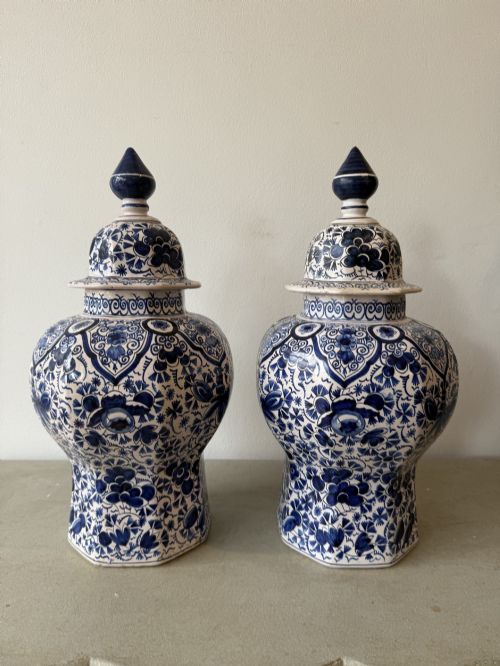


Blue White Delftware Vase
A blue white delftware vase brings the crisp contrast of cobalt pigment on tin glaze into a room, offering centuries of ceramic history.
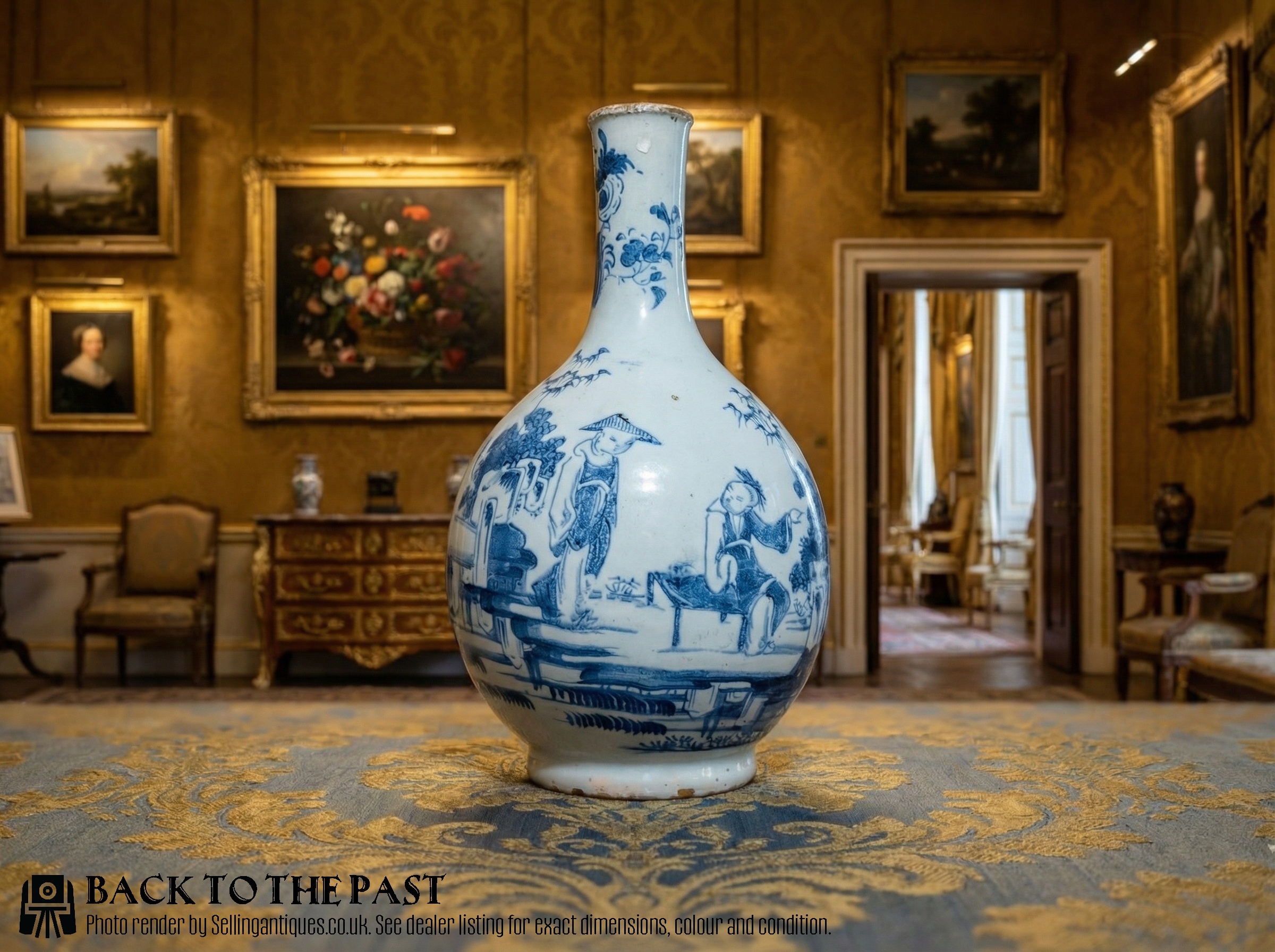
Blue White Delftware Vase
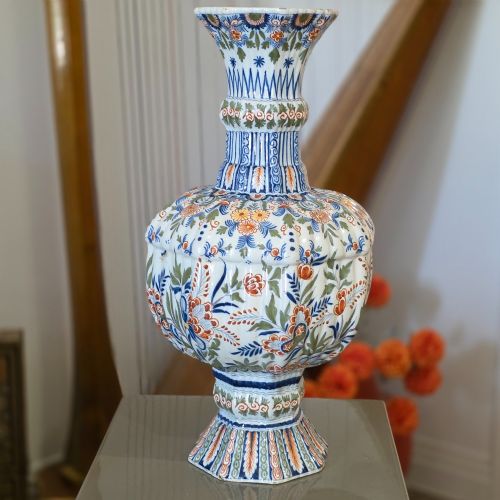
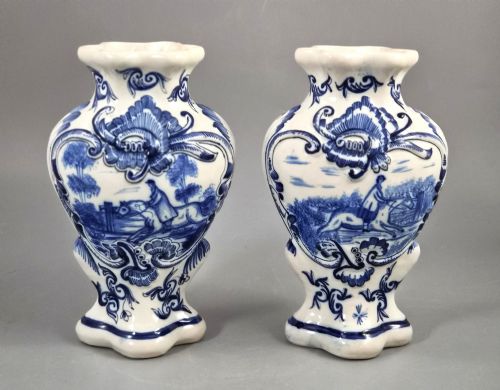
A blue white delftware vase is a tin-glazed earthenware vessel that draws on traditions from the seventeenth century onwards. When you search for this phrase, you encounter forms ranging from simple jars and baluster shapes to lidded vessels and garden urns. The pieces span periods from the seventeen hundreds through to the nineteenth century, reflecting Dutch, English, and French origins.
The most common examples on this page are eighteenth-century vessels, alongside nineteenth-century interpretations and French faience pieces. These range from cabinet vases to larger decorative pieces, including items later adapted as table lamps. The variety encompasses sober Dutch Baroque profiles and more elaborate Chinoiserie or Rococo revival designs.
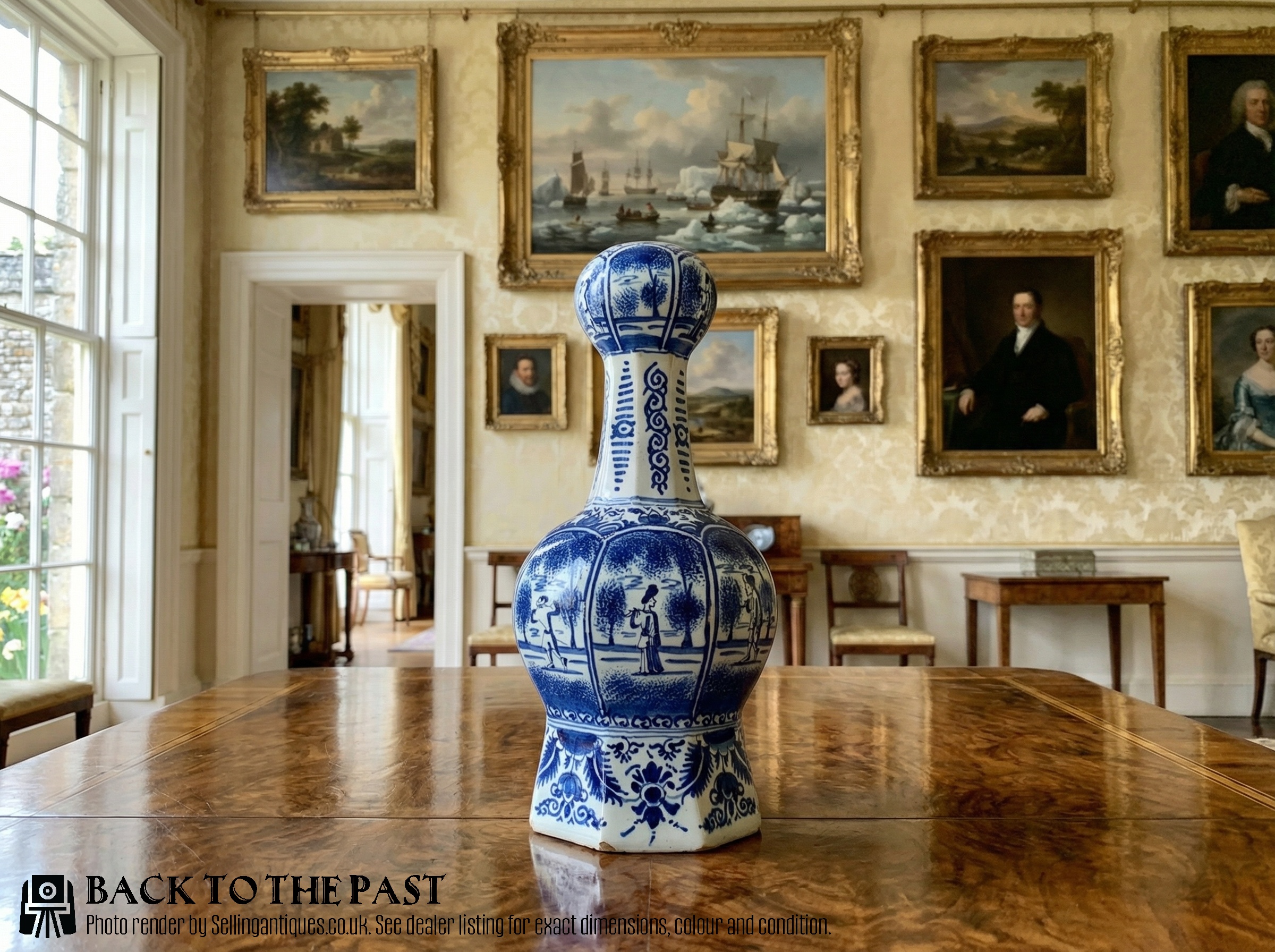
Materials and production methods
Makers shaped earthenware bodies before coating them in a liquid tin glaze that provided an opaque white surface for painting. Cobalt pigment was then applied by hand, sinking into the absorbent glaze before firing to achieve the characteristic deep blue decoration.
Vessels from different centres employ local clays finished with tin glaze and cobalt. Some examples incorporate later metal fittings or rewiring when converted for domestic lighting use.
Blue White Delftware Vase Retail Price Guide 2026
Typical asking prices for blue white delftware vase among the pieces listed under this phrase on Sellingantiques today, from the lower quarter to the upper quarter. They describe what is for sale here now, not the wider market.
Several centuries ago, potters painted fierce birds and delicate flora onto mud and tin, creating blue and white survivors that still watch over our rooms today.
Judging quality in delftware
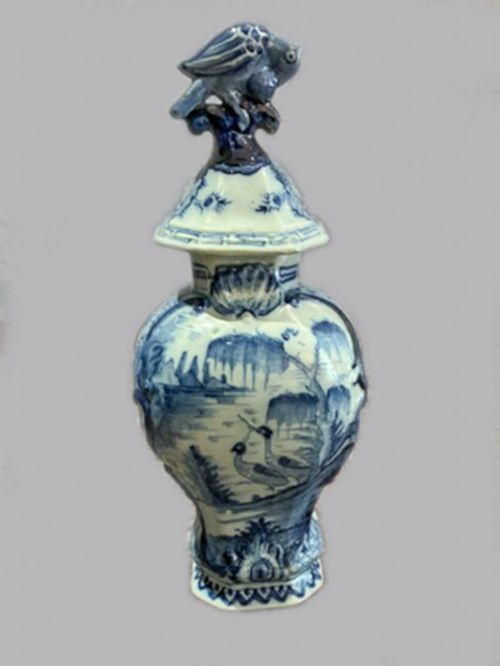
Quality rests in the crispness of the hand-painted cobalt design and the purity of the white tin glaze. Stronger pieces display confident brushwork, such as detailed Chinoiserie birds and flowers, rather than stiff or muddy execution.
The precision of the earthenware form and the stability of the glaze finish dictate the standing of an individual piece. Earlier seventeenth and eighteenth-century examples often command attention for their historical depth and direct potting characteristics.
Fourmaintraux-Courquin·Louis Victor
The Blue White Delftware Vase Glossary
- Tin-Glaze
- Earthenware pottery coated with a lead glaze made opaque by the addition of tin oxide. This creates the smooth white canvas essential for traditional blue and white painting.
- Cobalt Pigment
- A metallic oxide colourant used under the glaze to produce deep blue decoration on ceramics. It withstands high firing temperatures without losing its intense hue.
- Chinoiserie
- European artistic styles reflecting Chinese motifs and decorative schemes. This aesthetic appears frequently on seventeenth and eighteenth-century delftware vessels.
- Baluster
- A cylindrical or faceted vase form that swells towards the lower portion. This classic silhouette provides balance and presence on a table or mantel.
- Faience
- European tin-glazed earthenware, particularly associated with French and continental workshops. It shares technical roots with Dutch delft production.
Blue White Delftware Vase: Frequently Asked Questions
How do I date an old delft vase?
Dating relies on stylistic clues, potting weight, and the characteristics of the tin glaze and cobalt painting. Eighteenth-century examples typically show different potting techniques compared to nineteenth-century revivals.
Examine the base and body for signs of age, such as glaze wear or manufacture irregularities, which help distinguish period pieces from later interpretations.
Are all blue and white delft vases Dutch?
While Dutch delftware forms a significant part of the tradition, English delftware from potteries like Lambeth and French faience from makers at Desvres also contributed distinct pieces.
Each regional centre developed slight variations in clay bodies, glaze tones, and painting styles while using the same fundamental tin-glazed earthenware technique.
Why are some delft vases wired as lamps?
Many antique vases were converted into table lamps during the twentieth century to give fragile ceramic vessels a practical domestic function. This adaptation often involved drilling or mounting without necessarily harming the core body.
Collectors weigh the presence of old conversions against the desire for original, unaltered display vessels when selecting pieces for a room.
What is Chinoiserie on delftware?
Chinoiserie refers to European interpretations of East Asian art, featuring imaginary landscapes, flowers, and figures painted in cobalt blue. This style was immensely popular during the seventeenth and eighteenth centuries.
On delft vases, these scenes are rendered with spontaneous brushstrokes that adapt oriental motifs to European ceramic forms.