


Blue White Faience Vase
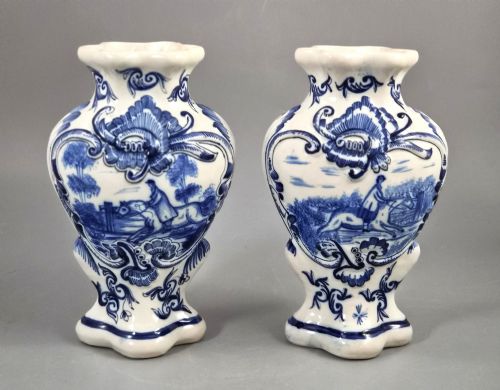
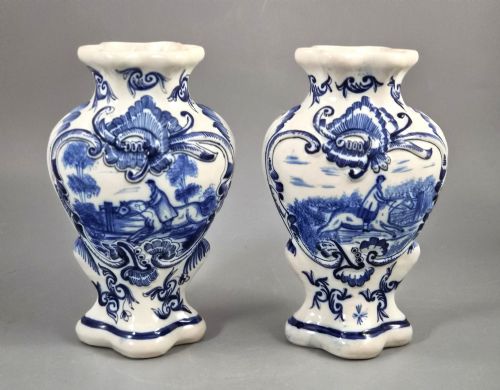
These blue white faience vase examples bring tin-glazed earthenware and cobalt pigment together in forms ranging from Dutch Baroque to French Rococo Revival.
Blue White Faience Vase
A blue white faience vase represents tin-glazed earthenware shaped into vessels for display, decoration, or lighting. The selection spans centuries of European pottery traditions, connecting Dutch Delft production with French and Italian interpretations.
Most pieces seen here originate from the seventeenth, eighteenth, and nineteenth centuries. Vases, decorative urns, and garden planters dominate the forms, alongside pieces later converted into table lamps.
The aesthetic relies on cobalt pigment applied over a tin glaze to create blue and white ornamentation. Buyers frequently encounter Dutch Baroque and French Rococo Revival styles within these listings.
Materials and construction
Makers shaped clay into earthenware bodies before applying an opaque tin glaze. This glaze provided a smooth white surface suitable for absorbing cobalt pigment painted by hand.
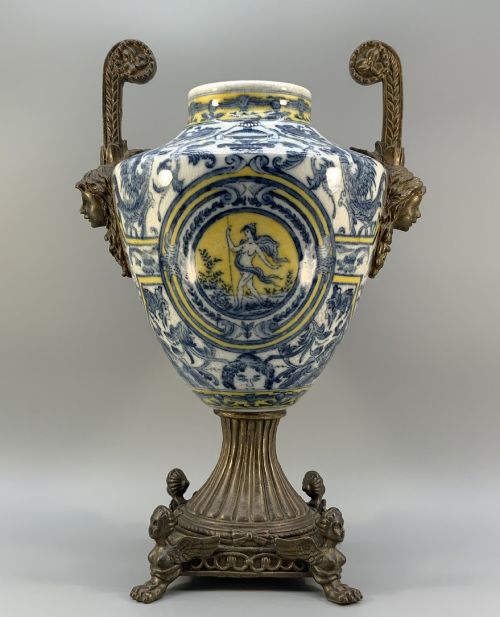
Certain nineteenth-century pieces incorporate cast bronze mounts fitted to the ceramic body. Kiln firing fixed the cobalt decoration beneath or within the glaze layer to achieve the characteristic blue and white palette.
Listings feature earthenware and ceramic bodies finished with tin glaze, cobalt pigment, and occasional bronze mounts.
Assessing quality in tin-glazed ceramics
Quality rests in the crispness of the cobalt brushwork and the stability of the tin glaze over the earthenware body. Superior examples display confident, detailed painting that remains sharp against the white background.
The complexity of form and the presence of integrated metalwork influence the character of individual pieces. Well-balanced proportions and careful handling of revival styles elevate specific vessels above standard production.
Fourmaintraux Courquin·Cantagalli
The Blue White Faience Vase Glossary
- Faience
- Tin-glazed earthenware produced in France, Italy, and other parts of Europe. The term covers a wide range of decorative domestic vessels.
- Tin-Glaze
- An opaque white glaze containing tin oxide applied to pottery before firing. It creates the pale background necessary for cobalt blue painting.
- Cobalt Pigment
- A mineral colourant used to paint blue designs onto ceramic glazes. It withstands high kiln temperatures without losing intensity.
- Chinoiserie
- European artistic styles reflecting Chinese motifs and decorative schemes. Artisans applied these patterns extensively to seventeenth and eighteenth-century ceramics.
- Delft
- Tin-glazed earthenware originating from the town of Delft in the Netherlands. The style became synonymous with blue and white Dutch pottery.
Blue White Faience Vase: Frequently Asked Questions
How do I clean an old faience vase?
Dust the surface gently with a dry, soft cloth to remove everyday particles. Avoid harsh chemical cleaners and do not submerge pieces with metal mounts in water.
Tin glaze can be sensitive to moisture if the earthenware body beneath has sustained damage or hairline cracks over the centuries.
Can I use these vases for fresh flowers?
Most antique tin-glazed vessels function best as decorative display pieces rather than practical containers for water. Historic earthenware remains porous and internal moisture can compromise the glaze.
Utilise a discreet inner glass tube if you must display cut stems inside an older ceramic vessel.
What is the difference between Delft and faience?
Delft specifically describes tin-glazed earthenware made in the Netherlands, particularly associated with seventeenth and eighteenth-century workshops. Faience is the broader European term for tin-glazed pottery produced in France, Italy, and elsewhere.
Both categories share the foundational technique of applying cobalt pigment over a white tin glaze.
Why do some vases have bronze mounts?
Metal mounts were frequently added during the nineteenth century to enhance the status and decorative appeal of older ceramic bodies. French workshops often paired porcelain and earthenware with cast bronze fittings in revival styles.
These additions transform simple vessels into ornate decorative objects suited to formal nineteenth-century interiors.