


19th Century Faience Vase
These 19th century faience vase pieces bring vibrant tin-glazed earthenware into a room, offering rich revival styles for collectors of colourful ceramics.
19th Century Faience Vase
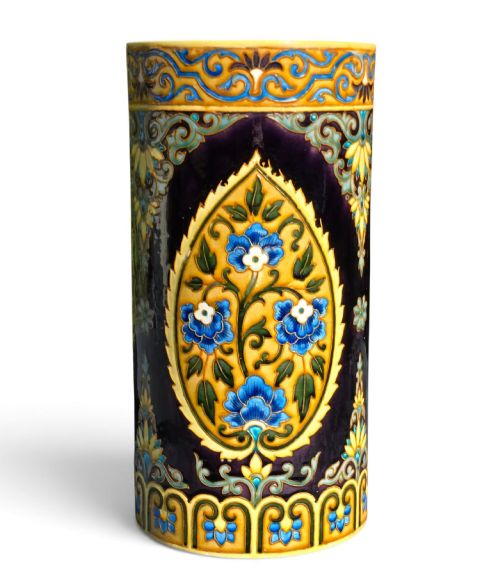
A 19th century faience vase represents a period of intense historical revival, drawing on Renaissance, Iznik, and Rococo aesthetics. These ceramics serve both as decorative centrepieces and functional vessels, taking forms such as ewers, urns, and umbrella stands.
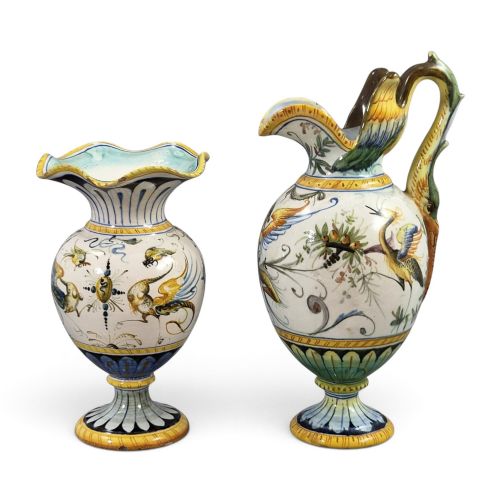
The version most commonly met on this page is the French faience vase, often produced in regional centres like Desvres, Rouen, and Bordeaux, or associated with makers like Jules Vieillard and Fourmaintraux-Courquin. Italian majolica revivals from potteries like Cantagalli also appear frequently.
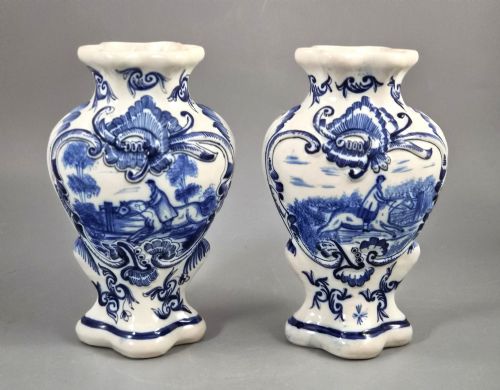
Earthenware bodies covered in tin glaze form the basis of these pieces, which display intricate enamel painting. Collectors encounter everything from Dutch-style manganese blue and white patterns to vibrant multicoloured Alhambra and Islamic revival motifs.
How they were made
Potters shaped the earthenware body before applying an opaque tin glaze, which created a smooth white surface suitable for painting. This tin-glaze technique formed the foundational layer for subsequent enamel decoration.
Painters applied mineral enamels directly onto the unfired or raw glaze, allowing the pigments to fuse with the surface during the kiln firing. This method demanded precise brushwork, as the porous glaze absorbed the colour instantly.
Specialised patent techniques, such as those used by Doulton Lambeth with Slaters patent, introduced textured backgrounds beneath the glaze. Artists then decorated these surfaces by hand, recording individual touches in the final glaze layer.
Tulip vases provide multiple spouts for individual stems, letting nineteenth-century decorators arrange flowers like tiny ceramic apartment buildings.
What varies in quality
The ambition of the design and the execution of the hand-painted enamel separate standard production from exceptional studio output. Pieces originating from named makers or established workshops demonstrate superior control over pigment density and line work.
Depth of glaze and clarity of colour define the visual success of the piece, particularly in revival styles that imitate sixteenth-century originals. Subtle variations in tone reveal the hand of a skilled decorator rather than mechanical transfer printing.
Théodore Deck·Fourmaintraux-Courquin·Cantagalli·Doulton Lambeth·Jules Vieillard
The 19th Century Faience Vase Glossary
- Faience
- Tin-glazed earthenware produced in Europe, particularly in France and Italy, known for its opaque white surface and painted enamel decoration. It serves as the primary material category for these nineteenth-century vessels.
- Majolica
- A type of Italian tin-glazed earthenware that nineteenth-century revival potteries frequently emulated. The term also describes nineteenth-century British earthenware with colourful lead glazes.
- Ewer
- A large jug with a wide spout and curved handle, often designed as a decorative companion to a vase. These forms frequently appear in Renaissance Revival ceramics.
- Manganese
- A metallic oxide used to produce rich purple, brown, or dark blue tones in ceramic decoration. It is characteristic of Dutch-style blue and white faience palettes.
- Tin Glaze
- A ceramic glaze made opaque by the addition of tin oxide, providing a white background for painted enamel designs. This technique unites the various regional traditions seen in nineteenth-century production.
19th Century Faience Vase: Frequently Asked Questions
How do I identify a 19th century faience vase?
Look for a tin-glazed earthenware body combined with historicist revival decoration, such as Iznik, Renaissance, or Rococo motifs. Makers' marks and painted signatures on the base often point to specific French or Italian workshops.
Examine the palette and glaze texture for hand-painted brushwork characteristic of nineteenth-century European potteries.
Where were these ceramic vases made?
Production centred primarily in France, with regional hubs in Desvres, Rouen, and Bordeaux, alongside significant contributions from Italian potteries in Florence. British makers like Doulton Lambeth also produced notable tin-glazed pieces.
Makers adopted historical styles from across Europe and the Middle East, leading to diverse aesthetic origins.
How should I display a faience vase at home?
Place these ceramic pieces on stable surfaces away from direct sunlight to protect the enamel colours over time. Their substantial earthenware weight suits larger mantelpieces, entrance halls, or display cabinets.
Keep them clear of damp environments to preserve the integrity of the earthenware body and tin glaze.
What is the difference between faience and majolica?
Faience generally refers to tin-glazed earthenware produced in France, Germany, and other northern European regions. Majolica typically denotes the Italian tradition, though nineteenth-century revival makers used both terms interchangeably.
Both categories rely on opaque tin glazes to create a smooth canvas for hand-painted enamel decoration.