


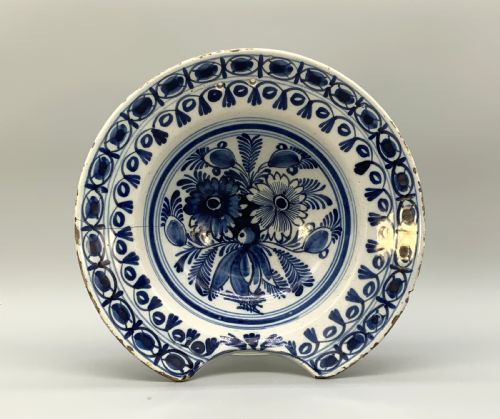
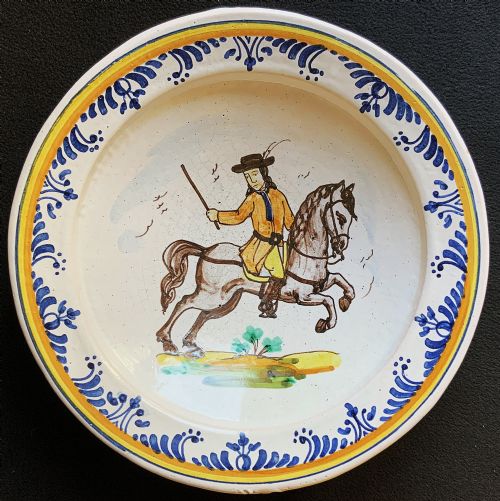
Blue White Delft Charger
A blue white delft charger brings centuries of painted tin-glazed earthenware and maritime trade history straight onto your wall or table.
Blue White Delft Charger
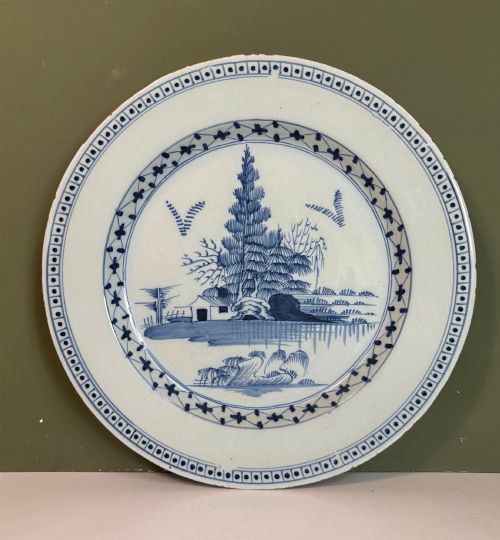
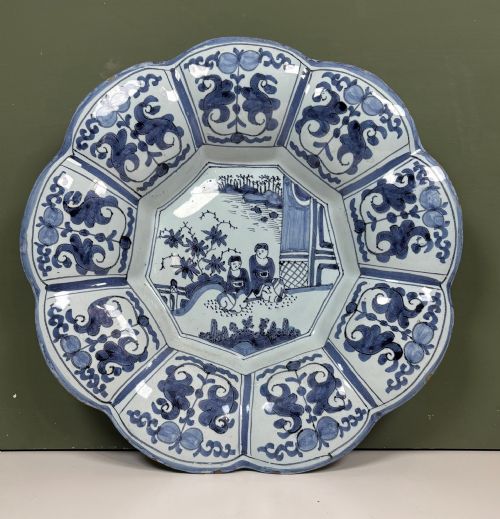
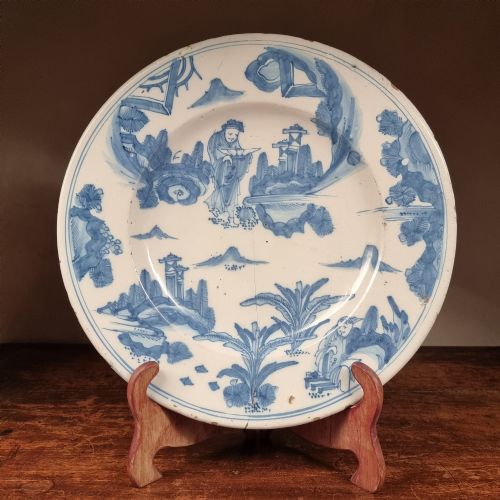
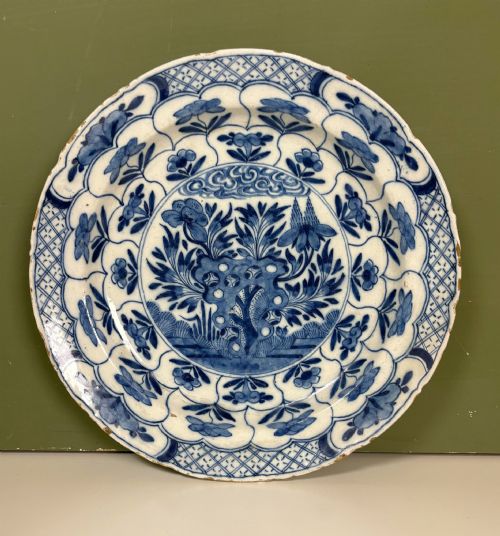
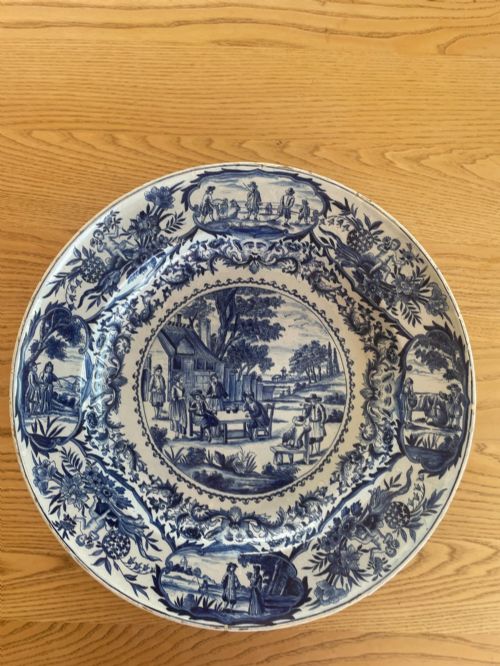
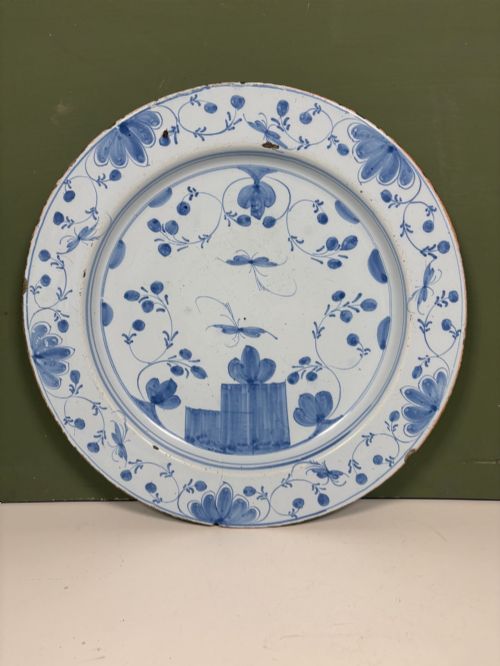
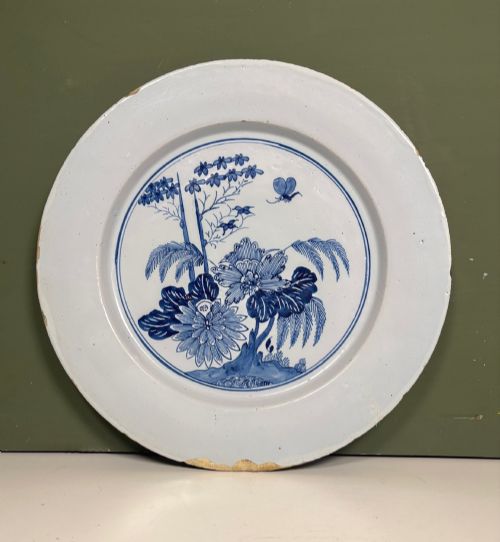
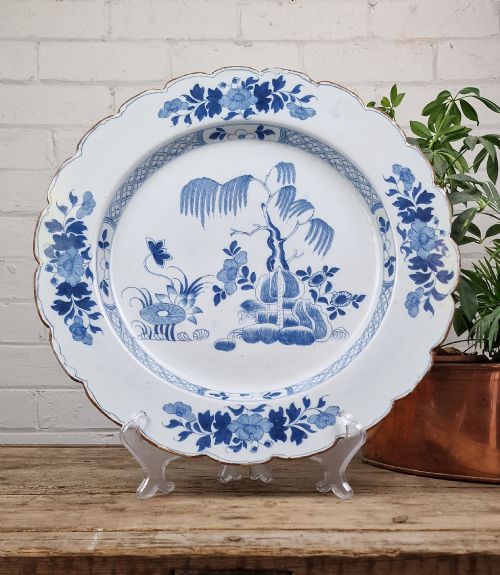
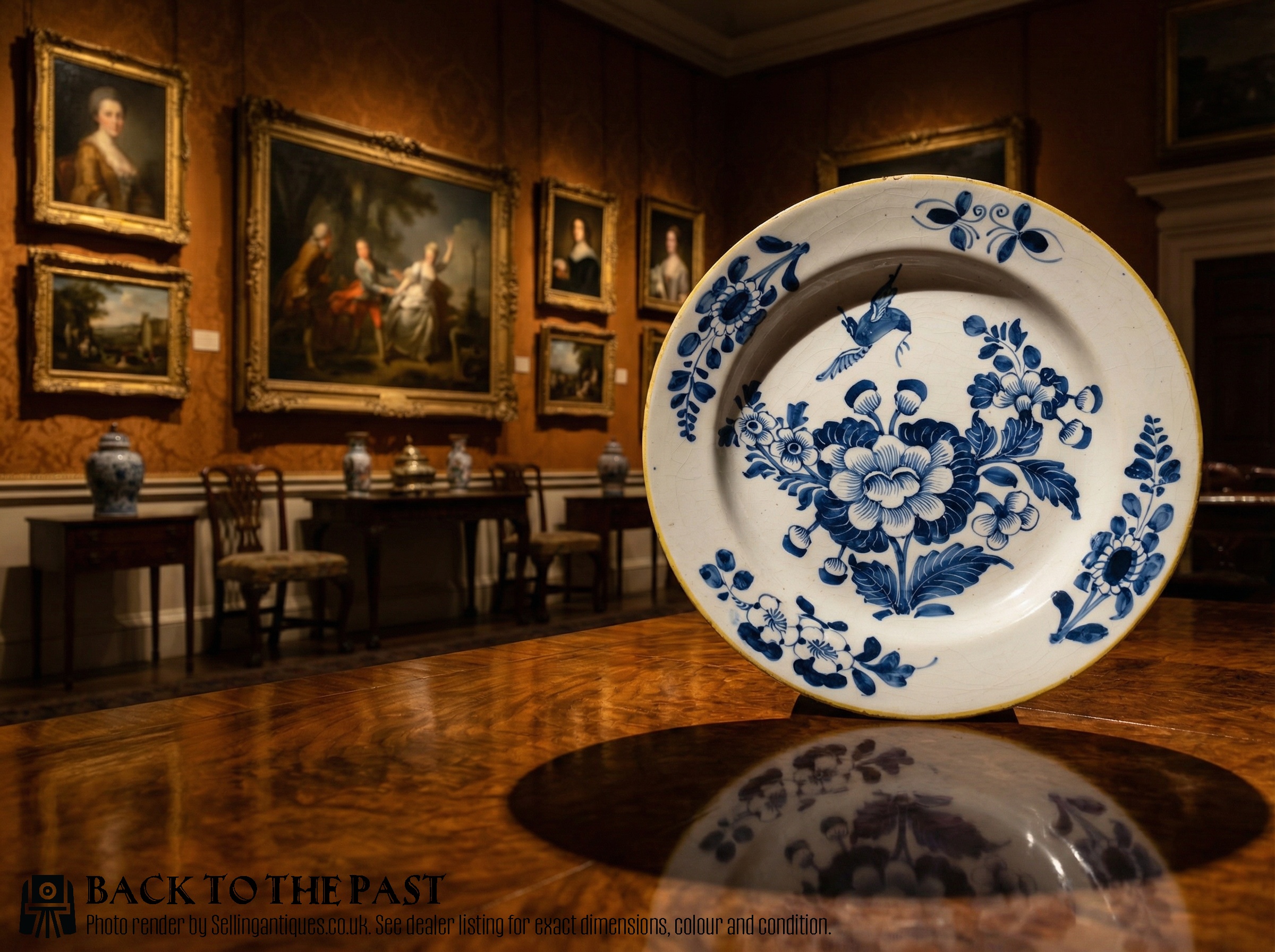
A blue white delft charger is a large decorative plate or platter created primarily in earthenware during the seventeenth and eighteenth centuries. These substantial vessels often served ceremonial or display purposes rather than everyday dining, showing considerable breadth in their surface decoration.
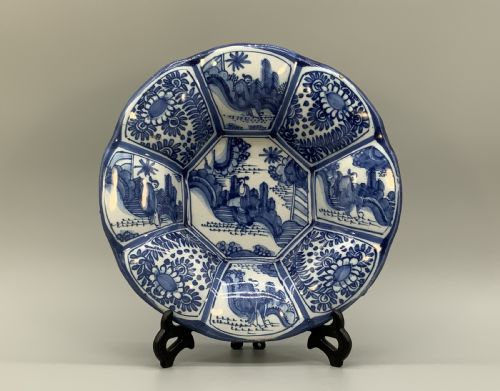
Most examples you encounter stem from Dutch or English kilns, incorporating styles ranging from early Kraak influences to later Chinoiserie and floral patterns. Alongside traditional chargers, the category embraces related forms like barber's bowls, shallow dishes, and marriage plates.
Makers drew upon cobalt oxide pigments to paint landscapes, birds, and abstract motifs directly onto the absorbent white glaze before final firing. This pigment creates the characteristic cobalt blue hue against an opaque white background.

Materials and Techniques
Potters shaped local earthenware clay into broad plates and chargers, then applied an opaque tin glaze containing metallic oxides to achieve a clean white surface. This tin-glazed layer provided an ideal canvas for the subsequent blue painting.
Painters used cobalt pigment suspended in water to execute freehand designs swiftly onto the unfired or raw glaze, which absorbed the liquid instantly. The pieces underwent a high-temperature kiln firing that fused the metallic cobalt into the glaze, fixing the characteristic blue pigment permanently.
Blue White Delft Charger Retail Price Guide 2026
Typical asking prices for blue white delft charger among the pieces listed under this phrase on Sellingantiques today, from the lower quarter to the upper quarter. They describe what is for sale here now, not the wider market.
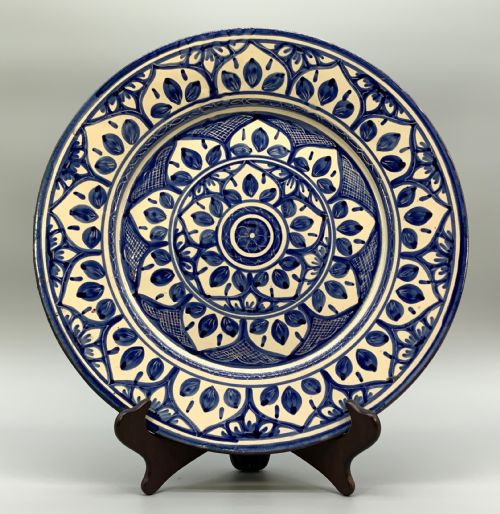
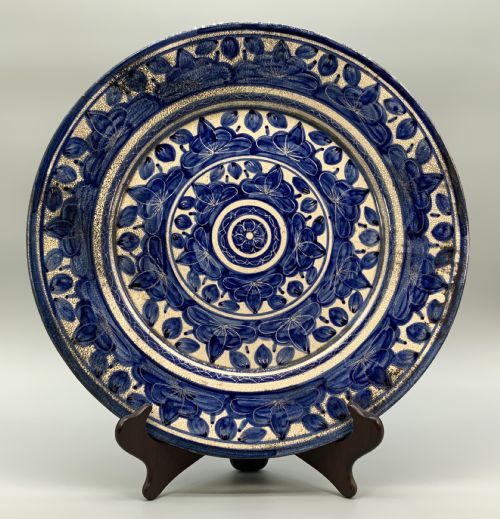
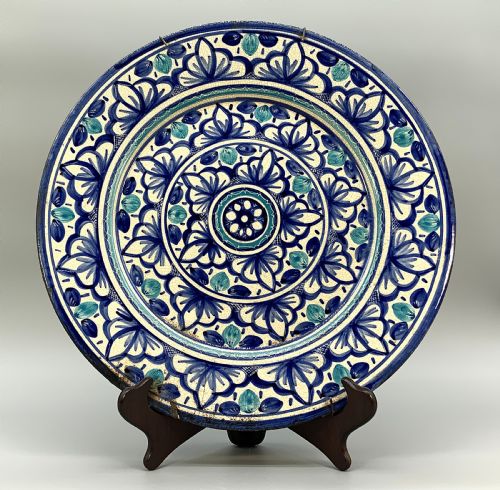
Listings feature earthenware chargers spanning the seventeenth, eighteenth, and nineteenth centuries, alongside twentieth-century Moorish revival examples.
Assessing Quality and Execution
Quality rests heavily on the confidence and fluidity of the painted brushwork, distinguishing master hand-painted motifs from rushed or rigid commercial repetitions. The depth of the cobalt pigment and the purity of the white tin glaze also dictate visual impact.
The degree of surface preservation and the stability of the earthenware body during firing determine the integrity of surviving chargers. Early seventeenth and eighteenth-century examples exhibit distinct variations in potting thickness and glaze pooling that separate workshop standards.
Van Genden·De Porceleyne Claeuw factory
The Blue White Delft Charger Glossary
- Tin Glaze
- An opaque white ceramic glaze containing tin oxide. This coating provides the smooth, pale ground necessary for traditional blue and white painting.
- Cobalt Oxide
- A mineral pigment used to impart deep blue colour to ceramics. It withstands high kiln temperatures without burning away.
- Charger
- A large decorative plate intended for display on walls or sideboards. These wide vessels exceed standard dining plate dimensions.
- Faience
- A European term for tin-glazed earthenware. Production centres spanned the Netherlands, England, and continental Europe.
Blue White Delft Charger: Frequently Asked Questions
How were blue white delft chargers used historically?
These large plates were primarily displayed on sideboards, dressers, or walls to demonstrate household status and taste. Their substantial size made them less suitable for practical dining and more ideal for decorative presentation.
Wealthy households used them to showcase imported aesthetic trends, particularly inspired by Chinese porcelain imports arriving via maritime trade during the seventeenth and eighteenth centuries.
How do I distinguish seventeenth from eighteenth century pieces?
Seventeenth-century examples often display heavy potting and dense Kraak-inspired panel designs derived from imported Chinese porcelain. The palette and border motifs evolved notably as production shifted toward distinct English and Dutch workshops.
Eighteenth-century chargers typically exhibit lighter bodies and more fluid floral or Chinoiserie brushwork. Examining the glaze thickness and pigment tone helps clarify the manufacturing era.
Can I hang an antique charger on the wall?
Hanging these items requires specialised display hardware designed to distribute weight safely across the earthenware rim and base. Specialist wire hangers grip the edges securely without putting undue stress on the historic ceramic body.
Ensure that any wall mount avoids placing pressure on historical hairline cracks or edge chips. Professional framing or custom display brackets offer secure support for heavy chargers.
What is the difference between English and Dutch delft?
Dutch production centres, particularly around Delft, frequently utilised thinner earthenware bodies and bright tin glazes with distinct bluish or white tones. English kilns in locations like Bristol and Lambeth often produced slightly heavier plates with warmer glaze tones.
Painterly styles also varied between regions, though both traditions drew heavily on blue and white maritime and botanical motifs. Factory techniques and clay composition provide clues to their specific geographic origins.