
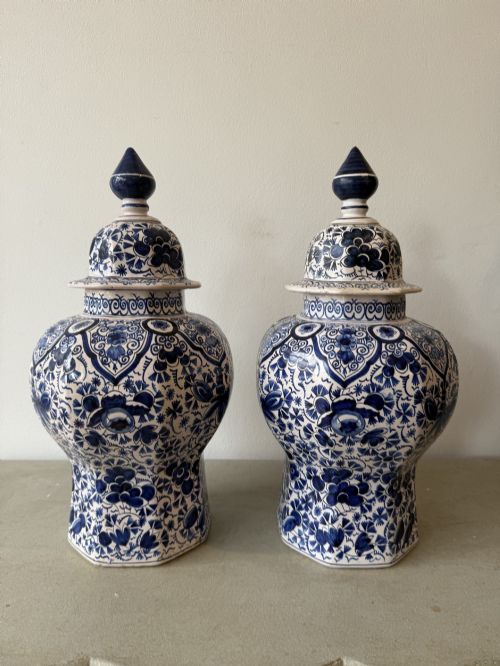
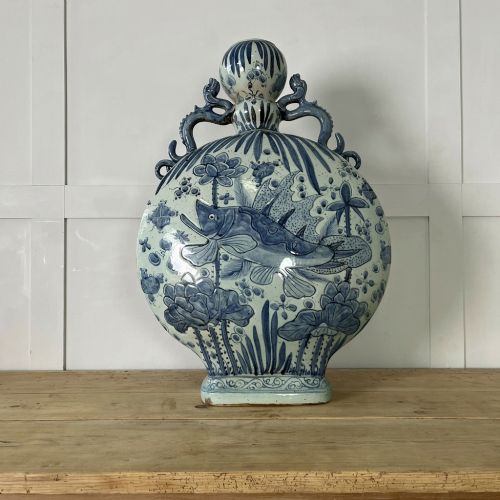


Blue White Chinoiserie Vase
A blue white chinoiserie vase brings painted scenes of distant landscapes and figures into domestic spaces through enduring ceramic forms.
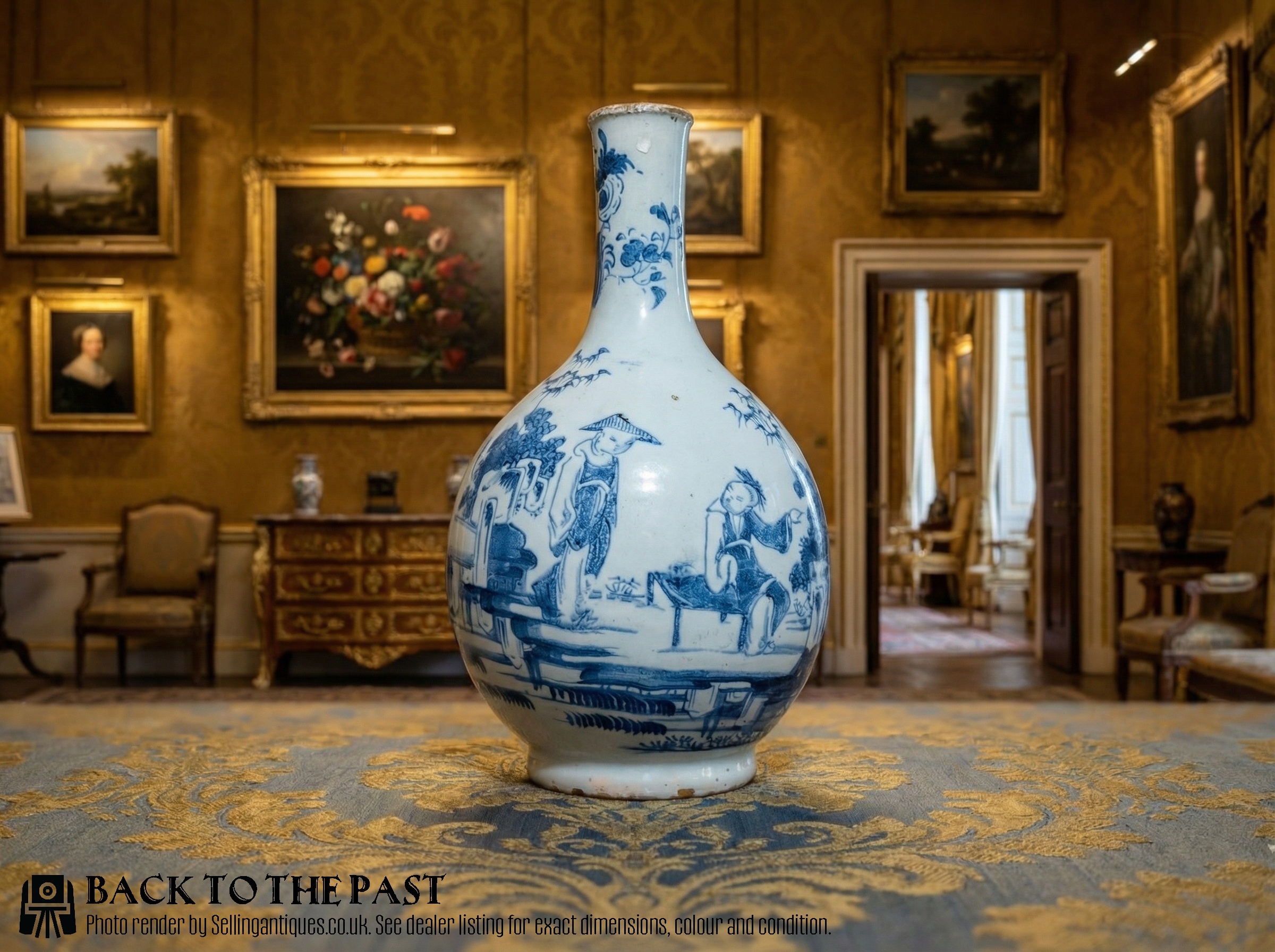
Blue White Chinoiserie Vase
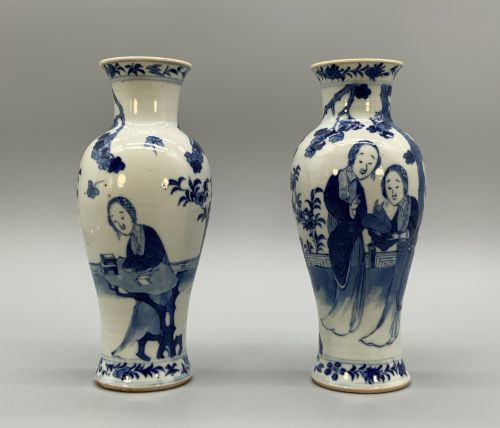
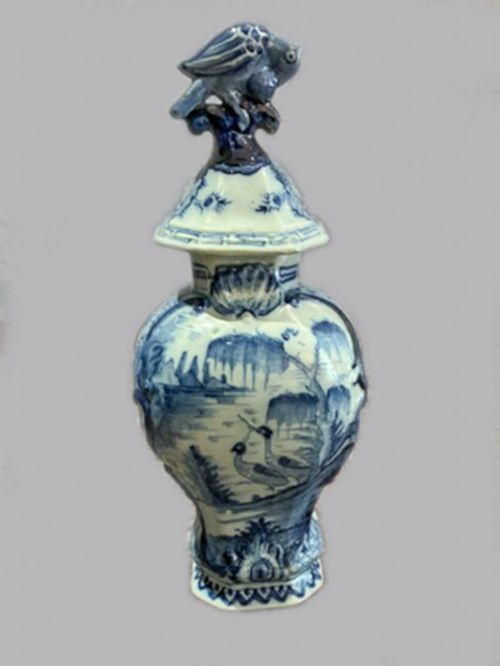
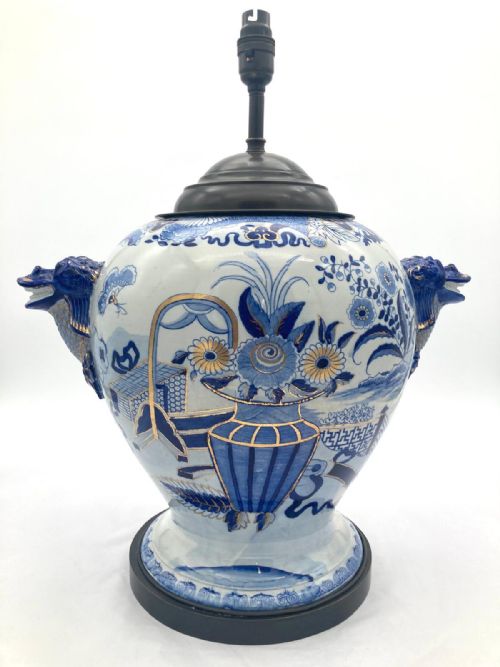
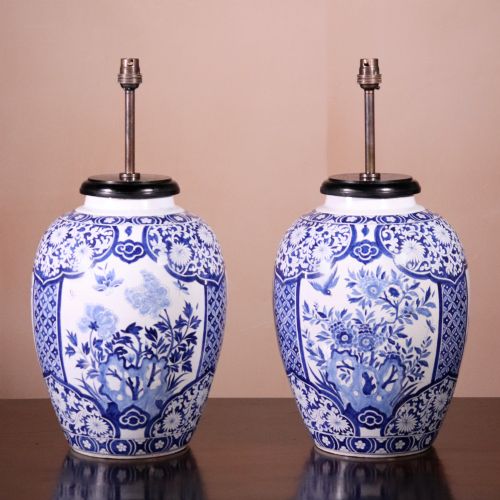
A blue white chinoiserie vase takes several forms across this selection, ranging from lidded jars and baluster shapes to converted lamps and umbrella stands. Buyers encounter examples originating from Chinese kilns alongside European counterparts produced in Dutch and English potteries.
Vessels designed for domestic utility sit alongside ornamental pieces, while several items show later conversions into table lamps. These diverse origins create a varied selection of ceramic wares united by blue and white decoration.
How they were made
Potters shaped these vessels primarily from porcelain, ceramic, tin-glazed earthenware, and ironstone, applying cobalt blue pigments beneath or over glazes. Production techniques combined thrown clay bodies with hand-painted motifs depicting figures, birds, and floral sprays.
European workshops utilised tin-glazing methods to imitate imported Asian porcelain, resulting in opaque white surfaces suited to intricate brushwork. Kiln firing fixed the cobalt pigments into durable finishes across both earthenware and porcelain bodies.
Object forms include umbrella stands, moon flasks, gourd vases, and baluster vessels alongside converted table lamps.
What varies in quality
Quality rests in the execution of the hand-painted cobalt decoration and the precision of the ceramic form. Finer pieces demonstrate control in brushwork, creating crisp contours within landscapes, figural scenes, and floral details.
The balance of the glaze and the purity of the white ground contribute to the visual weight of each vessel. Early examples show distinct handling in potting and pigment saturation compared to later industrial output.
Hicks and Meigh·Lambeth Pottery·Louis Victor·Mason's Ironstone China
The Blue White Chinoiserie Vase Glossary
- Chinoiserie
- European artistic style reflecting Chinese decorative motifs and imaginary landscapes. It appears frequently on seventeenth-century and eighteenth-century earthenwares.
- Delftware
- Tin-glazed earthenware produced in the Netherlands and England. It mimics the appearance of blue and white Chinese porcelain.
- Baluster
- A vase form featuring a rounded body that tapers toward the neck and base. This shape occurs across various periods in the listings.
- Faience
- European tin-glazed pottery with a fine white surface. It provides a ground for painted blue designs.
- Imari
- Japanese export porcelain decorated in underglaze blue and iron red with gilt additions. Several eighteenth-century examples demonstrate this tradition.
Blue White Chinoiserie Vase: Frequently Asked Questions
What is a blue white chinoiserie vase?
A blue white chinoiserie vase is a ceramic vessel decorated with European interpretations or Asian depictions of Chinese scenes, painted in cobalt blue upon a white background.
These pieces include traditional forms, lidded jars, and items adapted into lighting.
How do I tell Dutch delft from Chinese porcelain?
Dutch delft utilises a tin-glazed earthenware body that feels softer and often shows a heavier white glaze over a porous clay base.
Chinese porcelain uses a dense, vitreous material that rings when struck and lacks the earthenware body of European delft.
Why are some vases converted into lamps?
Many ceramic vessels were adapted into table lamps during later periods to suit changing interior domestic lighting requirements.
This conversion allowed decorative jars and vases to remain functional household objects while preserving their original painted surfaces.
How do I care for antique ceramic vases?
These ceramic and porcelain objects require gentle dusting with a dry cloth and protection from knocks or sudden temperature changes.
Converted lamp fittings should be checked by a qualified electrician before use in modern homes.