



Blue Watercolour Landscape Art
Blue watercolour landscape art captures atmospheric British scenes and coastal views through delicate washes on paper.
Blue Watercolour Landscape Art
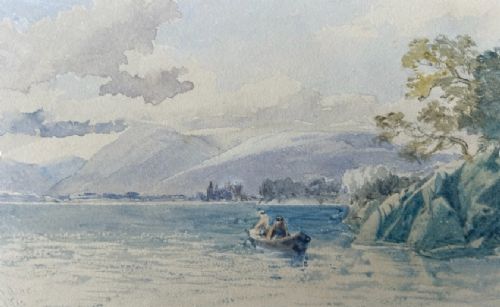
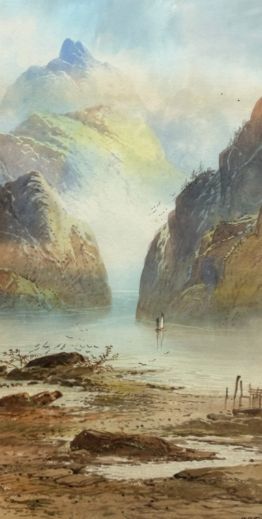
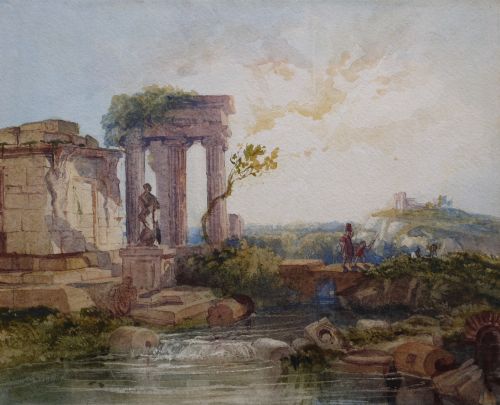
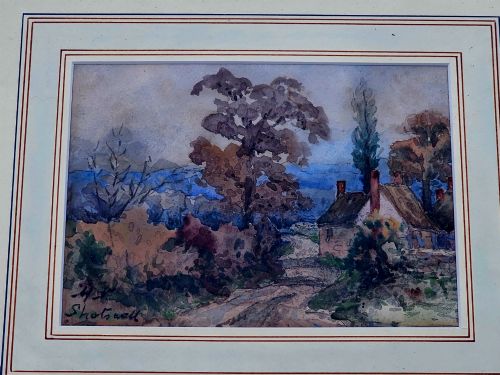
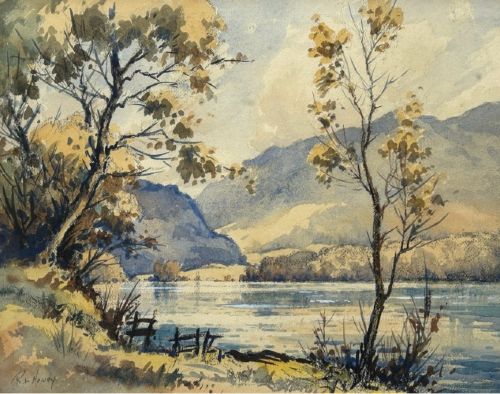
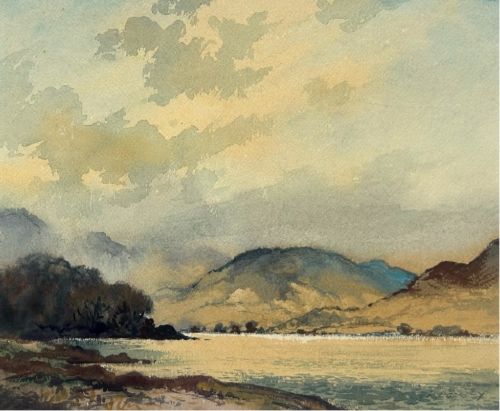
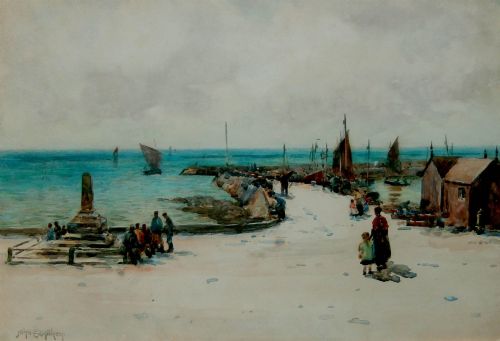
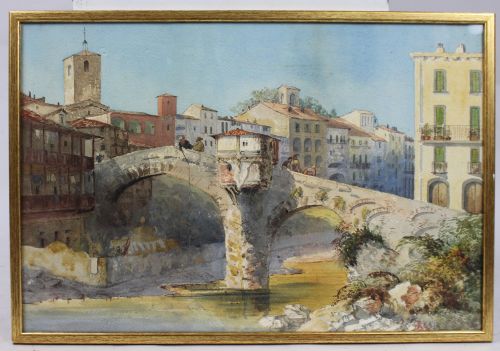
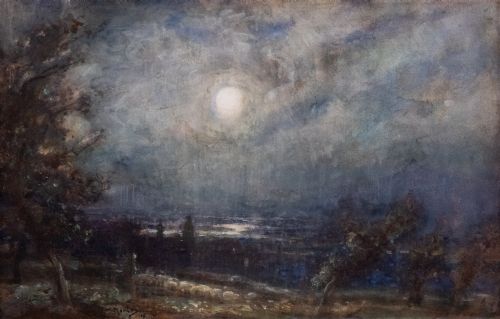
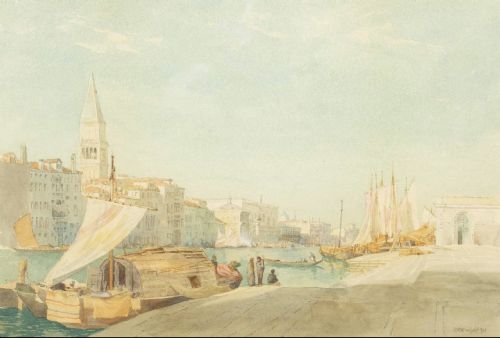
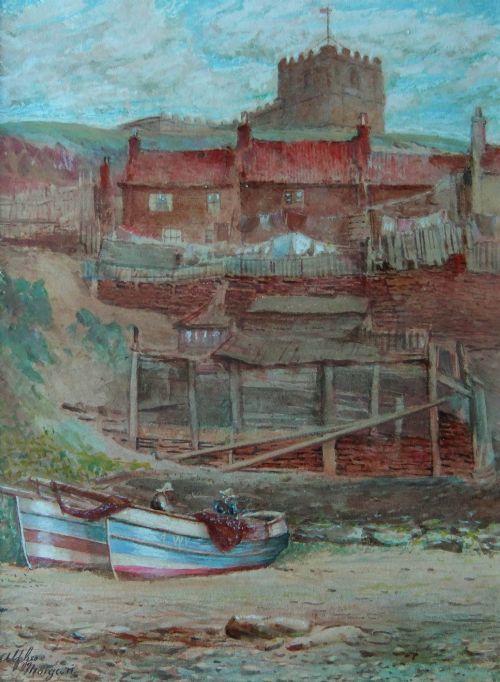
Collectors searching for blue watercolour landscape art encounter original works spanning the Victorian era through the mid-twentieth century. These paintings typically depict British rivers, coastal harbours, and rural valleys rendered predominantly in blue and tonal pigments. The selection includes works aligned with British Impressionism, traditional landscape painting, and maritime scenes.
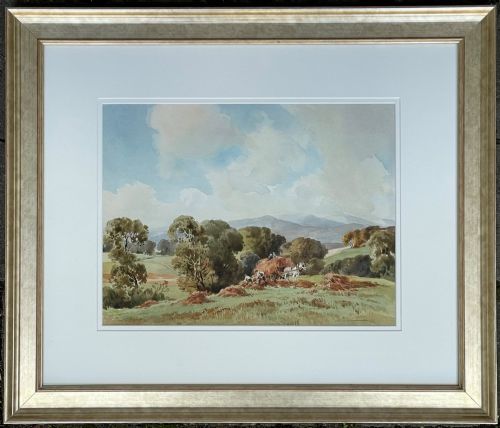
Most pieces date from the nineteenth and early twentieth centuries, featuring signed compositions by recognised artists of the period. Forms range from intimate pastoral views to larger harbour scenes executed on paper and housed behind glass in wooden frames. The enduring appeal lies in the transparent quality of the pigment and the atmospheric rendering of water and sky.
Materials and technique
Artists executed these works on paper using water-soluble pigments combined with ink or bodycolour for added opacity. The technique relies on applying fluid washes to build up translucent layers, allowing the white of the paper to illuminate the lighter areas of sky and water.
Framing typically involved wood mouldings and protective glass to safeguard the delicate pigments from moisture and light exposure. Many pieces retain original framing materials that complement the tonal qualities of the paintings.
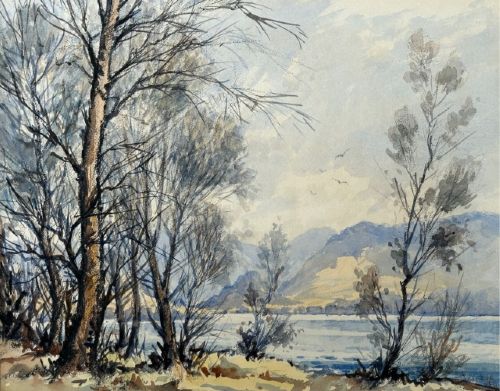
Listings span from Victorian pastoral watercolours to mid-twentieth-century Cumbrian lake scenes executed in pigment and ink on paper.
Markers of quality
Quality in these watercolours rests upon the artist's brushwork and control over the fluid medium. The strongest examples display confident washes and a sophisticated command of tonal depth, particularly in the depiction of marine atmospheres and open skies.
Provenance and documentation also distinguish individual pieces, with artist signatures, dated inscriptions, and well-preserved paper integrity elevating the standing of a work within its period.
Thomas Miles Richardson Jnr·James Orrock·William Henry Earp·Richard Principal Leitch·Alfred Young Nutt·Percy Lancaster·Robert Leslie Howey·John E Aitken·William Banks Fortescue·Thomas William Morley·Richard Henry Wright·Alfred G Morgan·Carlo Ferranti·William Matthison·George Stanfield Walters·Frank Kelsey·Henry Barlow Carter·Frederick Hines·F A Roylance·George F Pennington·William Frederick Settle·Philip Richard Morris·Edgar Woollatt·Lionel Horsnell·Cornelius Pearson
The Blue Watercolour Landscape Art Glossary
- Watercolour
- A painting method in which the paints are made of pigments suspended in a water-based solution. The binder is typically gum arabic, which allows the pigment to adhere to paper.
- Wash
- A thin, transparent layer of diluted pigment applied across the paper to create smooth backgrounds or skies. It forms the structural foundation of traditional watercolour painting.
- Gouache
- An opaque water-based paint that includes a white pigment filler, creating a heavier and more solid finish than standard watercolour. Artists often combined it with transparent washes to highlight details.
- Monogram
- A motif made by overlapping or combining two or more letters to form a single symbol. Many nineteenth-century artists used these instead of full signatures on smaller works.
- Provenance
- The chronology of the ownership, custody, or location of a historical piece. Clear records help confirm the authenticity and attribution of older works on paper.
Blue Watercolour Landscape Art: Frequently Asked Questions
How should I display watercolour art safely?
Watercolours require careful placement away from direct sunlight to prevent the pigments from fading over time. UV-filtering glass and acid-free mounts help protect the paper from environmental damage.
Humidity control is equally important when hanging works on paper in domestic spaces. Keeping pieces in stable indoor environments prevents the paper from warping and protects the wooden frames.
What subjects appear most frequently in these paintings?
Coastal harbours, fishing boats, and river valleys dominate the subject matter of these nineteenth and twentieth-century works. Artists frequently turned to maritime environments to explore atmospheric effects using blue and grey pigments.
Parks, pastoral meadows, and mountainous terrain also feature prominently across the collection. These rural compositions often capture specific British and European locations during distinct seasonal shifts.
How do I identify the period of a watercolour?
Stylistic clues, paper types, and framing methods often point toward a specific decade or artistic movement. Victorian and Edwardian works frequently exhibit traditional compositional structures and tonal restraint.
Signatures, dates inscribed on the reverse, and artist biographies provide definitive chronological markers. Examining the handwriting and framing materials adds further context to the date of creation.
Are these paintings original works?
The selection consists of hand-painted original works on paper rather than mechanical reproductions or prints. Each piece displays unique brush marks, pigment granulation, and individual artistic choices.
Artists signed many of these watercolours directly on the front or inscribed details on the reverse. These personal touches confirm their status as unique historical artefacts.