



Antique River Landscape Drawing
These antique river landscape drawing works capture tranquil waterways across varied historic periods, offering buyers historic charm and delicate draughtsmanship.
Antique River Landscape Drawing
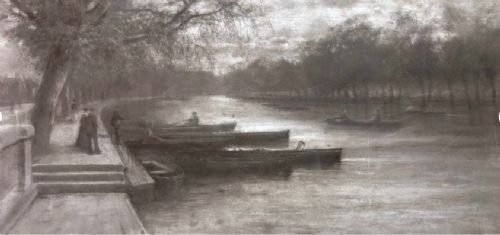
An antique river landscape drawing brings historical waterways into domestic spaces through works on paper executed by hand. These pieces range across centuries, documenting rivers from quiet English streams to Scottish highlands and Canadian scenes.
Buyers encountering this selection will find works spanning the eighteenth century through to the mid-twentieth century. The dominant formats rely on intimate framing behind glass, often housed in gilt wood frames that complement the historic nature of the paper.
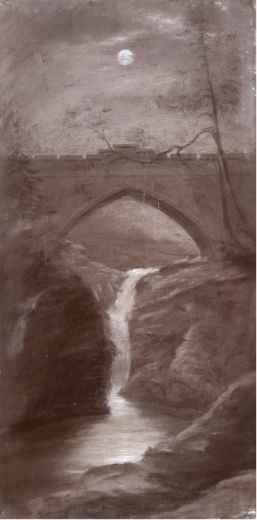
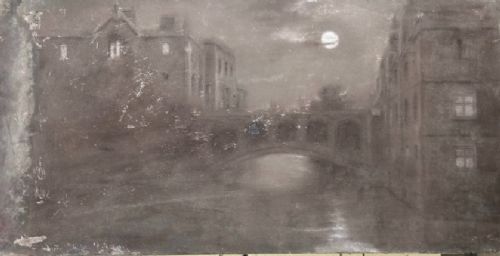
The collection unites varied artistic approaches, from precise architectural river views to atmospheric nocturnal scenes inspired by tonalist traditions. Each piece records a specific topography, linking the viewer to historical topography and nineteenth-century realism.
What varies in quality
Quality rests upon the sureness of the draughtsmanship and the artist's command over atmospheric perspective and light. Superior works demonstrate confident handling of water surfaces, reflections, and sky gradients that create spatial depth within a confined sheet.
The sophistication of the composition separates standard decorative examples from accomplished artistic records. Stronger pieces reveal deliberate tonal contrasts and precise compositional framing that capture the particular character of a riverbank or bridge.
The selection includes works spanning the eighteenth century, Victorian era, and the mid-twentieth century on paper.
Alfred Young Nutt·Berthe des Clayes·Amos Green·Henri Joseph Harpignies·John Joseph Cotman·Thomas Lound·Frank Charles Peyraud·Mads Stage
The Antique River Landscape Drawing Glossary
- Tonalism
- An artistic style that emerged in the late nineteenth century where artists painted landscapes with an overall dominant tone or mistiness. It prioritises mood and shadow over sharp detail.
- Barbizon School
- A French movement of landscape painters active during the mid-nineteenth century who worked directly from nature. Their focus on unidealised rural scenery influenced subsequent generations.
- Gilt Wood
- Timber frames covered with a thin layer of gold leaf or gold paint. These frames protect the works on paper and provide a decorative historic border.
- Charcoal
- A dry drawing medium made from organic carbonaceous material that produces deep blacks and subtle grey smudges. It allows for rapid expressive marks and soft blending.
Antique River Landscape Drawing: Frequently Asked Questions
How should I hang an antique drawing?
Position works away from direct sunlight to protect delicate watercolours, pastels, and paper supports from fading over time.
Ensure the room maintains stable humidity levels to prevent the paper from warping inside its glass frame.
What is Victorian tonalism?
Victorian tonalism is a late nineteenth-century approach focused on atmospheric mood rather than topographical precision.
These works often depict rivers and bridges at dusk or dawn, using soft charcoal or pastel gradients.
Are these works original?
The selection comprises original hand-drawn or painted works on paper created during the stated historic periods.
None of the pieces are modern reproductions or mechanical prints.
How do I identify charcoal drawings?
Charcoal leaves deep matte black marks that sit on the surface of the paper with a soft, powdery texture.
Artists often blended these dark strokes to create atmospheric haze around riverbanks and night skies.