
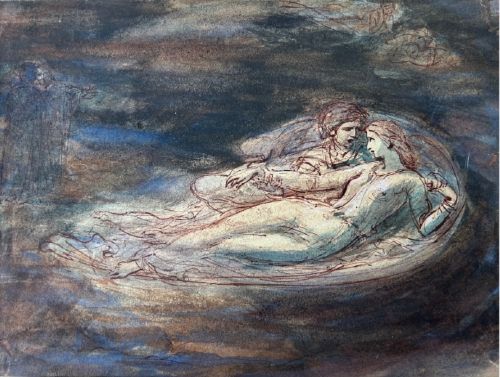
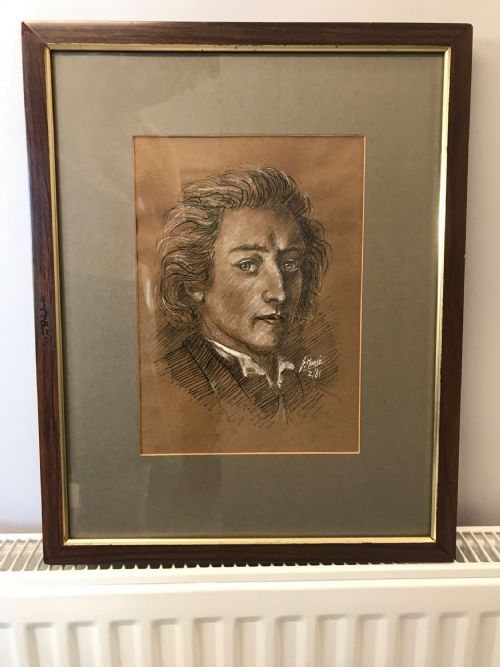
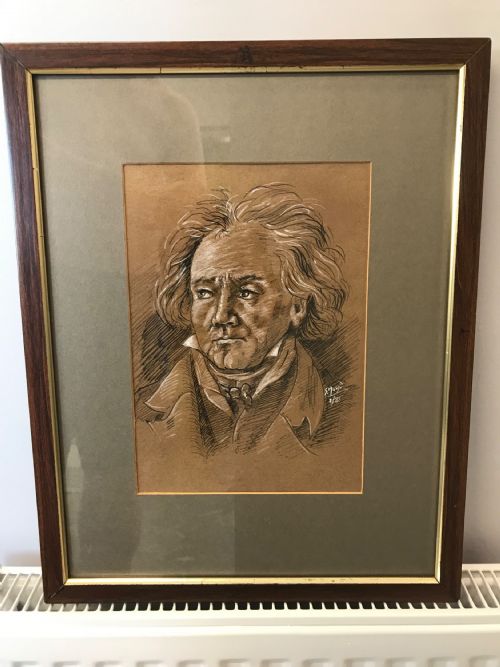
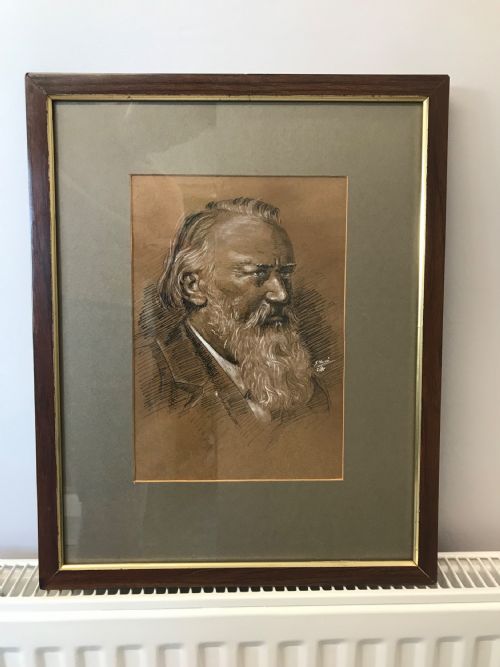


Brown Wash Artwork
Brown wash artwork brings together monochromatic ink and watercolour sketches, offering tonal depth and delicate draftsmanship.
Brown Wash Artwork
Brown wash artwork comprises original paintings, drawings, and works on paper created using sepia or brown ink and water-based pigments. You will frequently encounter nineteenth-century examples spanning Victorian and Edwardian periods, alongside later twentieth-century works.
The subjects range from British and European landscapes and marine scenes to portrait drawings of composers and literary figures. These pieces often arrive framed under glass, presenting historic draughtsmanship and narrative scenes.
How these works were made
Artists built these compositions upon paper substrates, employing pen and ink for precise linear definition and outlining. Watercolour pigment and gouache were then diluted to create monochromatic washes of brown and sepia tones.
Makers applied these fluid washes in layered applications to establish shadow, depth, and atmospheric perspective. Wood was utilised for the supportive framing that preserves these fragile works on paper.
Sepia ink was once sourced directly from marine cephalopods, giving historic drawings a subtle biological link to the sea.
What varies in quality
Quality rests in the precision of the initial ink draughtsmanship and the controlled transparency of the wash application. Stronger works display confident brushwork and tonal harmony that successfully convey light and shadow without muddying the paper.
The distinction also lies in the historical significance of the subject matter and the assured hand of the artist. Well-preserved sheets retain their original contrast and clarity, allowing the subtleties of the sepia pigment to define the form.
Tom Clough·Robert Richard Scanlan·William Wyld·Henry Barlow Carter·Thomas Pyne·Fred Lawson·Theobald Chartran·Rowland H. Hill·Thomas Lound·Thomas Brabazon Aylmer
The Brown Wash Artwork Glossary
- Wash
- A thin, semi-transparent layer of diluted ink or watercolour pigment applied to paper. This technique creates uniform areas of tone and shadow in monochrome or limited palettes.
- Sepia
- A brown pigment historically derived from the ink sac of the cuttlefish. It became a favoured medium for tonal drawings and monochromatic watercolours.
- Gouache
- An opaque water-based paint composed of pigment, water, and a binding agent such as gum arabic. It is often added to ink drawings to create highlights and solid opaque passages.
- Pre-Raphaelite
- An artistic movement and style associated with detailed observation, bright colour, and literary or historic subjects. Works from this circle emphasise naturalist precision.
- Works on paper
- A broad category encompassing drawings, watercolours, prints, and paintings executed on paper supports. These require protection behind glass to prevent environmental degradation.
Brown Wash Artwork: Frequently Asked Questions
What is brown wash artwork?
Brown wash artwork refers to drawings and paintings executed on paper using brown or sepia ink alongside diluted water-based pigments. These pieces rely on tonal gradations rather than a full spectrum of colour to define form and light.
Such works range from rapid compositional sketches to highly finished landscape and portrait studies produced across the nineteenth and twentieth centuries.
How should I frame and hang these pieces?
Because these works are executed on paper, they require professional framing with conservation-grade materials and glass to block damaging ultraviolet light. Direct sunlight and damp environments will cause the paper to degrade and the sepia pigments to fade.
Keep them away from direct heat sources and exterior walls where temperature fluctuations can warp the paper or damage the frame.
How do I identify the period of a drawing?
Dating relies heavily on the paper type, framing style, costume details in portraits, and any accompanying signatures or historical inscriptions. Nineteenth-century examples often display specific regional landscape traditions and period handwriting on the reverse.
Comparing the handling of the ink and wash against known dated works by the same school or artist helps narrow down the timeframe.
Were these sketches preparatory studies or finished works?
Many brown wash pieces served as preparatory studies or plein-air records created by artists before painting larger canvases in oil. However, numerous nineteenth-century watercolours were created as finished cabinet pieces intended directly for display.
The level of detail and the presence of a signature often indicate whether an artist considered the sheet a finished artwork in its own right.