

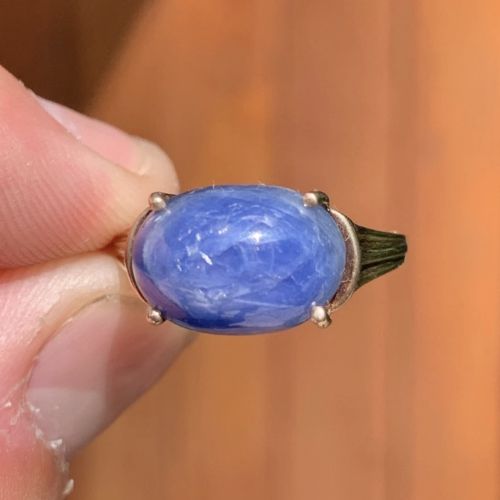
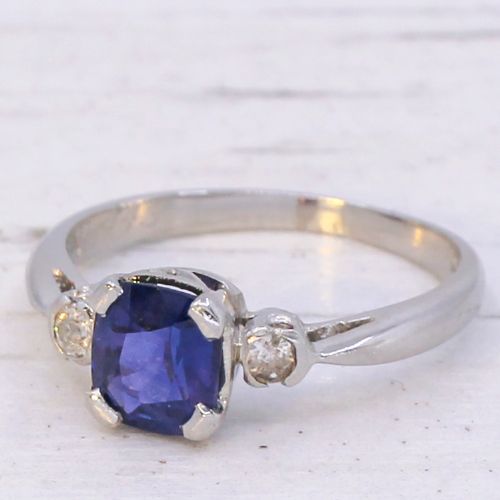
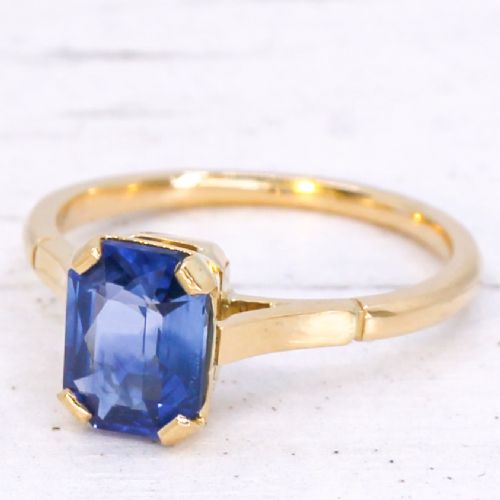
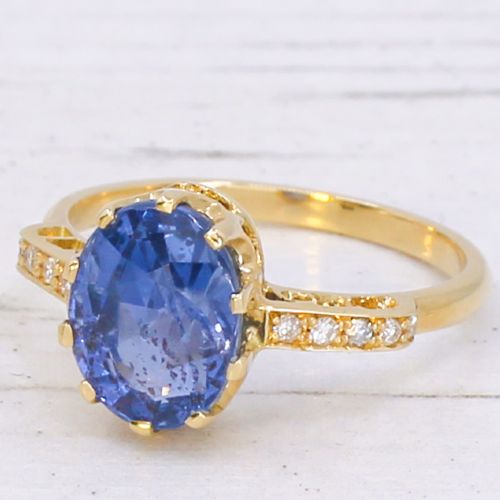






Blue Sapphire Solitaire
A blue sapphire solitaire focuses entirely on the deep blue stone, offering a classic ring or necklace centrepiece.
Blue Sapphire Solitaire
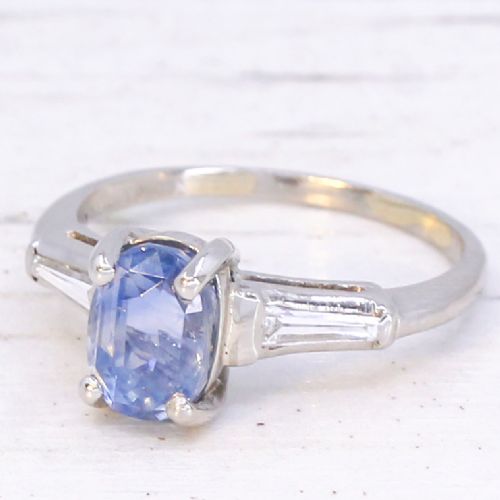
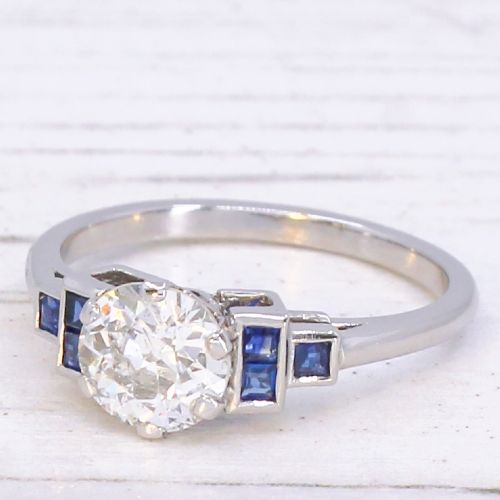
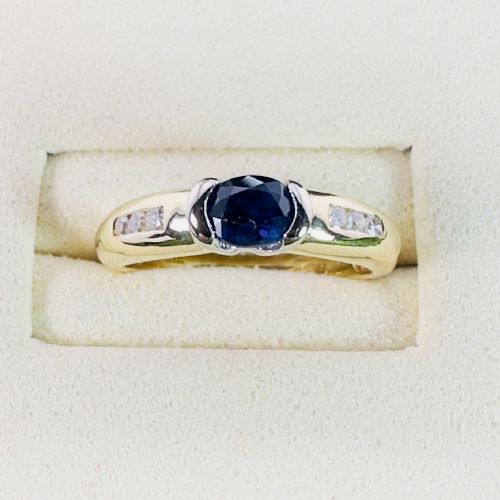
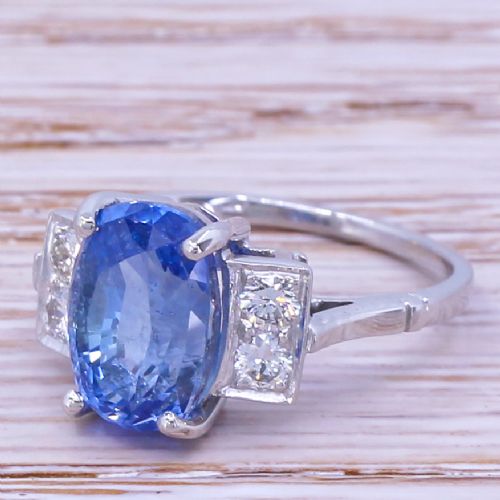
A blue sapphire solitaire centres on a single prominent gemstone, most frequently seen mounted as a ring alongside smaller accent diamonds or styled purely on its own. These pieces span periods from the nineteenth century through the Victorian, Edwardian, Art Deco, and mid-century eras, reaching into late twentieth-century vintage examples.
The selection ranges from delicate lower carat weights up to substantial unheated Ceylon and Burmese origin stones exceeding five carats. Buyers will encounter both rings and pendants, with gold and platinum settings housing oval, round, and various antique cut sapphires.
How they were made
Goldsmiths and platinum smiths utilised durable precious metals including platinum, yellow gold, 18ct gold, and 9ct gold to securely set the primary stones. Claw settings, bezel mounts, and twist designs were hand-forged to showcase the natural depth of the sapphire.
Stones often feature traditional cuts alongside old cut diamonds in supporting roles, demonstrating period-specific bench techniques from the Victorian era to the mid-century modern period.
Blue Sapphire Solitaire Retail Price Guide 2026
Typical asking prices for blue sapphire solitaire among the pieces listed under this phrase on Sellingantiques today, from the lower quarter to the upper quarter. They describe what is for sale here now, not the wider market.
The inventory records both Ceylon and Burmese sapphire origins alongside unheated stones spanning multiple decades.
What varies in quality
Quality rests upon the natural origin, geographic provenance such as Ceylon or Kashmir, and whether the sapphire remains unheated. Stones possessing high clarity, natural unenhanced colour, and substantial carat weight distinguish the finest specimens.
The precision of the period metalwork, the condition of the platinum or gold setting, and the quality of accompanying old cut diamonds further define the upper tier of these pieces.
The Blue Sapphire Solitaire Glossary
- Solitaire
- A jewellery piece featuring a single main gemstone set without accompanying major stones of the same type. This design highlights the optical properties of the central sapphire.
- Unheated
- A gemstone that has not undergone thermal enhancement to improve its colour or clarity. Unheated sapphires command particular interest among collectors for their natural state.
- Ceylon Sapphire
- A sapphire originating from Sri Lanka, historically known for a vibrant and luminous blue hue. These stones frequently appear in mid-century and Art Deco rings.
- Old Cut
- A hand-faceted diamond cut predating modern brilliant standards, often characterised by a smaller table and high crown. These cuts appear frequently in antique and Victorian rings.
- Platinum
- A dense, strong white metal utilised heavily in Art Deco settings. Its durability allows for delicate claw work holding substantial sapphires and diamonds.
Blue Sapphire Solitaire: Frequently Asked Questions
What is a blue sapphire solitaire?
A blue sapphire solitaire is a ring or pendant featuring one dominant sapphire gemstone as the primary visual focus. These pieces often include platinum or gold settings.
They appear across Victorian, Art Deco, and mid-century styles, sometimes accompanied by small accent diamonds.
How do I date my sapphire ring?
Dating relies upon stylistic markers such as Art Deco geometric lines or Victorian yellow gold twist bands. Hallmarks stamped inside the band provide further chronological clues.
Material choices like platinum usage also help narrow the manufacturing period.
What does unheated sapphire mean?
An unheated sapphire is a natural stone that has not been subjected to artificial heat treatment to alter its colour or clarity. This untreated state is noted in many vintage and antique listings.
Collectors prize unheated stones for their completely natural formation.
Are these pieces only rings?
While the vast majority of available pieces are rings, the category also includes occasional pendants. Both object types utilise the same precious metals.
Settings accommodate oval, round, and various antique cut stones in both forms.