
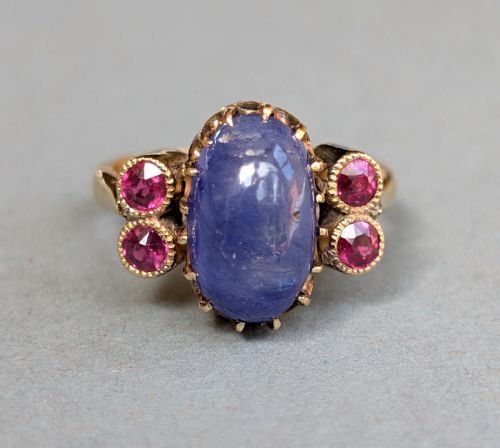


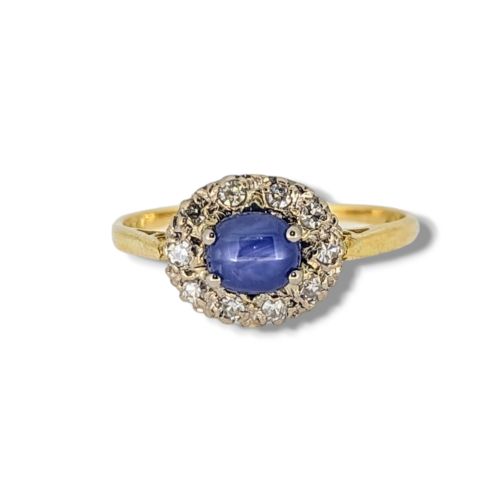


Cabochon Sapphire Ring
A cabochon sapphire ring brings together smooth, polished domes of corundum and period metalwork.
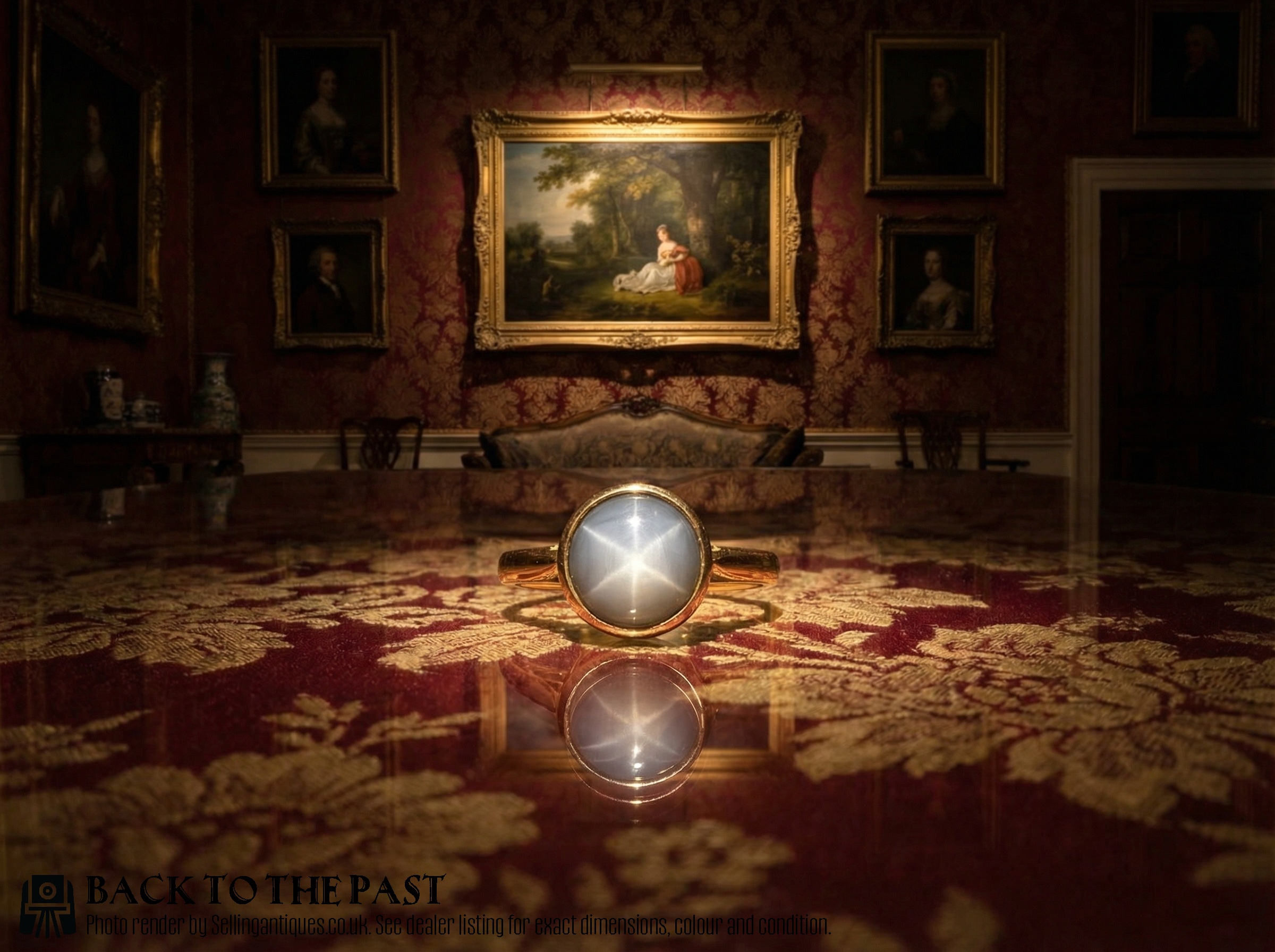
Cabochon Sapphire Ring
A cabochon sapphire ring showcases a rounded, dome-shaped stone rather than a faceted cut, emphasising the deep internal colour and natural optical effects of the gem. These pieces span Victorian, Edwardian, Art Deco, Mid-Century, and later twentieth-century periods.
The most common examples encountered on this page belong to the Art Deco and Edwardian eras, where large central cabochons are paired with diamonds in platinum or gold settings.
Designs range from single-stone solitaires and classic cluster rings to three-stone gypsy settings and foliate motifs.
Materials and Techniques
Goldsmiths and platinumsmiths shape durable precious metals including platinum, 18ct gold, 9ct gold, and 9ct yellow gold to form the structural mounts and settings. Gems are secured using claw settings, pave settings, or flush mountings that hug the rounded contours of the stone.
Lapidaries cut and polish sapphires into smooth domes, occasionally leaving stones unheated to preserve natural characteristics such as star effects or distinct purple and sky blue hues.
Accompanying stones utilise traditional diamond cuts including old cut, rose cut, eight-cut, and brilliant cuts to provide contrast against the polished sapphire.
Retail Price Guide 2026
Typical UK retail prices for cabochon sapphire ring, calculated from the Sellingantiques database of over a million retail prices indexed since 2003. This retail price guide relies exclusively on Sellingantiques data; no external sources or auction records are used, so the figures do not describe the wider market.
A late-century sterling silver cigarette case listed previously includes a cabochon sapphire push button and a finger ring chain.
Quality Variations
The distinction between tiers rests upon the origin, weight, and optical clarity of the central sapphire, alongside the precision of the surrounding metalwork. Stones originating from Ceylon with unheated properties and substantial carat weights command significant attention.
Fine craftsmanship shows in the integration of platinum and gold settings, where intricate gallery work and well-matched diamond arrangements support the focal cabochon without visual heaviness.
The Cabochon Sapphire Ring Glossary
- Cabochon
- A gemstone cut with a smooth, convex dome and a flat or slightly curved base rather than facets. This historic cutting style highlights the depth and natural colour of the stone.
- Unheated
- A sapphire that has not undergone thermal enhancement to alter its colour or clarity. These natural stones are prized for retaining their authentic geological formation.
- Cluster ring
- A ring design featuring a central gemstone encircled by a group of smaller stones, typically diamonds. This arrangement maximises overall visual presence and light reflection.
- Old cut
- A generic term for diamond cuts executed before the standardisation of the modern brilliant cut, characterised by high crowns and small tables. These stones display a distinctive soft, candlelit sparkle.
- Rose cut
- A diamond cut featuring a flat base and a domed crown composed of triangular facets arranged in a radiating pattern. It resembles an unopened rosebud.
Frequently Asked Questions
How do I care for a cabochon sapphire ring?
Clean the ring gently using warm soapy water and a soft brush, avoiding harsh chemical cleaners that can affect the metal and stone. Store the piece separately in a fabric-lined box to prevent the sapphire or surrounding diamonds from scratching other jewellery.
Have the setting checked periodically by a professional jeweller to ensure the claws holding the dome remain secure. Regular maintenance protects the structural integrity of antique platinum and gold mounts.
Can I wear my ring every day?
Sapphire is a durable gemstone ranking high on the Mohs hardness scale, making it suitable for regular wear. However, antique and vintage settings require care to prevent impact damage to delicate claws and shoulders.
Consider removing the ring during heavy manual tasks, sports, or swimming to protect the precious metal and older stone settings from undue stress.
How do I identify the period of my ring?
Examine the mounting style, metal choices, and diamond cuts to establish a chronological baseline. Edwardian pieces often feature delicate platinum work and lace-like motifs, while Art Deco examples display geometric symmetry and strong lines.
Victorian rings frequently utilise yellow gold and heavier foliate or gypsy settings, whereas Mid-Century designs introduce bolder proportions and varied cluster arrangements.