


1930s Sapphire Ring
A 1930s sapphire ring brings geometric precision and bold colour to the hand, offering enduring appeal for collectors of period jewellery.
1930s Sapphire Ring
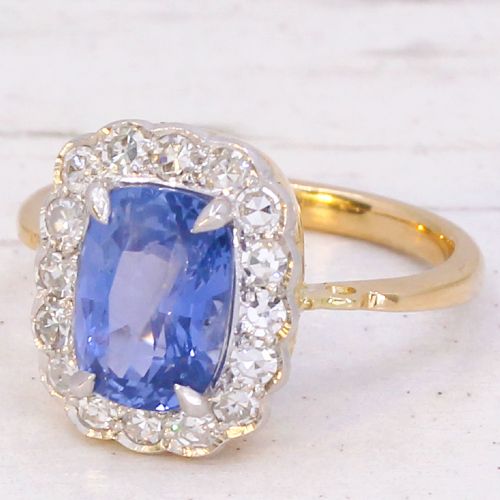
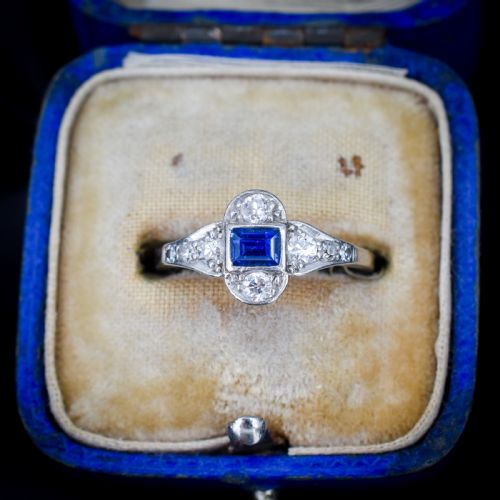
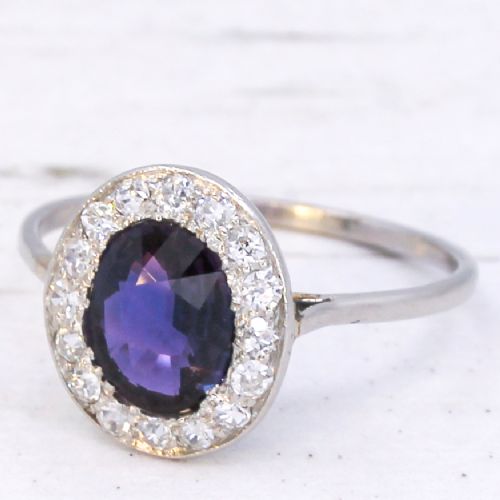
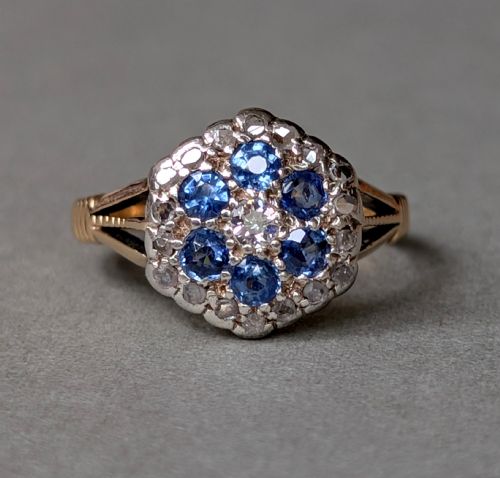
When you search for a 1930s sapphire ring, you encounter jewels shaped by the geometric lines and structured designs of the Art Deco period. These pieces frequently pair deep blue stones with diamond accents, reflecting the prevalent style of the era.
The selection ranges from delicate dress rings to substantial cocktail and cluster formations. You will also find rarer variations featuring yellow, orange, or cabochon-cut sapphires set alongside traditional blue examples.
Origin details often highlight Ceylon and Burmese stones within these mountings. The forms span individual rings as well as matched jewellery sets.
How they were made
Makers utilised platinum alongside yellow gold, white gold, and palladium to construct durable settings that could support prominent gemstone arrangements. Platinum gained favour for its strength in holding intricate diamond and sapphire clusters without heavy metal bulk.
Gemstones are shaped into various cuts, including standard facets, baguettes, and smooth cabochons. These stones are then integrated into geometric cluster, halo, and trilogy layouts typical of the period.
1930s Sapphire Ring Retail Price Guide 2026
Typical asking prices for 1930s sapphire ring among the pieces listed under this phrase on Sellingantiques today, from the lower quarter to the upper quarter. They describe what is for sale here now, not the wider market.
Some rings manage to squeeze nearly twelve carats of sapphire onto a single finger.
What varies in quality
The standard of a piece depends heavily on the natural origin, clarity, and treatment state of the central sapphire. Unheated stones from specific regions command attention for their depth of colour and purity.
Execution of the metalwork also defines the tier of the ring, with precise platinum settings and balanced diamond distribution marking superior examples.
W H Tandy
The 1930s Sapphire Ring Glossary
- Art Deco
- A design style dominant in the 1920s and 1930s characterised by symmetry, geometric lines, and modern industrial influences.
- Cabochon
- A gemstone cut with a smooth, rounded, convex top rather than facets, often utilised for large sapphires.
- Cluster ring
- A ring design featuring a central stone surrounded by a border of smaller accent stones, typically diamonds.
- Trilogy ring
- A ring set with three prominent stones representing the past, present, and future.
- Unheated sapphire
- A natural gemstone that has not undergone thermal enhancement to improve its colour or clarity.
1930s Sapphire Ring: Frequently Asked Questions
How do I identify a 1930s sapphire ring?
Look for characteristic Art Deco geometric motifs, platinum or white gold settings, and specific stone cuts like baguettes or old cuts.
Assessing the overall mounting style and hallmarks helps confirm the period of origin.
Are these rings suitable for daily wear?
Sapphires possess high natural durability, making them suitable for regular use when properly maintained.
However, delicate platinum or gold settings from the period require careful handling and periodic checks by a jeweller.
What is a cluster ring?
A cluster ring arranges a central gemstone, such as a sapphire, with a tight border of smaller stones like diamonds.
This configuration maximises visual impact and light reflection on the hand.
Do all these rings feature blue sapphires?
While deep blue is most common, the listings also include yellow, orange, and pale varieties.
Some pieces feature unheated stones originating from Ceylon or Burma.