



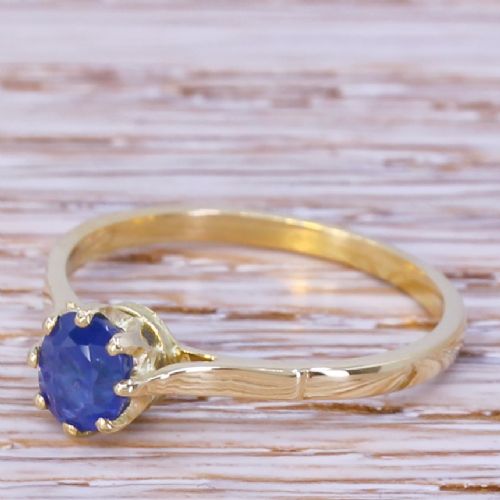
Burmese Sapphire Ring
A burmese sapphire ring brings together saturated natural corundum and precious metal settings from the Edwardian, Victorian, Art Deco, and Mid-Century periods.
Burmese Sapphire Ring
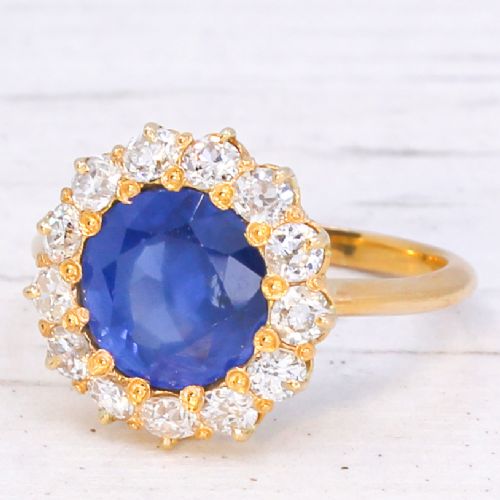
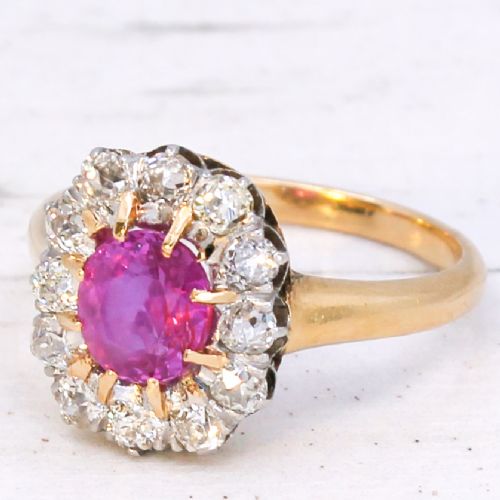
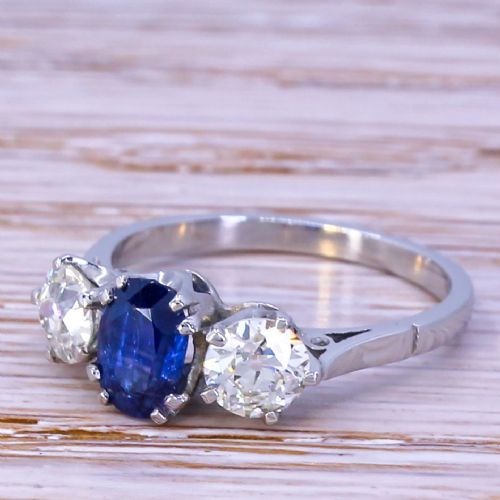
A burmese sapphire ring centres on a natural gemstone sourced from Burma, often accompanied by diamond accents in cluster, solitaire, or trilogy configurations. These pieces span from Victorian and Edwardian origins through Art Deco designs to Mid-Century examples.
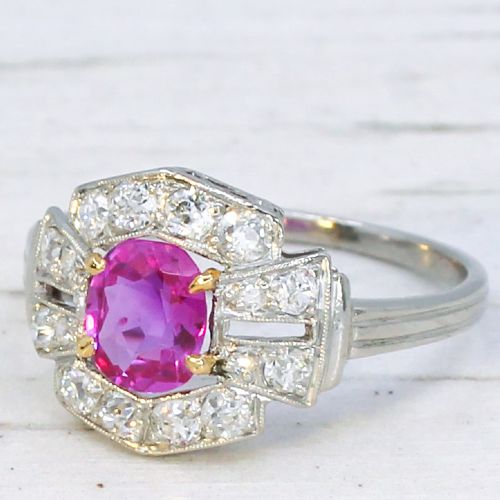
The Art Deco examples frequently pair the central sapphire with geometric diamond arrangements in platinum settings. Other pieces utilise yellow gold, spanning fifteen-carat and eighteen-carat variations, alongside white metals to frame the stones.
Solitaire rings place the unheated or natural sapphire entirely on its own, whilst cluster and trilogy formats distribute smaller diamonds around the primary corundum. Pink sapphire variants also appear across the decades alongside the traditional blue stones.
How They Were Made
Goldsmiths set natural Burmese sapphires and diamonds into durable mountings of platinum and yellow gold. Old cut diamonds frequently accompany the central corundum in designs dating from the early twentieth century.
Metals such as fifteen-carat and eighteen-carat yellow gold provide warm structural contrast to the bright white of platinum settings. Gemstones are secured via precision claw settings or flush mountings within the metalwork.
Retail Price Guide 2026
Typical UK retail prices for burmese sapphire ring, calculated from the Sellingantiques database of over a million retail prices indexed since 2003. This retail price guide relies exclusively on Sellingantiques data; no external sources or auction records are used, so the figures do not describe the wider market.
Some stones travelled from Mogok to be worn in rainy provincial towns.
What Varies in Quality
The distinction in quality rests on the carat weight of the central Burmese sapphire and its status as unheated or natural. Larger stones exceeding three or eight carats occupy the upper end of the scale.
The presence and size of accompanying diamonds, ranging from modest accents to substantial old cut stones, influence the overall composition. The choice of metal, shifting from yellow gold to platinum, also defines the character of each piece.
The Burmese Sapphire Ring Glossary
- Trilogy ring
- A ring featuring three primary gemstones set in a row across the finger. This layout typically places a central sapphire flanked by two diamonds.
- Cluster ring
- A design where a central gemstone is surrounded by a tight arrangement of smaller stones. Diamonds are the usual choice for the outer border.
- Solitaire
- A ring featuring a single prominent gemstone mounted alone on the band. This setting highlights the individual qualities of the central sapphire.
- Old cut
- A historic diamond cutting style characterised by a smaller table, higher crown, and open culet. These stones appear frequently in pieces from the Edwardian and Art Deco periods.
- Unheated
- A gemstone that has undergone no thermal enhancement to improve its natural colour or clarity. This status is notable in fine Burmese sapphires.
Frequently Asked Questions
What periods do these rings come from?
The pieces span the Victorian, Edwardian, Art Deco, and Mid-Century eras, covering dates from around nineteen hundred to nineteen sixty.
Art Deco designs and Mid-Century examples form a substantial portion of the available and archive items.
Are all Burmese sapphires blue?
Whilst the majority of the sapphires display traditional blue tones, pink sapphire varieties also appear in the selection.
Both blue and pink stones are found paired with diamonds in various ring configurations.
What metals are used in these rings?
The mountings utilise platinum as well as yellow gold in fifteen-carat and eighteen-carat purities.
Platinum is particularly common in Art Deco designs to hold white diamonds alongside the blue or pink sapphires.