





Blue Sapphire Trilogy Ring
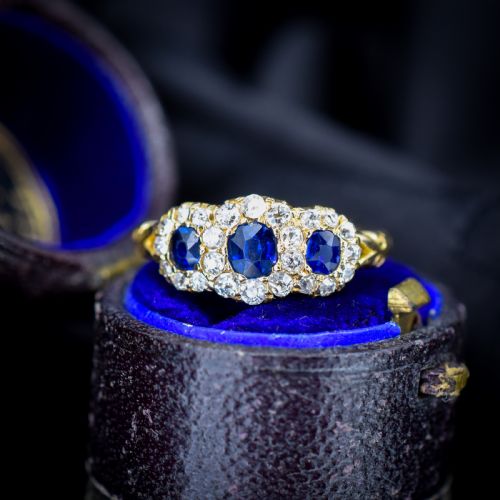
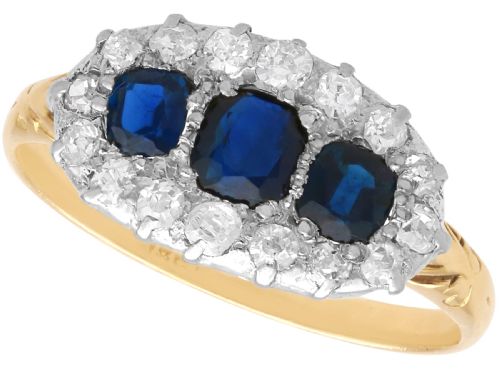
A blue sapphire trilogy ring holds three stones representing past, present, and future, combining deep blue gems with sparkling diamonds.
Blue Sapphire Trilogy Ring
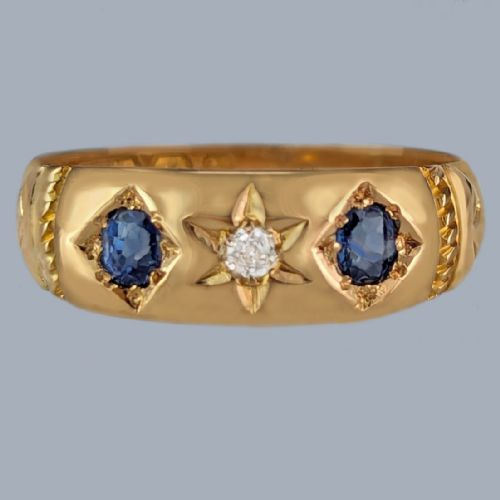
A blue sapphire trilogy ring presents three prominent stones set across the finger, most commonly pairing a central sapphire flanked by two diamonds. When examining a blue sapphire trilogy ring, collectors encounter forms spanning the Georgian, Victorian, Edwardian, Art Deco, and Mid-Century periods.
The materials recorded in these pieces include natural sapphires originating from Burma, Ceylon, or basaltic sources, alongside old cut, transitional, and brilliant cut diamonds. Metal choices range from platinum and silver to 9ct gold, 15ct gold, 18ct yellow gold, and standard 18ct gold.
Victorian examples often utilise yellow gold mounts with triple cluster or traditional three stone configurations, while Art Deco pieces favour geometric platinum settings. Later mid-century variations incorporate unheated stones and streamlined mountings.
Construction and materials
Goldsmiths constructed these rings by mounting sapphires and diamonds into precious metal settings that evolved from heavy gold claw mounts in the Victorian era to secure platinum channels and prongs during the Art Deco period. Silver was also utilised alongside gold in earlier Georgian examples.
Stones were cut by hand in earlier periods, resulting in old cut and transitional diamond facets that interact differently with light compared to later brilliant cuts. Sapphires were selected for their natural blue hues, ranging from deep basaltic tones to bright Burmese and Ceylon specimens.
Listings feature sapphire and diamond combinations mounted in platinum, silver, and gold ranging from 9ct to 18ct purity.
Factors influencing quality
Quality in these pieces depends heavily on the origin, colour saturation, and heat treatment status of the central sapphire, with unheated Burmese and Ceylon stones commanding distinct attention from collectors. Diamond clarity, carat weight, and matching cut proportions further define the upper tier of pieces.
The integrity of the metalwork, whether hand-forged 18ct yellow gold from the nineteenth century or precise platinum fabrication from the Art Deco period, dictates the durability and finesse of the mounting.
The Blue Sapphire Trilogy Ring Glossary
- Trilogy ring
- A ring featuring three stones set in a row, traditionally symbolising the past, present, and future. This layout is typical for engagement rings.
- Old cut diamond
- A diamond cut by hand before modern machinery, characterised by a smaller table, higher crown, and open culet. These stones display a softer candlelight glow.
- Transition cut diamond
- A diamond cut during the interim period between old European cuts and modern round brilliants, bridging the nineteenth and twentieth centuries.
- Paste
- Hand-cut glass used in historic jewellery to imitate gemstones. Georgian and Victorian paste pieces possess independent collectible value.
- Rubover setting
- A setting style where a thin strip of metal is pushed over the edge of the stone to hold it securely. This technique creates a smooth, snag-free profile.
Blue Sapphire Trilogy Ring: Frequently Asked Questions
What periods do these rings come from?
The available selection spans several distinct eras, including Georgian, Victorian, Edwardian, Art Deco, and Mid-Century periods. Each era brings characteristic changes in metal selection and stone cutting techniques.
For instance, Victorian examples frequently employ 18ct yellow gold, while Art Deco pieces favour platinum and geometric arrangements.
Are the sapphires natural?
The listings include natural sapphires originating from regions such as Burma and Ceylon, alongside basaltic stones. Some twentieth-century examples specifically note unheated sapphire status.
Documentation and gemological characteristics help distinguish natural untreated stones from treated or synthetic alternatives found in later jewellery.
How should I care for an antique ring?
Historic rings require gentle handling due to the age of their settings and the nature of historic metals like 9ct, 15ct, and 18ct gold. Regular professional checks ensure the prongs holding the sapphires and diamonds remain secure.
Removing the ring during manual tasks prevents unnecessary wear to the platinum, silver, or gold bands.
Can these rings be resized?
Most gold and platinum bands can be altered by a skilled jeweller experienced in antique pieces. The feasibility depends on the shank thickness and whether the shoulder design permits adjustment without disturbing the stones.
Consulting a specialist ensures the structural integrity of the trilogy setting is maintained during the process.