


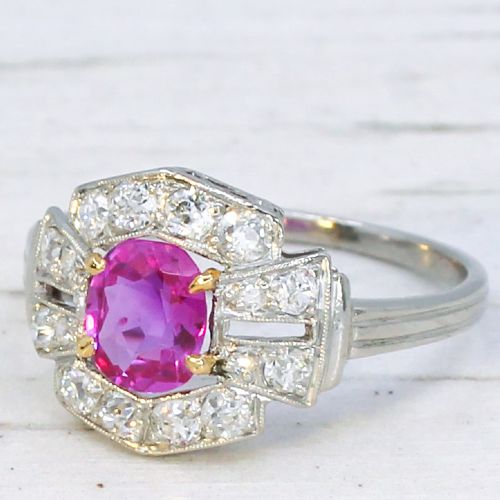
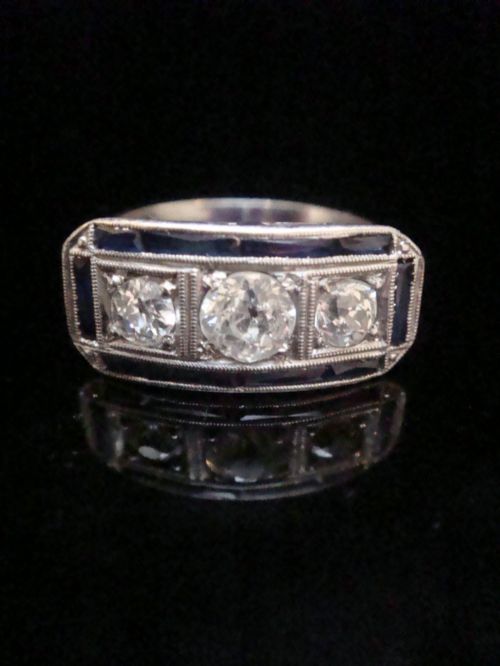


1920s Sapphire Diamond Ring
A 1920s sapphire diamond ring brings together crisp geometric design and deep blue stones, offering a distinctive piece of jewellery that collectors seek for its characteristic period style.
1920s Sapphire Diamond Ring
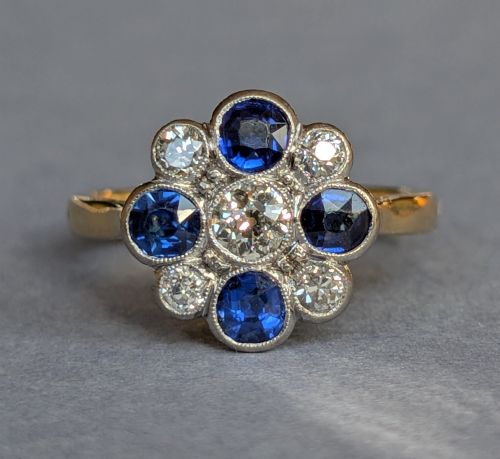
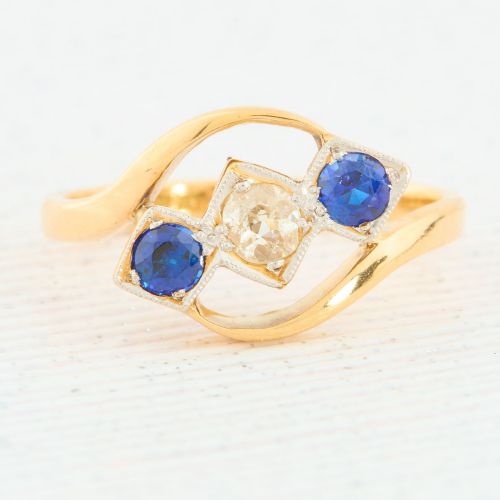
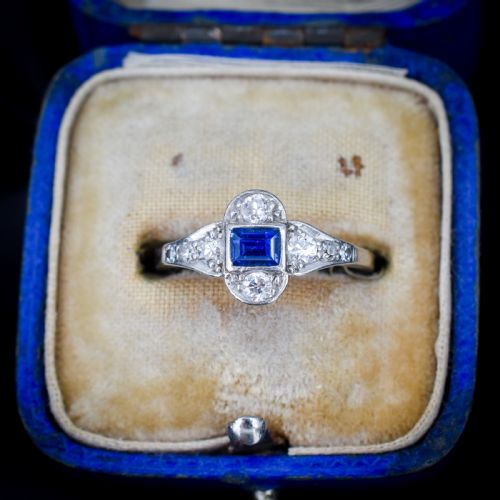
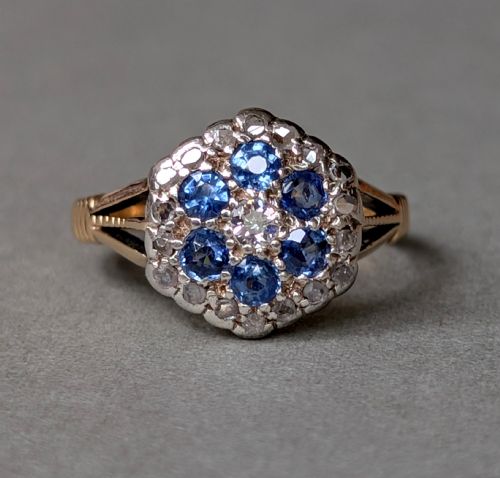
A 1920s sapphire diamond ring is defined by the geometric principles of the Art Deco movement, frequently appearing as dress rings, cluster rings, or geometric target designs. These pieces combine vibrant blue sapphires with sparkling diamonds, reflecting the aesthetic preferences of the period spanning the 1920s, 1930s, and 1940s.
The version most commonly met on this page is the platinum or 18ct white gold cluster ring, where a central sapphire is surrounded by smaller diamonds. Alongside these cluster configurations, trilogy rings, solitaire settings, and navette shapes appear frequently in the selection.
Originating predominantly from British and French workshops of the interwar decades, these rings showcase the shift away from flowing Edwardian curves toward sharp lines and symmetrical arrangements. Buyers encounter both pink and yellow sapphire variations alongside the traditional blue stones.
How they were made
Platinum and 18ct white gold serve as the primary foundational metals for these pieces, often paired with traditional yellow gold in settings that highlight the stones. The adoption of platinum allowed jewellers to create delicate, strong settings and intricate pierced galleries that held stones securely without heavy metal bulk.
Gemstones were cut to suit rigid geometric layouts, employing calibré cut sapphires that were individually shaped to fit tightly into borders or specific channel patterns. Diamonds of the era were typically old cut, transitional cut, or baguette cut, chosen to maximise light return within low-profile mountings.
1920s Sapphire Diamond Ring Retail Price Guide 2026
Typical asking prices for 1920s sapphire diamond ring among the pieces listed under this phrase on Sellingantiques today, from the lower quarter to the upper quarter. They describe what is for sale here now, not the wider market.
What varies in quality
The overall standard of a 1920s sapphire diamond ring rests heavily on the natural origin and saturation of the sapphire, with unheated stones from sources like Burma or Ceylon commanding distinct attention. The precision of the hand-cut calibré work and the matching of the surrounding diamond melee dictate the visual harmony of the piece.
Structural integrity through the delicate platinum or gold galleries also separates superior examples from more ordinary ones, as the longevity of pierced scrollwork depends on expert original fabrication. Pieces that retain their original sizing and uncompromised metal thickness represent the higher tier of surviving examples.
The 1920s Sapphire Diamond Ring Glossary
- Calibré cut
- Small gemstones specifically shaped and faceted to fit precisely into a designed channel or geometric border without shared prongs. This technique demands exceptional skill from the lapidary.
- Target cluster
- A concentric circular ring design featuring a central stone encircled by distinct rings of contrasting coloured gemstones and diamonds. It resembles an archery target.
- Navette
- A boat-shaped ring setting that tapers to sharp points at either end along the finger. This elongated outline was popular during the Art Deco era.
- Trilogy ring
- A mounting holding three principal stones in a row, often interpreted as representing the past, present, and future. In these listings, they typically pair a central sapphire with flanking diamonds.
- Old cut
- A diamond cutting style predecessor to the modern brilliant, characterised by a smaller table, higher crown, and open culet. These stones produce a softer, candlelit sparkle.
1920s Sapphire Diamond Ring: Frequently Asked Questions
How do I wear an antique ring safely?
These rings tolerate daily wear provided you remove them during heavy physical tasks or gardening to protect the delicate platinum settings.
Regular checks by a jeweller ensure the tiny claws holding the calibré sapphires remain secure.
Were all these rings made in France?
While French workshops produced many of the most intricate platinum and tricolour designs seen here, British makers also contributed extensively.
Both regions shared the prevailing Art Deco vocabulary of clean lines and geometric stone arrangements.
How do I tell an Edwardian piece from a 1920s piece?
Edwardian jewellery leans toward flowing garlands and soft lacy platinum work, whereas 1920s pieces favour strict geometry and symmetry.
The listings here occasionally touch the Edwardian period but are dominated by the sharp lines of the Art Deco era.