




Millegrain Sapphire Ring
A millegrain sapphire ring brings together deep blue stones and delicate beaded metalwork that captures the elegance of early twentieth-century design.
Millegrain Sapphire Ring
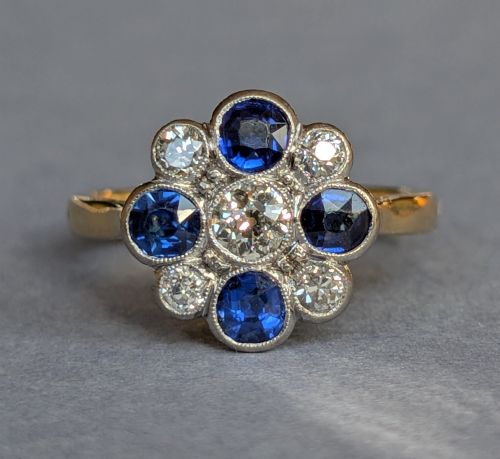
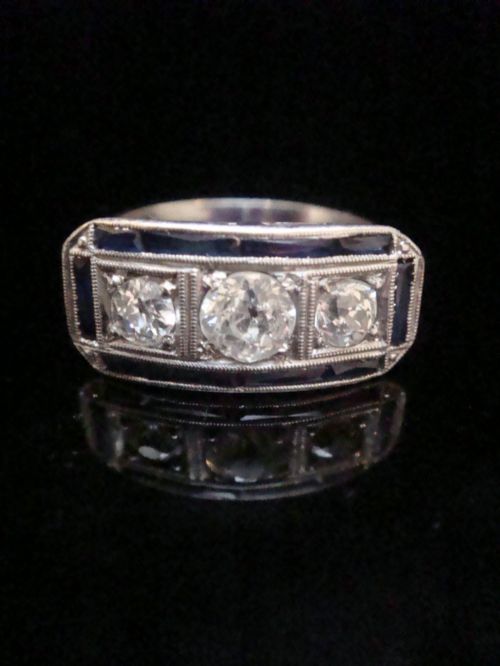
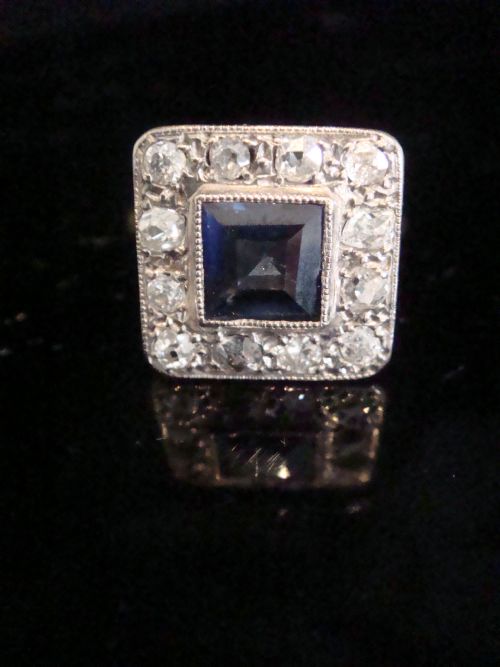
A millegrain sapphire ring is defined by the tiny, beaded border of metal that frames the central stones, adding a refined textural finish to the mount. These pieces span the Edwardian era through the 1920s, 1930s, and 1940s, capturing distinct stylistic shifts in jewellery design over four decades.
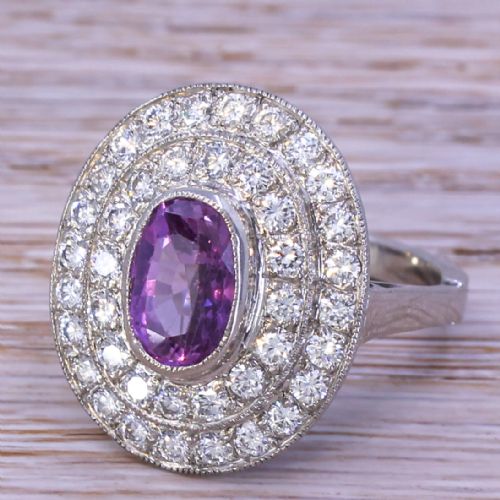
The most common versions encountered on this page belong to the Art Deco and Edwardian styles, showcasing both geometric motifs and organic foliage. Buyers will frequently find three-stone configurations alongside cluster arrangements featuring surrounding diamonds.
Materials vary across these rings, with combinations of platinum, 18ct yellow gold, and 15ct gold providing the structural settings for the sapphires and diamonds. The reliance on white platinum and yellow gold highlights the transition from delicate Edwardian lacework to bolder Art Deco geometry.
How they were made
Goldsmiths constructed these rings using durable precious metals such as platinum, 18ct yellow gold, and 15ct gold to securely house sapphires and diamonds. Metalworking techniques of the period involved hand-rolling and shaping the precious metals before setting each gemstone by hand.
The characteristic millegrain edge was achieved using a specialised knurling tool that rolled tiny beads of metal along the outer borders of the setting. This meticulous process softened the visual transition between the metal and the stones while adding decorative texture.
Millegrain Sapphire Ring Retail Price Guide 2026
Typical asking prices for millegrain sapphire ring among the pieces listed under this phrase on Sellingantiques today, from the lower quarter to the upper quarter. They describe what is for sale here now, not the wider market.
Materials utilised across the available pieces include platinum, 18ct yellow gold, and 15ct gold.
What varies in quality
Quality in these rings rests upon the crispness of the beaded millegrain work and the precision with which the stones are set into the metal. Fine examples exhibit uniform, perfectly spaced beads that retain their definition without wearing down over decades of handling.
The choice of materials and the harmony between the sapphire and accompanying diamonds also dictate the standing of a piece. Superior composition shows careful consideration of stone proportions, ensuring the central blue tone balances the brilliance of the old-cut diamonds.
The Millegrain Sapphire Ring Glossary
- Millegrain
- A decorative technique featuring a raised, finely beaded edge along the border of a metal setting. It creates a soft, textured frame around gemstones.
- Art Deco
- A design style spanning the 1920s and 1930s characterised by geometric symmetry, clean lines, and stylised motifs. It succeeded the more flowing Edwardian aesthetic.
- Edwardian
- A period of jewellery design associated with the early twentieth century, known for delicate lacy metalwork and platinum settings. Pieces from this era often mimic fabric textures.
- Old cut
- A traditional diamond-cutting style preceding modern brilliant cuts, featuring a smaller table and wider facets. These stones produce a softer, candlelight sparkle.
- Cluster
- An arrangement of gemstones where a central stone is surrounded by a group of smaller stones. This layout maximises overall visual presence.
Millegrain Sapphire Ring: Frequently Asked Questions
What is millegrain?
Millegrain is a decorative border of tiny metal beads that frames the edges of a setting, giving the jewellery a refined finish.
Craftsmen applied this detail using a specialised tool to press small dots into the precious metal alongside the stones.
How do I care for my ring?
These antique rings require gentle handling and should be cleaned with mild soap and warm water using a soft brush. Avoid harsh chemical dips that can damage the older metals and settings.
It is wise to remove the ring during heavy manual work to protect the delicate millegrain borders and stone settings.
How do I date a piece?
Dating relies on stylistic clues, such as the flowing foliate motifs of Edwardian work versus the geometric precision of Art Deco design. The choice of metals also offers hints, with platinum and yellow gold appearing across different decades.
Examining the specific cut of the diamonds, such as old cuts, helps place the ring within its historical period.
Are these rings suitable for daily wear?
Many people wear these historic rings daily, provided they receive regular checks by a jeweller to ensure the stone settings remain secure. Platinum and gold offer good durability for everyday use.
Care should be taken with delicate cluster mounts and older claw settings to prevent accidental knocks.