
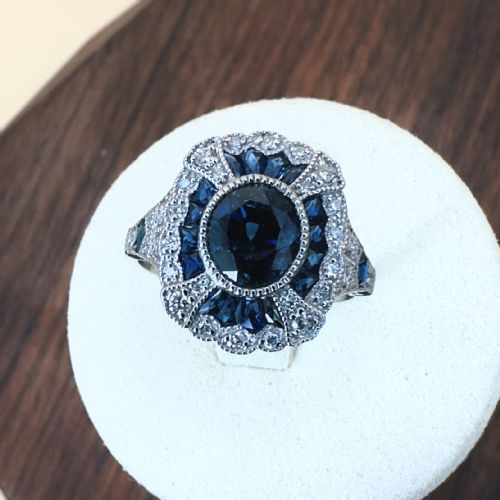
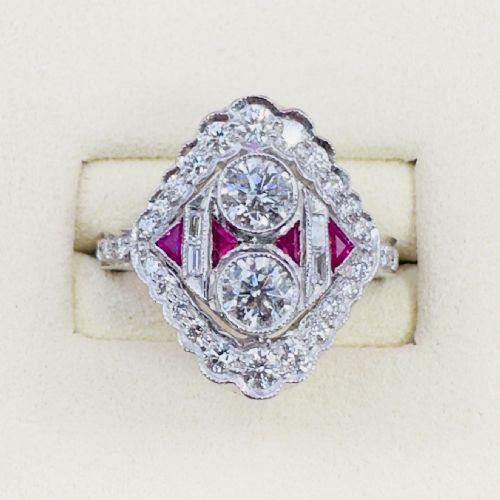
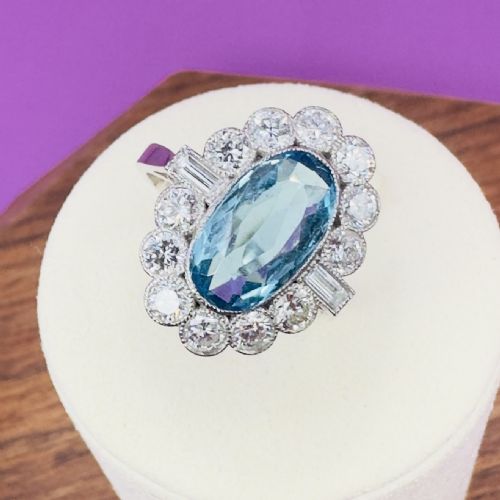

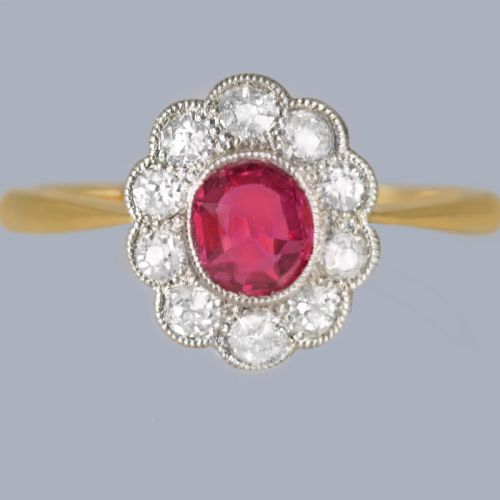


Art Deco Halo Ring
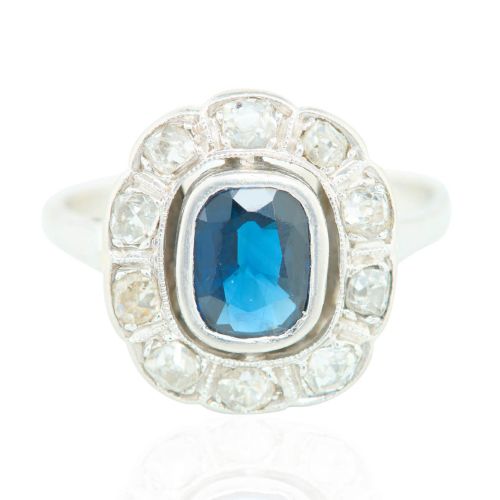
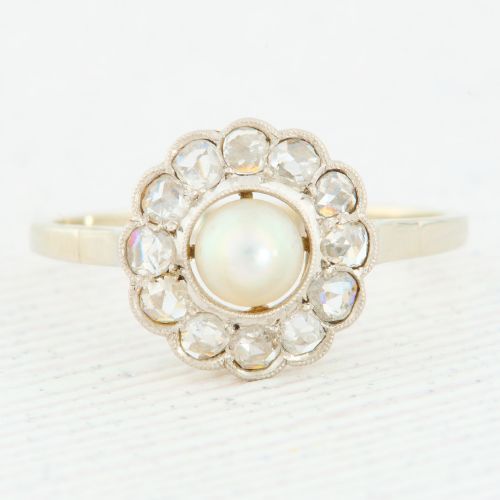
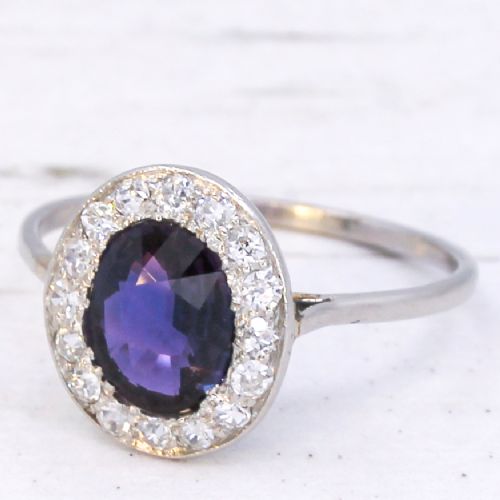
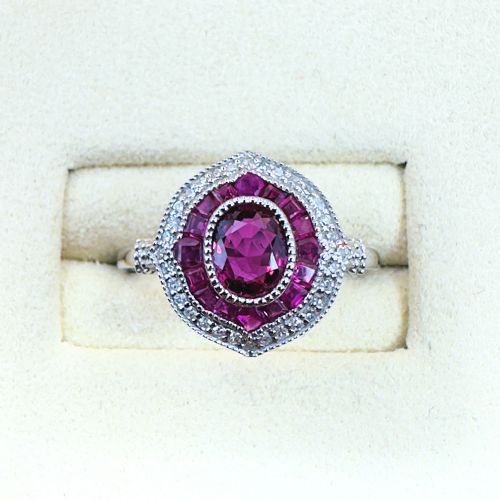
An art deco halo ring brings geometric brilliance to the hand through concentric circles of diamonds framing coloured gems.
Identifying an art deco halo ring
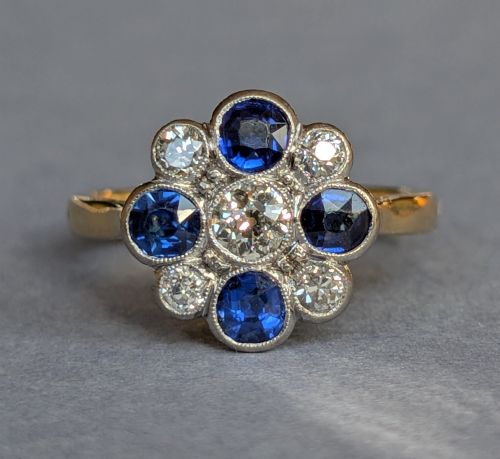
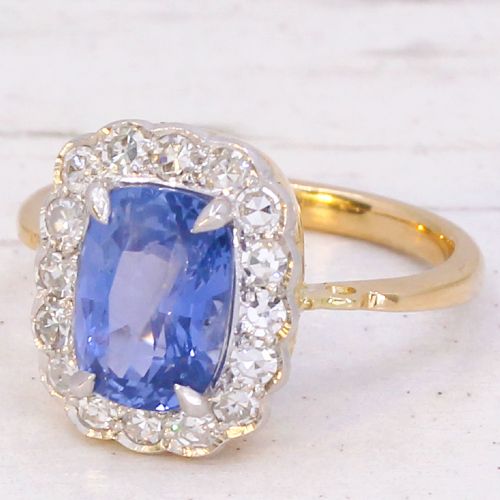
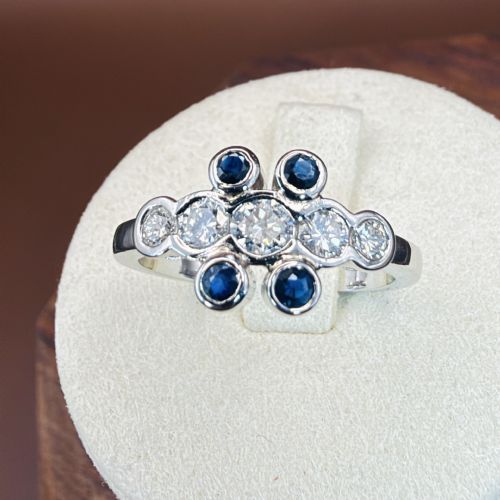
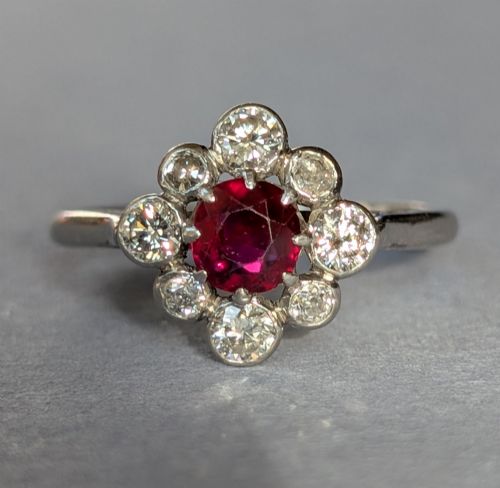
An art deco halo ring centres on a prominent gemstone, such as a diamond, sapphire, emerald, ruby, aquamarine, amethyst, opal or paste, surrounded by smaller accent stones that create the signature radiating border.
Most examples date from the 1920s and 1930s, reflecting the architectural geometry and clean symmetry characteristic of the period.
Cluster and snowflake forms dominate the selection, often pairing a central diamond or cabochon sapphire with meticulous frames of smaller diamonds or marcasite.
Materials and construction methods
Goldsmiths utilised platinum, 18ct gold, 18ct white gold, 9ct gold and silver to mount the stones securely while minimising visible metal around the clusters.
Gemstones feature old cut diamonds alongside cabochon, cushion and faceted coloured stones, set within geometric frames designed to catch the light from every angle.
Retail Price Guide 2026
Typical UK retail prices for art deco halo ring, calculated from the Sellingantiques database of over a million retail prices indexed since 2003. This retail price guide relies exclusively on Sellingantiques data; no external sources or auction records are used, so the figures do not describe the wider market.
Snowflake and fan motifs occasionally replace the traditional round halo, bringing unexpected geometry to cold winter fingers.
Distinctions in quality and execution
Superior pieces display exceptional centring of the halo stones and precise matching of colour and cut in the surrounding diamonds or side gems.
Finer mountings integrate platinum with 18ct gold to provide both durability and a bright white surface that enhances the brilliance of the central stone.
The Art Deco Halo Ring Glossary
- Halo
- A concentric ring of smaller gemstones, usually diamonds, encircling a larger central stone to magnify its visual presence. This setting style defines the geometry of many 1930s rings.
- Cluster
- An arrangement of multiple stones grouped closely together to form a single decorative unit on the finger. These configurations often mimic flowers or snowflakes.
- Cabochon
- A gemstone polished to a smooth, rounded dome rather than faceted with flat planes. This technique appears frequently on significant sapphires from the period.
- Old cut
- A traditional diamond cutting style characterised by a high crown, small table and open culet, engineered to catch candle and gas light. These stones exhibit a softer, deeper dispersion than modern brilliant cuts.
- Marcasite
- Small, faceted pieces of iron pyrite set into silver mounts to provide a dark, metallic sparkle resembling steel. It was widely used in alternative period jewellery.
Frequently Asked Questions
How were these rings worn originally?
Many served as engagement rings or dress rings, designed to make a bold visual statement on the hand.
The low profile of the cluster settings made them practical for daily wear during the interwar decades.
What metals appear in these settings?
Goldsmiths employed platinum, 18ct yellow gold, 18ct white gold, 9ct gold and silver.
Platinum and white gold were particularly favoured for their ability to hold delicate milgrain detailing around diamond bezels.
How do I care for an antique halo ring?
Protect the piece from harsh impacts, as the fine claws holding the halo stones can loosen over decades of movement.
Regular inspection by a specialist ensures the central gem and surrounding small stones remain secure in their original mountings.