


Blue Printed Porcelain
Blue printed porcelain brings transfer-printed scenes onto fine ceramic surfaces, offering collectors rich historical detail and deep cobalt contrast.
Blue Printed Porcelain
When you search for blue printed porcelain, you encounter a selection of eighteenth-century and nineteenth-century tableware and decorative objects spanning the Georgian, Regency, and Victorian periods.
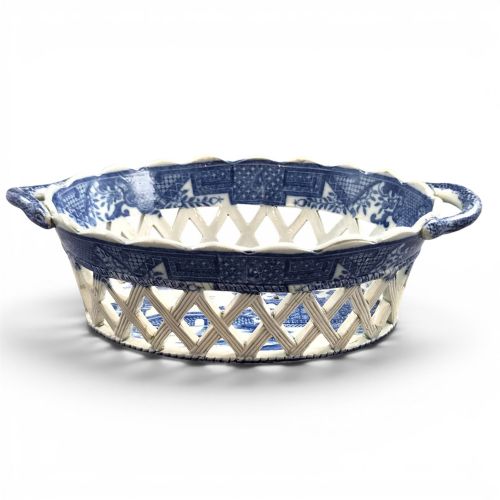
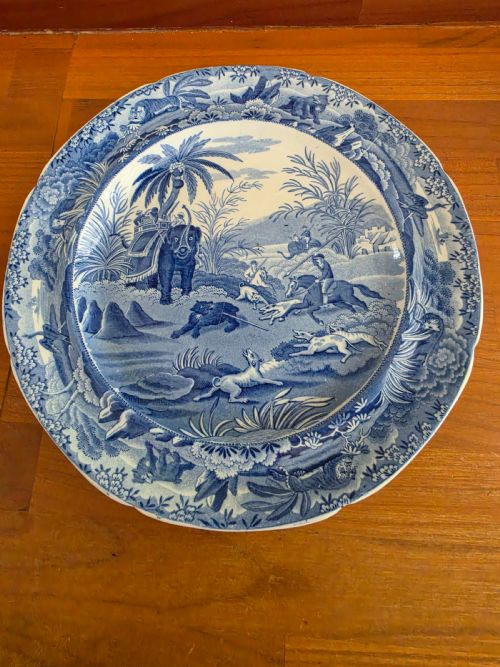
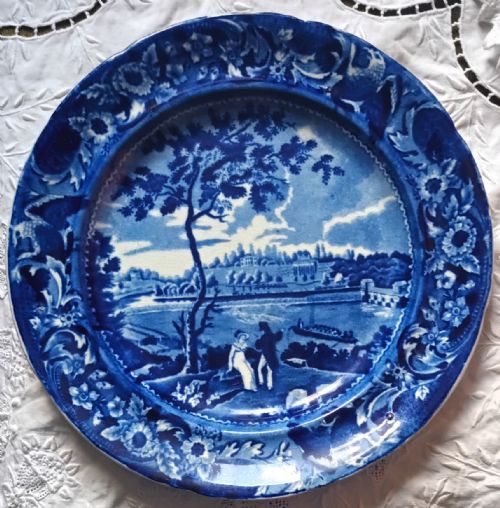
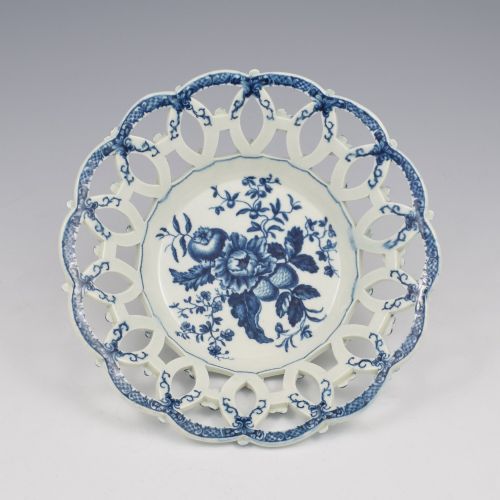
The inventory on this page consists predominantly of plates, baskets, footbaths, mugs, pickle dishes, and tea bowls featuring blue transfer-printed designs.
These items originate from notable English factories and potteries, displaying both classical scenes and chinoiserie motifs.
How they were made
Potters utilised soft-paste porcelain, pearlware, and earthenware bodies as the foundation for these items.
Makers applied designs using cobalt glaze transferred onto the ceramic surface before firing.
The process required precise control of kilns to achieve the characteristic deep blue tones against the white ceramic or glaze.
Bears, cannonballs, and fishermen populate these blue landscapes, proving that historical potters enjoyed a dramatic narrative.
What varies in quality
The clarity and registration of the transfer print separate standard utility wares from finer collector pieces.
Complexity of form, such as reticulated chestnut baskets or moulded pickle dishes, dictates the skill involved in production.
The depth and consistency of the cobalt glaze across the ceramic body indicate the precision of the firing process.
Spode·Heathcote·Caughley·Liverpool Pennington·Stubbs·Staffordshire
The Blue Printed Porcelain Glossary
- Soft-paste porcelain
- An early ceramic composition fired at lower temperatures than hard-paste porcelain. It often displays a slightly warmer tone under the glaze.
- Transfer printing
- A method of applying engraved designs to ceramics via paper from a copper plate. This technique allowed intricate pictorial scenes to be replicated efficiently.
- Chinoiserie
- A European artistic style reflecting Chinese motifs and landscapes. It frequently appears on eighteenth-century tea bowls and baskets.
- Reticulated
- Having an openwork or net-like pattern formed in the clay. This technique appears on decorative chestnut baskets.
Blue Printed Porcelain: Frequently Asked Questions
How do I date blue printed porcelain?
Examine the ceramic body type, such as pearlware versus soft-paste porcelain, alongside the style of the transfer-printed subject matter.
Factory marks, where present, help narrow the period down to specific decades like the eighteenth or nineteenth century.
Were these pieces used daily?
Many items like plates, mugs, and tea bowls served functional roles in Georgian and Victorian households.
More elaborate forms such as footbaths and reticulated chestnut baskets were reserved for formal dining and display.
What is the difference between porcelain and pearlware?
Porcelain is a vitrified ceramic body that transmits light when held up to a strong source. Pearlware is a refined earthenware covered in a tinted glaze designed to mimic Chinese porcelain.
How should I display these pieces?
Display items away from direct sunlight to protect the glaze and ceramic body over time. Use stable plate stands or enclosed cabinets for delicate forms like baskets and tea bowls.