


Blue Transferware Jug
A blue transferware jug brings deep cobalt scenery to earthenware, offering both daily utility and cabinet display.
Blue Transferware Jug
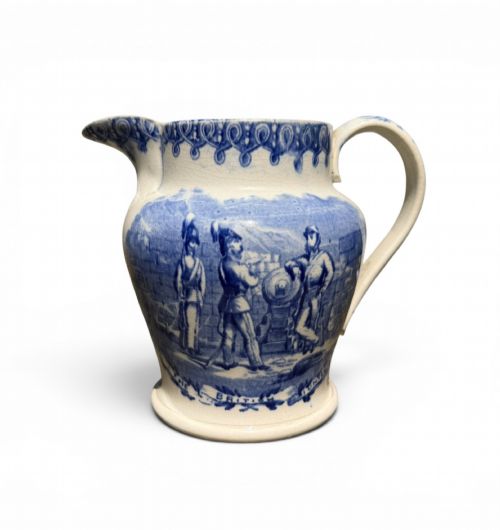
A blue transferware jug combines utilitarian ceramic forms with intricate printed decoration derived from copper plates. Buyers seeking a blue transferware jug encounter pieces ranging from large Georgian service vessels to compact Victorian washware pitchers.
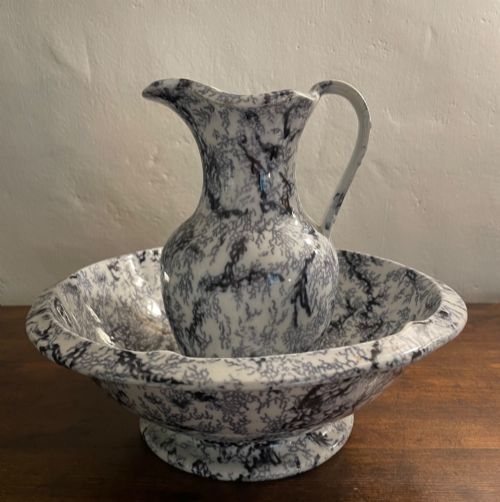
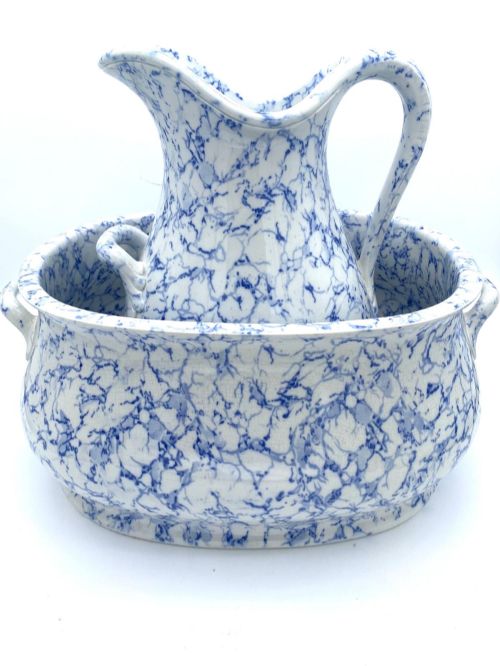
The selection includes large water jugs associated with washstand sets alongside monumental footbath and basin combinations. Most examples originate from the nineteenth century, spanning Georgian, Victorian, and Edwardian periods.
Potteries produced these items in various sizes, from cabinet-scale milk pitchers up to gallon-capacity serving vessels. The decorative themes span scenic patterns, historical landmarks, and classical motifs printed in rich cobalt tones.
Distinctions in manufacture and decoration
Quality rests in the crispness of the transfer print and the clarity of the cobalt glaze. Superior examples maintain sharp lines without blurring or smudging where the paper joined the curved body.
The modelling of handles, mask heads, and spout profiles indicates the skill of the original workshop. Heavier earthenware forms designed for daily service contrast with finer porcelain bodies intended for formal display.
Listings feature earthenware and porcelain bodies decorated with cobalt glaze, alongside examples incorporating gold leaf accents.
Minton·Caughley Coalport·Dr Christopher Dresser·Doulton Burslem
The Blue Transferware Jug Glossary
- Transferware
- Ceramic pottery decorated by transferring a printed design from an engraved copper plate using tissue paper. This technique allowed intricate pictorial scenes to be replicated consistently across multiple vessels.
- Cobalt glaze
- A deep blue metallic oxide pigment used under the glaze to create rich pictorial decoration. It withstands high kiln temperatures without losing its intense colour.
- Earthenware
- Porous ceramic pottery fired at lower temperatures than porcelain and finished with a vitreous glaze. It forms the structural body for the majority of utilitarian jugs.
- Flow blue
- A nineteenth-century ceramic style where the cobalt blue pigment intentionally blurred into the surrounding white glaze during firing. This created a soft, hazy appearance favoured in washstand sets.
- Mask head
- A sculptural face moulded into the ceramic spout or body of a jug, often taking the form of a classical deity or grotesque. It serves both an ornamental and structural purpose on the vessel.
Blue Transferware Jug: Frequently Asked Questions
How do I date a blue transferware jug?
Dating relies on examining the ceramic body, handle attachment style, and the depth of the cobalt transfer print. Georgian and early nineteenth-century pieces often feature heavier earthenware bodies and hand-finished details.
Later Victorian and Edwardian examples frequently form part of larger bathroom sets with standardised basin pairings. Maker marks, where present on the base, provide further chronological context.
Were these jugs used for water?
Many larger examples served specific functions in bedrooms as part of washstand sets, holding water for washing alongside matching basins. Other robust forms acted as serving vessels for liquids at table or in tavern settings.
Display pieces, such as shop window display items or monumental footbath jugs, were designed primarily for visual impact rather than heavy daily service.
What causes the blurry look on some jugs?
The hazy appearance is a deliberate aesthetic known as flow blue, achieved by introducing volatile chlorides into the kiln atmosphere during firing. This caused the cobalt pigment to bleed softly into the white glaze.
It represents a distinct stylistic choice of the mid-nineteenth century rather than a manufacturing defect or accidental damage.
How should I display a large jug?
Large pitchers and wash jugs require stable, level surfaces capable of supporting their considerable ceramic weight. Placing them on low sideboards or within deep shelving units highlights their scale and pictorial decoration safely.
Avoid positioning them in areas prone to heavy foot traffic where handles or spouts might suffer accidental impacts.