

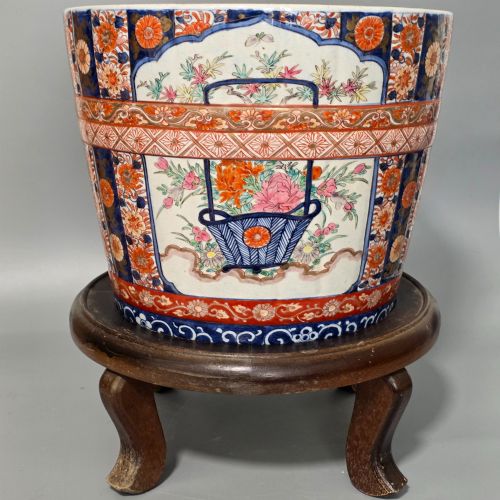


Blue Porcelain Basket
A blue porcelain basket brings painted depth and pierced detail to a table, combining utility with decorative porcelain craft.
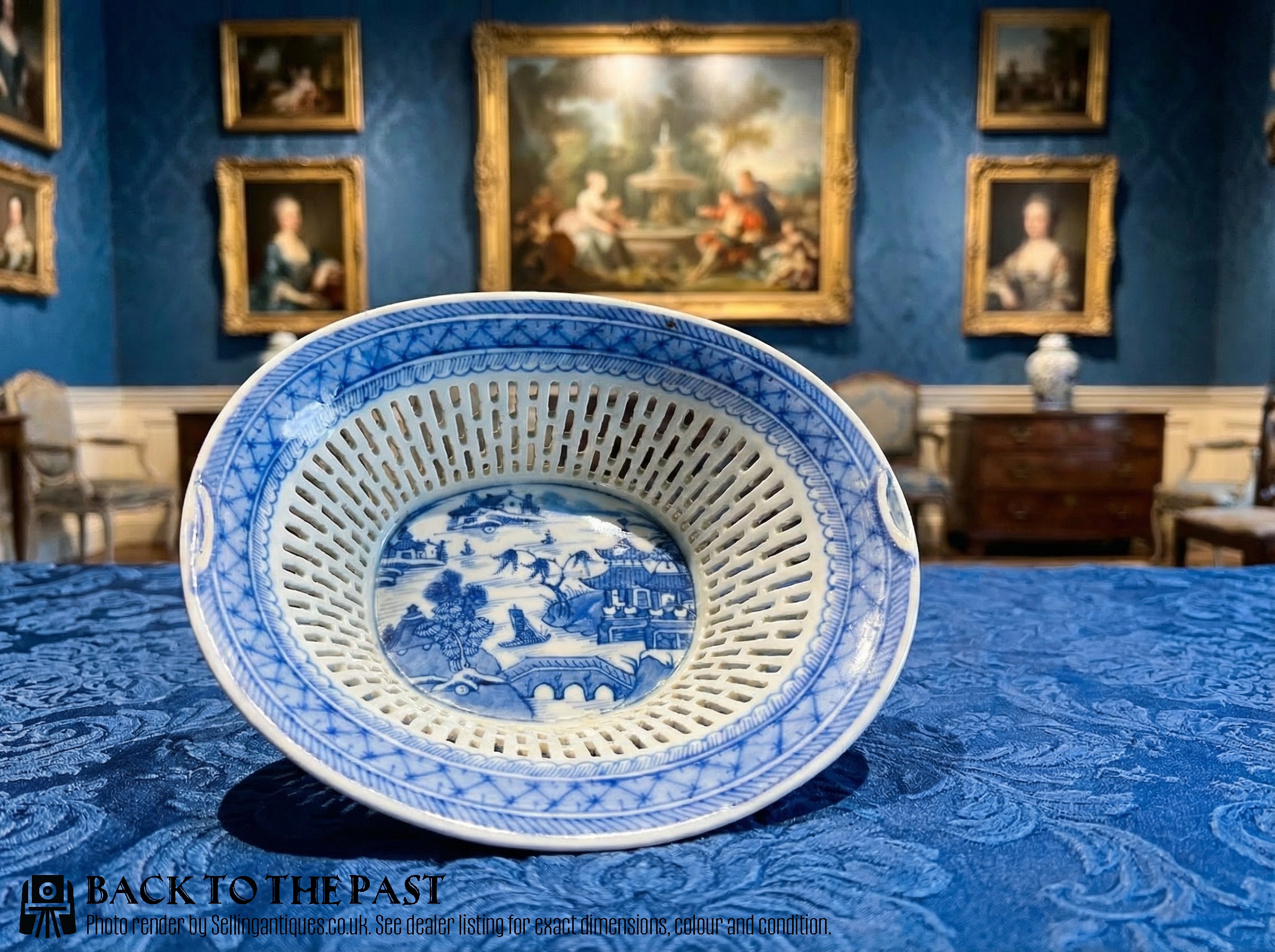
Blue Porcelain Basket
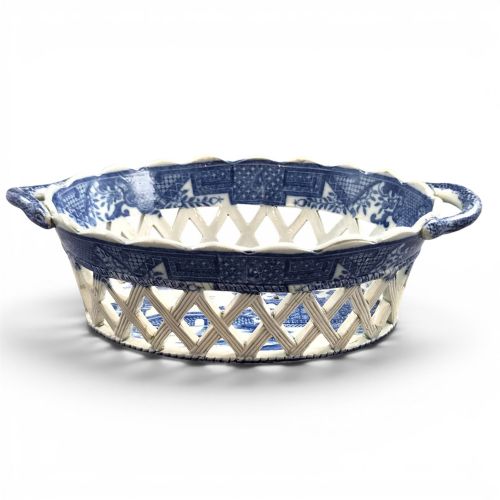
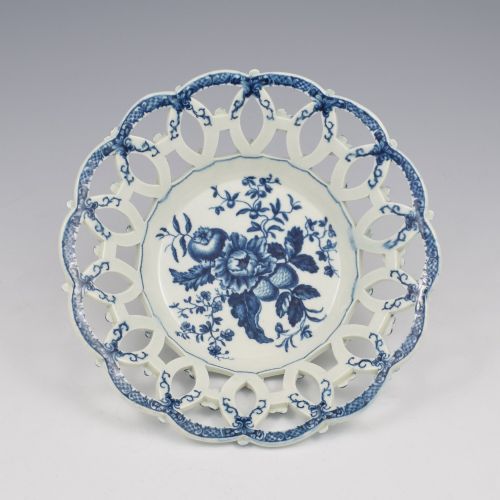
A blue porcelain basket is a ceramic vessel shaped like woven wicker or pierced with open reticulated lattice work, painted or glazed in blue pigments. These pieces range from eighteenth century chestnut baskets with lids and stands to nineteenth century decorative examples.
The versions most commonly found here include English soft-paste porcelain from factories like Worcester, alongside pearlware and continental wares. They appear alongside related forms such as dishes, planters, and mugs sharing the same blue and white palette.
Originating in Georgian and Victorian parlours for serving fruit or chestnuts, these vessels function today as decorative centrepieces. They bridge the gap between utilitarian table service and fine ceramic art.
How they were made
Makers relied on porcelain, soft-paste porcelain, earthenware, and pearlware as the primary ceramic bodies for these baskets. Cobalt underglaze and enamel provided the distinctive blue coloration, fixed by high-temperature firing beneath a clear glaze.
Piercing and reticulation required skilled knife work while the clay was leather-hard, creating openwork lattices that risked collapse in the kiln. Handles and applied floral details were hand-formed separately and luted to the main body before glazing.
Early Staffordshire dogs occasionally wore baskets in their mouths, serving as peculiar quill holders for the Victorian desk.
What varies in quality
Quality rests on the crispness of the reticulated piercing and the definition of the woven lattice work, which should remain sharp and even. Finer examples display delicate, hand-painted cobalt underglaze details rather than uniform transfer printing.
The weight, translucency of the ceramic body, and survival of matching stands or covers dictate the standing of a piece. Early soft-paste bodies show subtle variations and glaze pooling that distinguish them from later mass-produced ceramics.
Chamberlain Worcester·Spode·Mason·Vion and Baury·Sevres
The Blue Porcelain Basket Glossary
- Reticulated
- Pierced or openwork ceramic decoration formed by cutting geometric or lattice patterns into the wet clay before firing. This technique created lightweight decorative walls on baskets and chestnut sets.
- Chestnut basket
- A specialised lidded serving vessel designed to hold roasted chestnuts at the end of a formal meal. These pieces frequently included an associated underplate or tray.
- Soft-paste porcelain
- An artificial porcelain compound invented in Europe to imitate true Chinese hard-paste porcelain, fired at lower temperatures. It is characterised by a warm, creamy glaze and slight translucency.
- Cobalt underglaze
- A metallic oxide pigment applied to the raw clay body beneath the protective transparent glaze before the final firing. This pigment withstands high kiln temperatures without losing its deep blue colour.
- Pearlware
- An refined earthenware developed in the late eighteenth century featuring a thin glaze with a faint bluish tint. It provided a whiter surface to better display blue transfer-printed patterns.
Blue Porcelain Basket: Frequently Asked Questions
How were blue porcelain baskets used?
These vessels served aristocratic and middle-class dining tables for presenting dry foods, specifically roasted chestnuts or seasonal fruits. Their pierced walls allowed air circulation while adding a decorative element to the dessert course.
Over time, they transitioned from functional dining implements to purely decorative cabinet pieces and table centrepieces. Today, collectors display them on sideboards, mantelpieces, or wall brackets.
How do I date an 18th-century basket?
Dating relies on examining the ceramic body, glaze characteristics, and painting style under magnification. Eighteenth-century pieces often use soft-paste porcelain with characteristic glaze pooling and hand-painted underglaze blue.
Comparing the pierced lattice patterns and handle shapes to known factory patterns helps narrow the decade of production. Documentation from archives and historical sales provides additional context for attribution.
What is the difference between porcelain and pearlware?
Porcelain is a vitrified, hard ceramic body that is typically translucent and rings when tapped. Soft-paste porcelain used in early English baskets has a warmer tone and a softer glaze surface.
Pearlware is a refined earthenware developed to mimic porcelain by adding a bluish cast to the clear glaze over a white body. It is opaque and heavier than porcelain, commonly decorated with blue transfer printing.
Can I use my antique basket for food?
Using antique ceramic baskets for serving food is generally discouraged due to the fragility of soft-paste bodies and historic glazes. Crazing and hairline cracks can absorb moisture and harbour bacteria over time.
Displaying them dry protects the porous ceramic and any historic repairs from further degradation. Gentle dusting with a soft brush is the preferred method of maintenance.