




Blue Persian Carpet
These heavy blue persian carpet examples bring depth and historic regional artistry into a room through rich wool knotting and traditional motifs.

Blue Persian Carpet
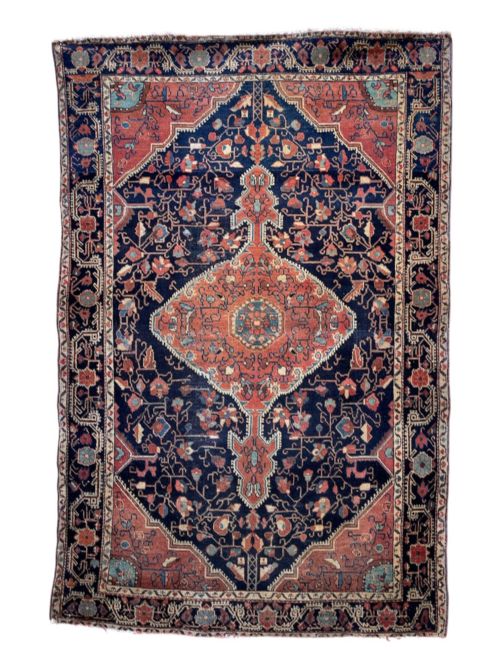
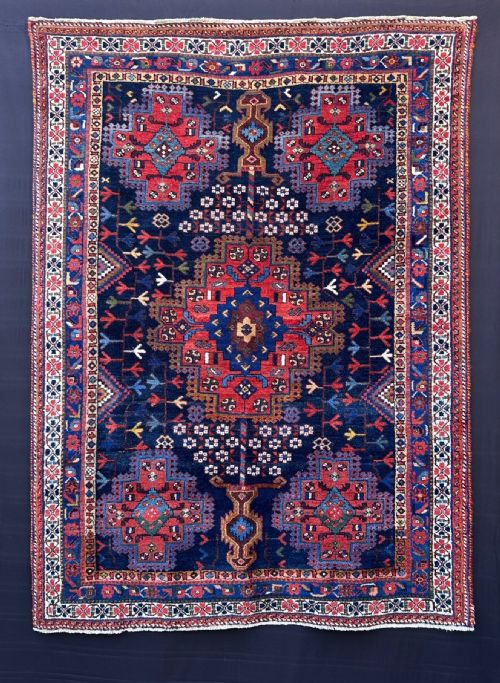
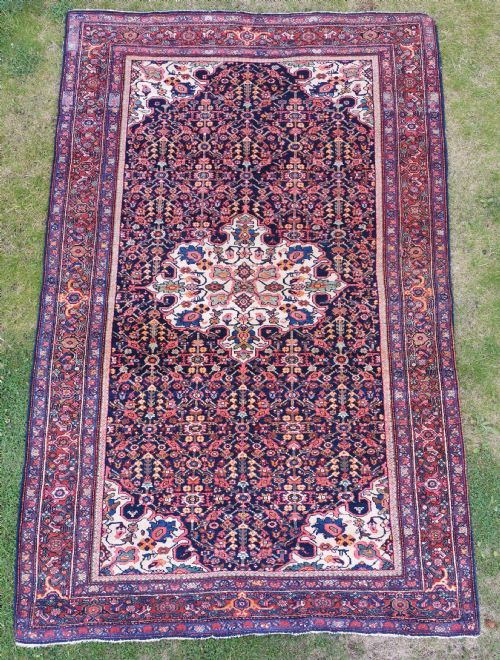
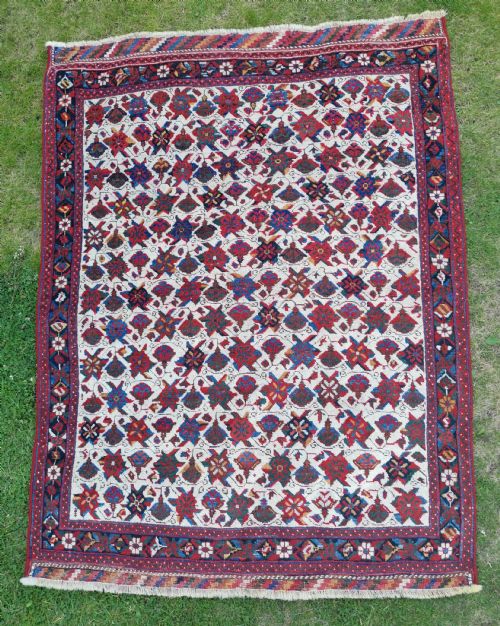
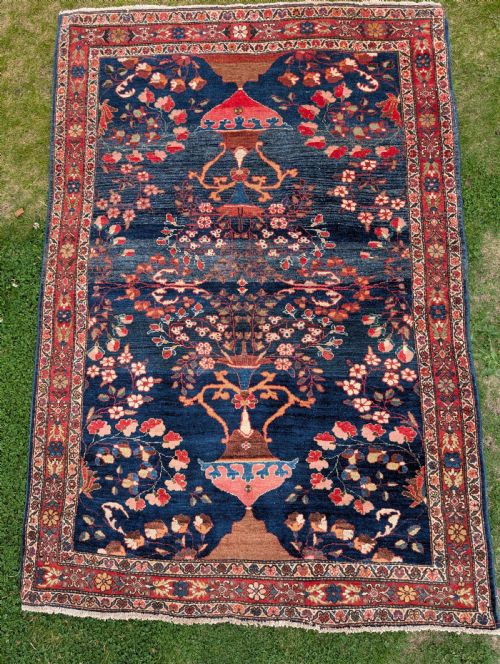
A blue persian carpet encompasses floor coverings originating from nineteenth and early twentieth-century weaving centres across Persia, including Heriz, Bakhtiar, Khamseh, and Afshar regions. When searching for this type, buyers encounter large formal carpets as well as smaller tribal rugs defined by deep indigo and sky blue grounds.
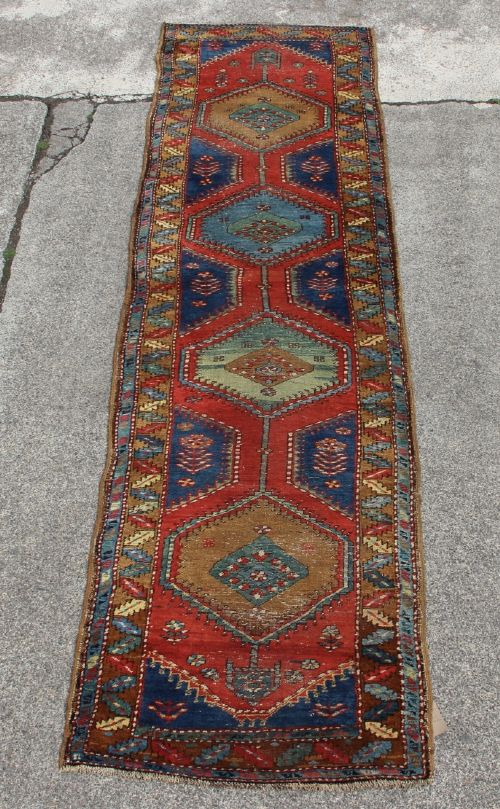
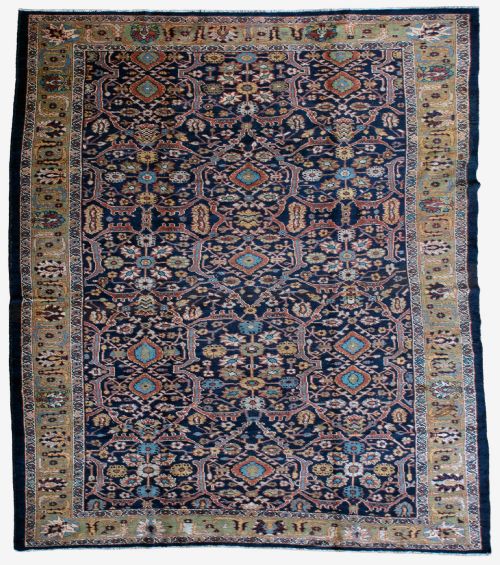
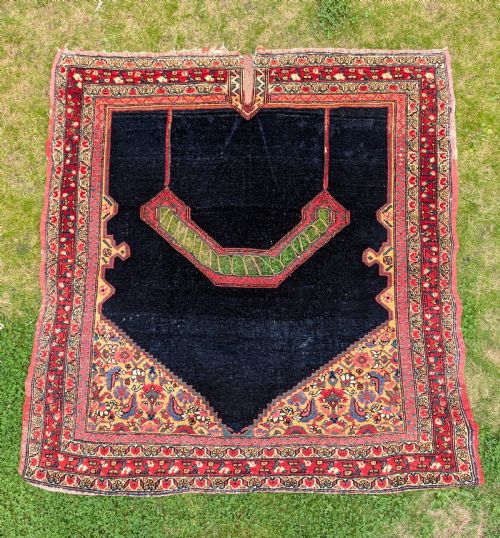
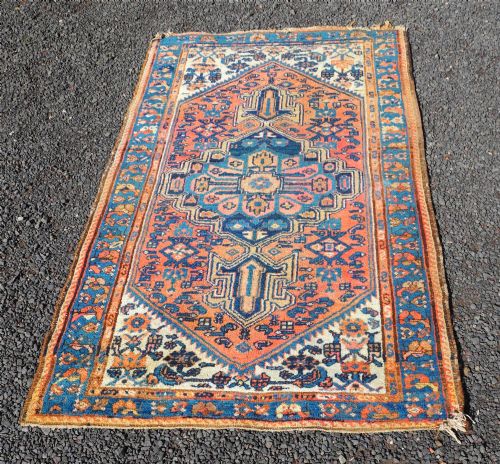
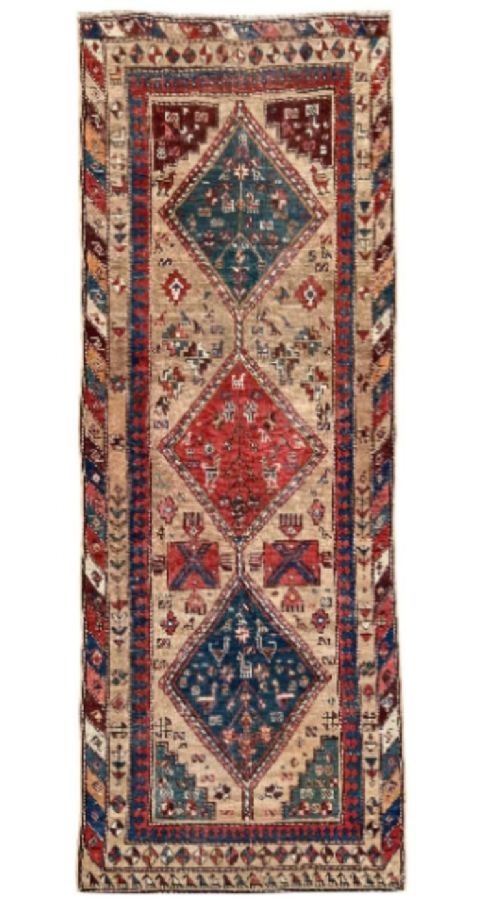
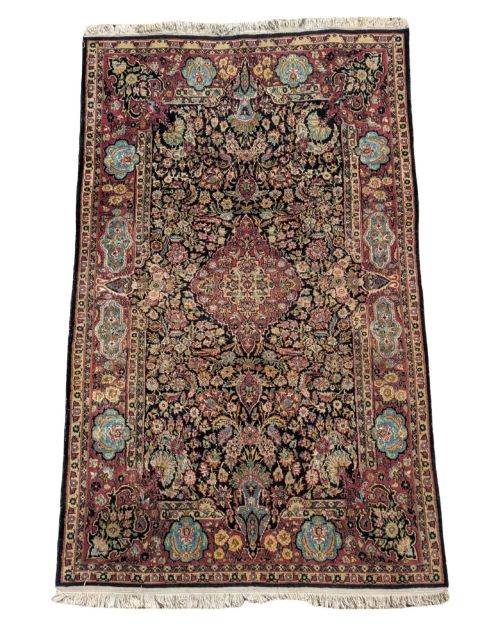
The selection ranges from grand room-size Heriz and Mahal carpets down to narrow hallway runners and compact saddle covers. Village pieces display bold geometric medallions, whilst city workshops often incorporate intricate floral fields and silk highlights.
Dating primarily from the eighteen-fifties through to the nineteen-thirties, these pieces reflect distinct regional knotting traditions and local dye palettes. The surviving specimens show considerable variety in format, stretching from square proportions to long narrow corridor runners.
How they were made
Weavers constructed these carpets using hand-spun wool foundations and pile, occasionally integrating cotton for structural warp and weft threads or adding fine silk highlights to specific details. Natural dyes provided the characteristic rich blue tones, derived from indigo plants and combined with earthy browns and warm reds.
The construction relied entirely on hand-knotting techniques executed on upright looms, creating dense pile surfaces capable of withstanding generations of heavy use. Tribal weavers and workshop artisans alike employed sturdy knot counts that secured the intricate geometric and curvilinear designs.
Blue Persian Carpet Retail Price Guide 2026
Typical asking prices for blue persian carpet among the pieces listed under this phrase on Sellingantiques today, from the lower quarter to the upper quarter. They describe what is for sale here now, not the wider market.
Some nineteenth-century nomadic weavers hid tiny stray animal figures and misplaced asymmetry within their rigid geometric prayer designs.
What varies in quality
Quality rests upon the fineness of the hand-knotting, the precision of the geometric or floral layout, and the depth achieved by natural indigo and companion dyes. Carpets featuring tightly packed wool foundations and crisp, well-defined medallion structures occupy the upper tier of the range.
The integration of superior hand-spun wool and balanced proportions separates exceptional city and village pieces from simpler utility formats. Subtle variations in dye saturation and wool lustre further distinguish finer regional carpets from standard commercial output.
The Blue Persian Carpet Glossary
- Kelleh
- A long, narrow format carpet traditionally designed to fit specific proportions in Persian reception rooms. These elongated pieces often display central medallion sequences.
- Medallion
- A large, symmetrical central ornament placed in the field of a carpet. It serves as the primary focal point around which secondary floral or geometric motifs revolve.
- Runner
- A long, narrow strip of carpet intended for hallways, corridors, or staircases. They repeat geometric patterns or continuous floral vines along their length.
- Warp
- The vertical foundation threads stretched lengthwise on the loom before knotting begins. The exposed ends of these threads frequently form the fringed edges of the rug.
Blue Persian Carpet: Frequently Asked Questions
How do I style a blue persian carpet?
These carpets anchor a room by providing a strong anchor of indigo or sky blue tones against wooden floors or neutral stone tiles. Their traditional patterns complement both classic period furniture and minimalist modern interiors.
Position large room formats centrally beneath living room seating groups, or utilise long runners to add warmth and texture to narrow hallways and corridors.
Are these carpets suitable for hallways?
Many surviving examples are specifically formatted as runners or long gallery carpets originally intended for corridors and passage spaces. Their sturdy wool construction handles regular foot traffic effectively.
When selecting a piece for a hallway, measure the passage width carefully to ensure the border motifs remain visible alongside skirting boards.
How do I distinguish regional Persian carpet styles?
Regional styles reveal themselves through distinct design geometry and colour distribution. Heriz and Serapi carpets typically feature bold, architectural medallions with large-scale geometric motifs in blues and rust hues.
In contrast, tribal pieces from Afshar or Khamseh weavers display smaller, repeating boteh motifs and denser, more spontaneous field arrangements executed with rich indigo dyes.
What maintenance do antique wool carpets require?
Regular gentle vacuuming without a rotating brush roll keeps surface dust from settling into the wool pile. Professional cleaning by a specialist in antique textiles preserves the integrity of the natural dyes.
Rotating the carpet periodically ensures even wear patterns across areas exposed to direct sunlight or heavy foot traffic.