


Blue Persian Bag Face
A blue persian bag face is a woven fragment of a nomadic storage sack that brings rich tribal colour and geometry into a modern interior.
Blue Persian Bag Face
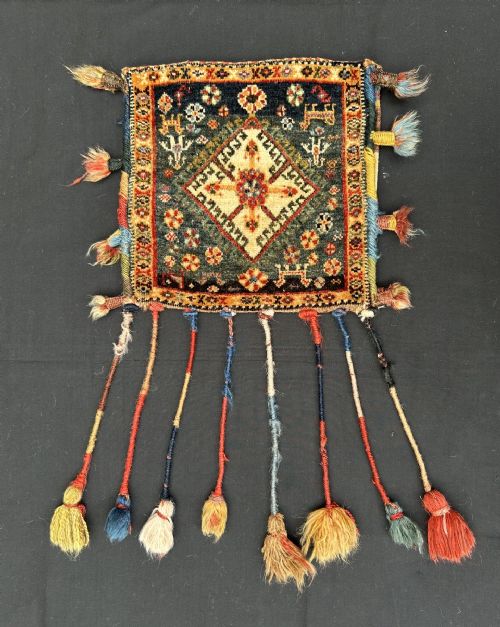
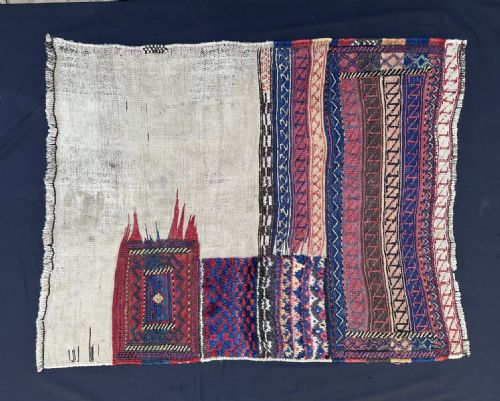
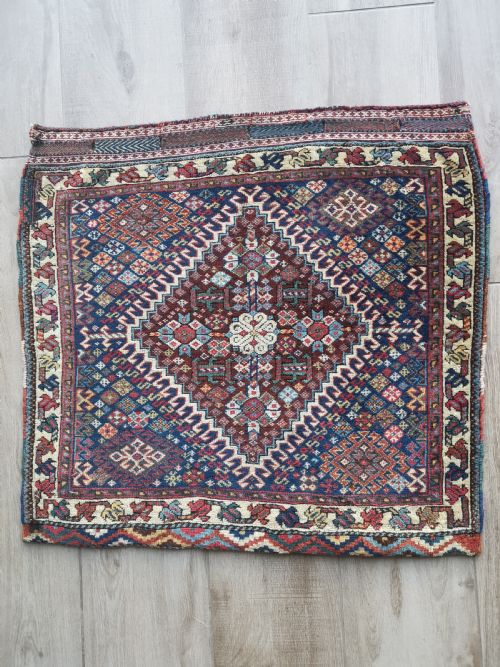
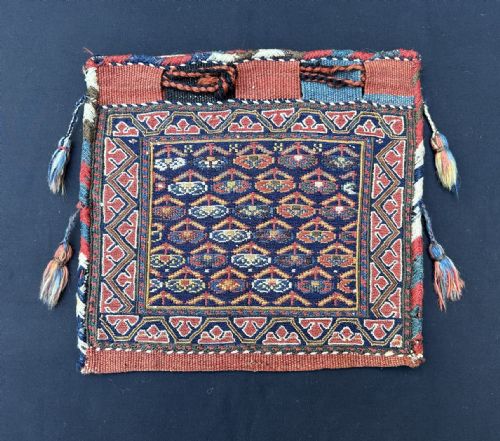
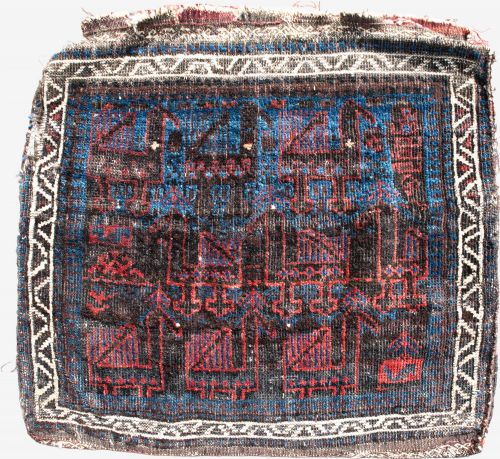
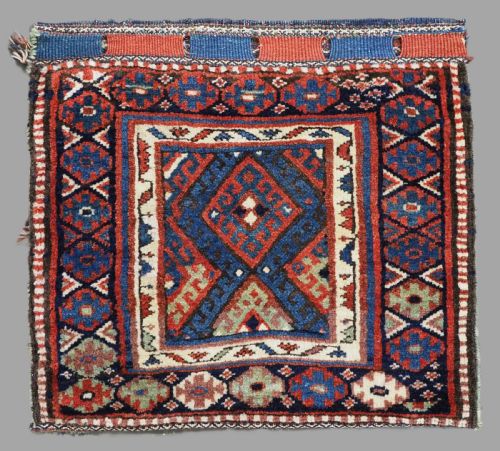
A blue persian bag face represents the front panel of a larger nomadic storage sack, known as a khorjin, which was originally utilised for transport on animals. These fragments survive because the sturdy face panels were preserved long after the plain weave backs and side seams wore away. Buyers searching this phrase encounter nineteenth-century tribal weaving from western, southern and south-west regions of Persia.
The regional variety spans specific nomadic confederacies and tribal groups, including the Qashqai, Afshar, Shahsavan, Lori-Bakhtiari and Kurdish weavers. Forms range from square vanity bags and cushion covers to complete saddlebag faces displaying central medallions, boteh motifs or geometric bird and dragon patterns. Pieces date primarily from the mid-nineteenth century through to the early twentieth century.
How they were made
These textiles rely on hand-spun wool combined with cotton foundations, worked into resilient pile knots or flat-woven sumac structures. Weavers utilised natural and vegetable dyes to achieve deep indigo blues alongside rich madder reds and earthy secondary tones. The combination of hand-spun wool and natural colourants gives the pile its characteristic luminous quality.
Flat-woven soumak techniques appear frequently alongside pile-knotted surfaces, creating varied textures within the same piece. The structural integrity depends on tight packing of the foundation warps and wefts to protect the wool surface from heavy daily wear during nomadic use.
Some nomadic weavers included tiny protective amulets hidden within the pile to ward off the evil eye.
What varies in quality
The distinction between standard examples and exceptional pieces rests upon the handle of the wool and the depth of the dye work. Luminous, lustrous wool containing natural lanolin responds differently to light than flat, dry fibres. The clarity of the drawing within geometric medallions and animal motifs dictates the visual strength of the design.
Subtlety in the transition of natural dye colours adds depth that mechanical or uniform dying fails to achieve. Precision in sumac work or knot density further separates utilitarian weaving from master tribal artistry.
The Blue Persian Bag Face Glossary
- Khorjin
- A traditional double-sided saddlebag used by nomadic groups for transport and storage. These sacks were divided into two compartments connected by a central web.
- Sumac
- A warp-wrapping flat-weave technique that produces a textured surface resembling embroidery without the use of pile knots. Shahsavan weavers utilised this method extensively for bag faces.
- Boteh
- A stylised floral motif resembling a folded almond or pine cone, frequently seen in Persian tribal weaving. This ancient symbol appears across Afshar and Qashqai designs.
- Vanity-bag
- A smaller ornamental bag used within nomadic tents for personal belongings. These pieces often feature particularly fine knotting and concentrated design work.
Blue Persian Bag Face: Frequently Asked Questions
What is a bag face?
A bag face is the decorative front panel of a nomadic storage sack that has been separated from its plain-weave back. These panels were preserved for their intricate patterns and superior wool work.
Nomads originally used the complete double sacks for packing household goods during seasonal migrations. Collectors now display the surviving faces as textile art on walls or tabletops.
How were these bags used?
Nomadic families utilised these heavy woolen sacks for storing grain, bedding, and personal possessions inside tents and during transport on horses or camels. The sturdy construction protected contents from dust and weather.
When the sides and plain backs wore out from friction against pack animals, the decorative faces were often cut away and saved. Families valued the skilled weaving and traditional tribal symbols enough to keep them after the utilitarian function ended.
How do I tell tribal groups apart?
Tribal attribution relies on specific wool qualities, colour palettes, and structural characteristics unique to each region. Shahsavan pieces often feature precise soumak flat-weaving with geometric animal rows, while Afshar and Qashqai work frequently displays boteh motifs and central medallions.
Familiarity with regional colour choices, such as deep indigo blues paired with rich terracotta reds, helps identify whether a piece originated in Fars, Kerman, or western Persia.
How should I live with these textiles?
These robust wool pieces suit display as wall hangings, table mats, or small decorative cushions in low-traffic areas. Direct strong sunlight should be avoided to protect natural dyes from fading over time.
Gentle vacuuming with a suction-only attachment maintains the wool without damaging the antique foundation threads. Proper placement allows the tactile texture and historic dye work to be appreciated daily.