


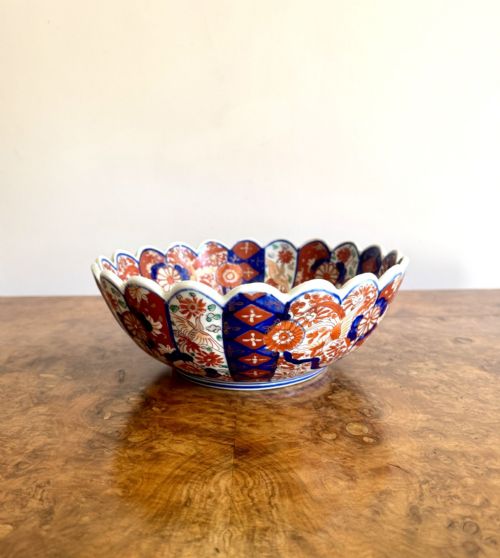
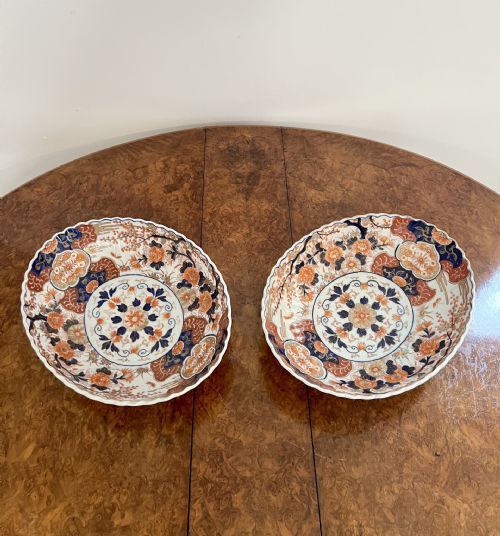


Blue Orange Porcelain Bowl
A blue orange porcelain bowl brings rich palette and striking pattern together, whether shaped in Japanese Imari taste or English ironstone.
Blue Orange Porcelain Bowl
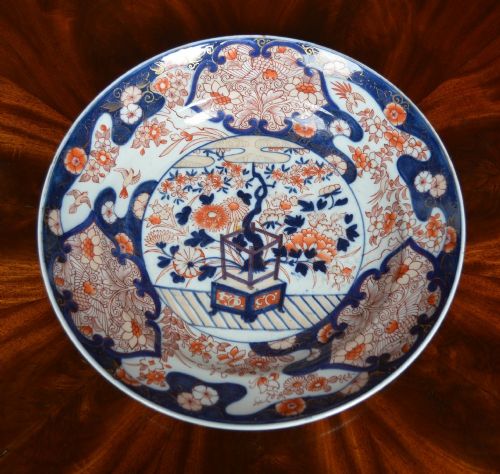
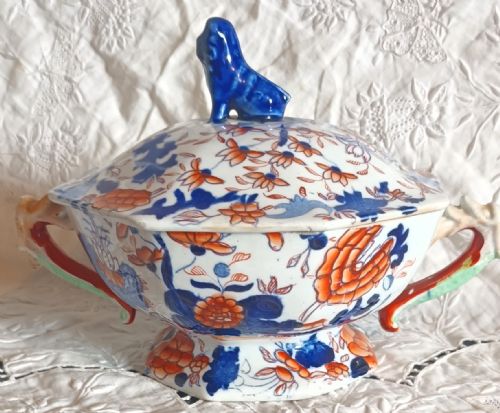
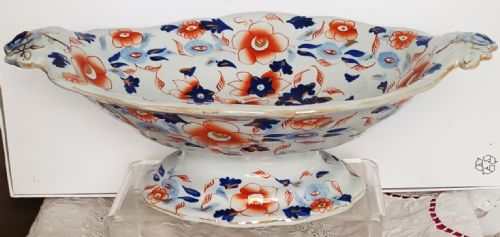
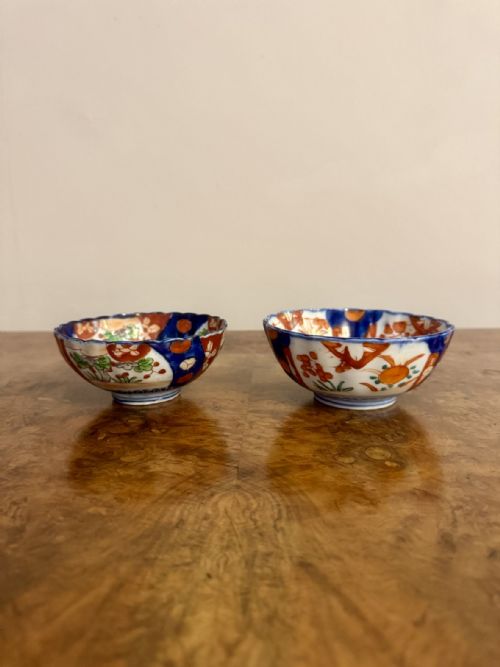
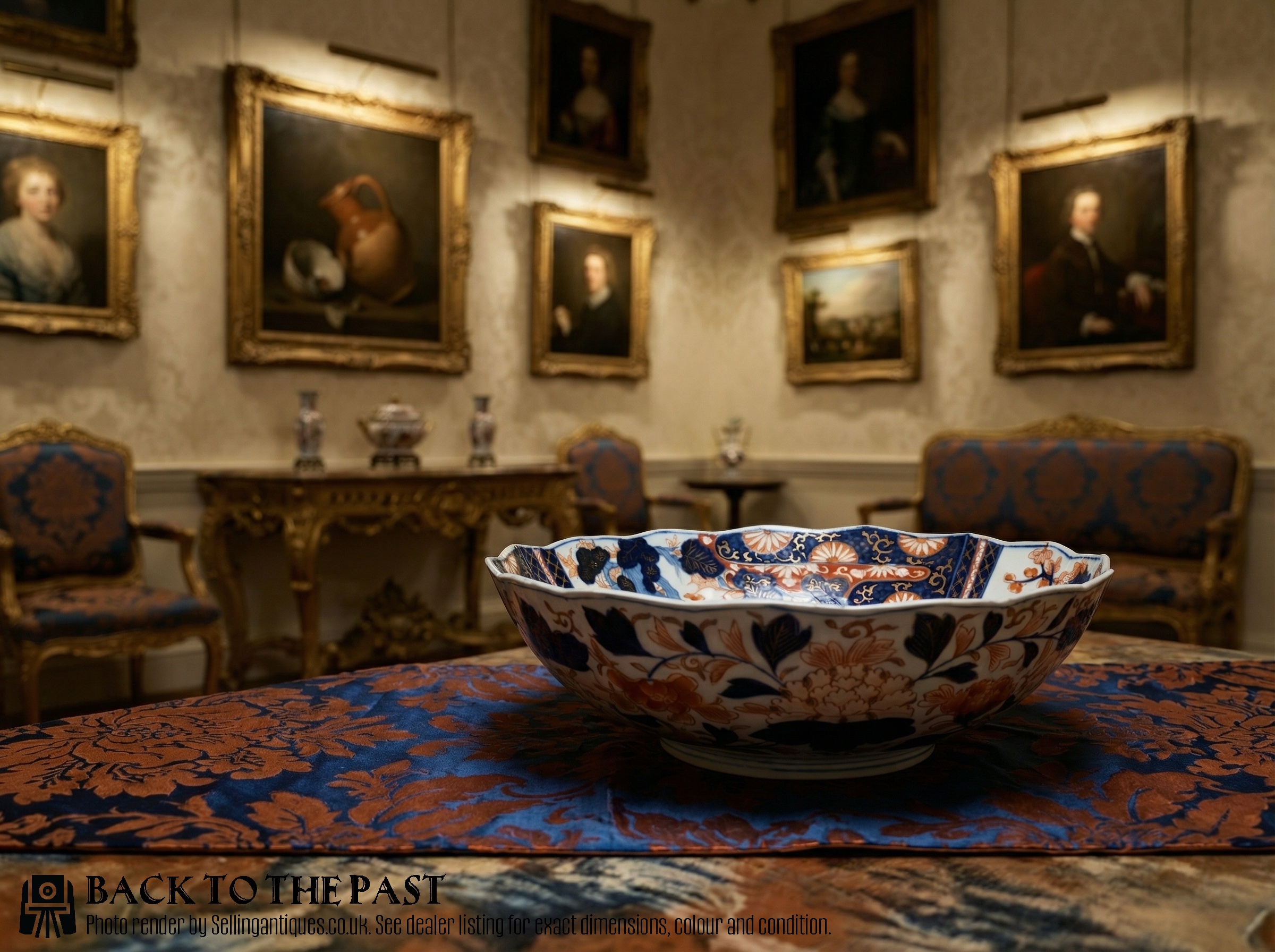
When you search for a blue orange porcelain bowl, you encounter a selection spanning the eighteenth, nineteenth, and early twentieth centuries, dominated by Japanese Imari production alongside English interpretations. These pieces range from small domestic serving vessels and scalloped display dishes to substantial jardinieres and footed comports.
Japanese Imari pieces from the Meiji period and earlier centuries make up the core of what you find here, alongside English ironstone and bone china by makers such as Mason's and Wedgwood. Forms vary considerably, taking in hexagonal profiles, boat shapes, and deep circular vessels intended for decorative display or table service.
How they were made
Ceramic bodies of porcelain, ironstone, and bone china provide the structural foundation for these pieces, shaped on the wheel or pressed into moulds. Potters then applied underglaze blue and vibrant overglaze enamel pigments, often combining cobalt with rich orange tones.
Many examples incorporate gold leaf or gilt highlights applied over the glaze during a secondary firing stage to accentuate the patterns. Lustre glazes also appear on twentieth-century earthenware and porcelain to catch the light across the surface.
Listings feature porcelain, ironstone, and earthenware bodies decorated with enamel, glaze, and gold leaf across multiple centuries.
What varies in quality
Execution of the painted decoration defines the upper tier of these vessels, where crisp cobalt lines meet precisely controlled orange enamel and gilt detailing. Finer examples display harmonious balance across complex motifs without crowding the visible ceramic body.
The weight and purity of the porcelain or ironstone substrate also differentiate individual pieces, alongside the crispness of moulded edges like scalloped rims and hexagonal facets. Superior potting ensures a stable base and even glaze distribution across the entire object.
Mason's Ironstone·Daisy Makeig-Jones Wedgwood
The Blue Orange Porcelain Bowl Glossary
- Imari
- A style of Japanese export porcelain originating from Arita, traditionally decorated in underglaze blue, iron red or orange, and gold. This aesthetic heavily influenced European ceramic manufacturers throughout the eighteenth and nineteenth centuries.
- Ironstone
- A durable type of earthenware patented in the nineteenth century by English potters to imitate Chinese porcelain. It offers robust utility while accepting rich transfer-printed and hand-painted blue and orange palettes.
- Jardinerie
- A large decorative ceramic pot or container designed to hold potted plants or flowers. These substantial vessels frequently showcase elaborate panels of blue and orange ornamentation.
- Comport
- A raised serving dish or pedestal bowl used on the dining table for fruit or sweetmeats. Antique examples often feature footed bases and shaped rims.
- Lustre
- A type of ceramic glaze containing metallic salts that produce an iridescent surface sheen upon firing. This technique creates shimmering orange and copper effects on early twentieth-century decorative wares.
Blue Orange Porcelain Bowl: Frequently Asked Questions
How do I date a blue orange porcelain bowl?
Dating relies on identifying the material body, potting characteristics, and stylistic conventions associated with specific manufacturing periods. Eighteenth-century pieces often show coarser potting and hand-pencilled cobalt, while nineteenth-century items utilise refined ironstone or transfer-printing techniques.
Examining the foot ring and base glaze provides further clues to age. Unmarked Japanese pieces require comparison with established Meiji and Edo export traditions, whereas marked English pieces often bear factory stamps.
Are these bowls safe for daily use?
Most antique bowls are best reserved for display or gentle decorative service rather than heavy daily dining. Overglaze enamels and gold leaf can wear down with abrasive washing or acidic foods.
Hand washing in tepid water with mild soap protects the fragile glaze and metallic highlights. Storing them away from direct heat prevents thermal shock to older ceramic bodies.
What is the difference between Imari and Chinoiserie?
Imari specifically denotes Japanese export ware featuring a characteristic palette of cobalt blue, iron orange, and gold, arranged in traditional floral and brocade patterns. Chinoiserie represents European interpretations of Chinese and East Asian artistic motifs.
While both styles share similar colour schemes in many nineteenth-century pieces, their underlying compositional structures and regional influences differ. Imari focuses on defined panels and dense surface pattern.
How should I display a jardiniere?
A jardiniere makes a strong focal point when placed on a sturdy low table, pedestal, or sideboard where its full profile is visible. Because these vessels were designed to hold plants, placing a protective liner inside prevents moisture from contacting the antique interior.
Keeping them out of direct sunlight preserves the vibrancy of the orange enamels and gilt details over time. Their substantial weight requires stable placement away from high-traffic walkways.