


Blue Lustre Ceramic Dish
A blue lustre ceramic dish brings iridescent metallic sheen and rich colour to a room, catching the light in a way ordinary ceramics cannot.

Blue Lustre Ceramic Dish
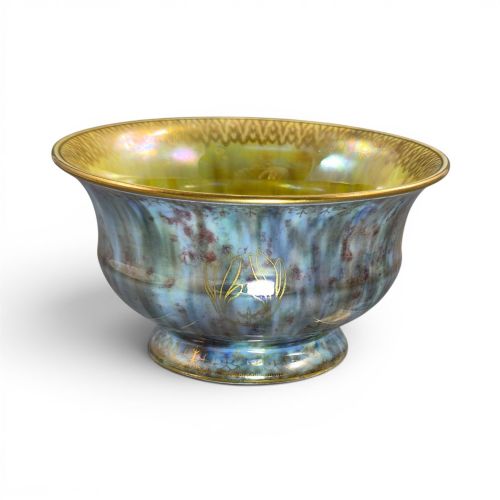
When you search for a blue lustre ceramic dish, you encounter striking decorative and footed bowls spanning the Victorian era through the Edwardian period and the 1930s. These pieces unite deep earthenware or porcelain bodies with shimmering metallic finishes, often displaying imaginative motifs.
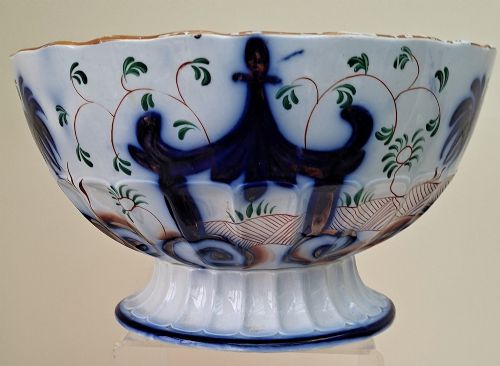
The versions you meet most frequently on this page originate from notable potteries like Wedgwood, created during the early twentieth century by designers such as Daisy Makeig-Jones. Alongside these, nineteenth-century examples like Gaudy Welsh pottery provide traditional patterned alternatives with distinct footed forms.
Materials and technique
Potters formed these pieces using bone china, earthenware, and porcelain, shaping them into decorative bowls and footed bowls. Artisans then applied specialised glaze layers alongside enamel colours to achieve the characteristic glossy finish.
Makers integrated gold leaf and gilt details into the surface design, fusing metal with ceramic through high-temperature firing. This process produced the luminous, reflective qualities seen across Art Nouveau and Art Deco styles.
Listings feature porcelain, bone china, and earthenware formed into decorative and footed bowls across Edwardian and Victorian periods.
Distinctions in quality
Quality rests upon the complexity of the design and the precision of the glaze work, distinguishing standard decorative pieces from ambitious studio creations. The depth of the metallic iridescence and the clarity of painted motifs dictate the visual impact of each bowl.
Wares bearing named designs like Fairyland or King Dragon display superior artistic ambition and meticulous hand-painting compared to simpler geometric or floral patterns. The crispness of the gilt application and the integrity of the underlying bone china or earthenware further separate standard production from exceptional examples.
Wedgwood·Daisy Makeig-Jones·James Hodgkiss·Maling·Gaudy Welsh
The Blue Lustre Ceramic Dish Glossary
- Lustre glaze
- A metallic ceramic finish that creates an iridescent sheen upon firing. This technique reflects light to produce shifting colours across the surface of the dish.
- Bone china
- A type of porcelain containing bone ash that offers high strength and a bright white body. It provides a refined base for detailed enamel painting.
- Gilt
- A thin layer of gold applied to the surface of the ceramic for decoration. It highlights rims and motifs with metallic brilliance.
- Footed bowl
- A vessel elevated on a small pedestal or base. This form lifts the decorative surface to display the glaze work more prominently.
- Enamel
- Opaque glass fused to the ceramic body through heat to add vibrant colour. It allows for intricate, long-lasting pattern work.
Blue Lustre Ceramic Dish: Frequently Asked Questions
How do I care for a lustre bowl?
Wash these ceramic pieces gently by hand using mild soap and warm water. Avoid abrasive sponges or harsh detergents that might harm the delicate metallic glaze.
Keep them away from direct, harsh sunlight for prolonged periods to preserve the rich enamel colours and gilt details. Display them safely on stable surfaces where they will not be knocked.
Are these bowls safe for food use?
Historical decorative bowls often contain metallic glazes and enamel finishes that are unsuited for modern culinary consumption. They function primarily as ornamental display pieces rather than tableware.
Utilise them to enhance a room's aesthetic rather than serving meals or liquids from them. This preserves both the historical surface and the integrity of the materials.
What defines the Edwardian lustre style?
Edwardian lustre work frequently incorporates imaginative narrative scenes, mythical creatures, and rich colour mottling. Designers embraced complex fairy-tale motifs that transformed functional bowls into miniature canvases.
The aesthetic combines rich blue hues with shimmering gold leaf and detailed enamel work. This period produced some of the most intricate decorative ceramics available.
How do I identify a Victorian piece?
Victorian examples often feature traditional patterns such as the Gaudy Welsh pagoda design on sturdy earthenware bodies. These pieces tend to rely on robust glazes and bold, hand-painted cobalt blue elements.
They lack the ethereal, highly polished fairy-land motifs of the later Edwardian period. Examining the weight, pattern style, and clay body helps determine the nineteenth-century origin.