
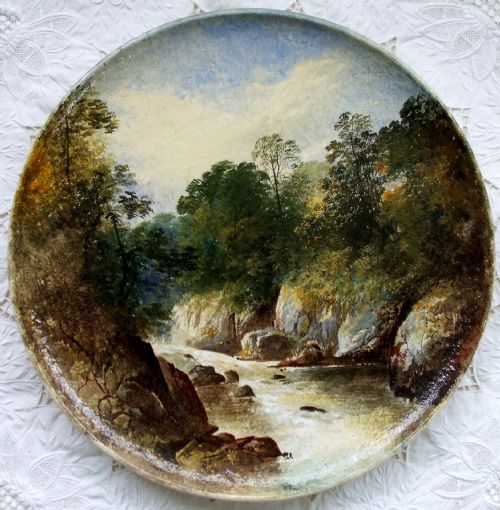


English Art Pottery Dish
An English art pottery dish brings vibrant colour and hand-applied glaze into a room through decorative bowls, plaques and chargers.

English Art Pottery Dish
When you search for an english art pottery dish, you encounter decorative bowls, plaques, plates, and chargers created across the nineteenth and twentieth centuries. These pieces represent distinct aesthetic movements including Victorian, Arts and Crafts, Art Nouveau, and Art Deco.
The version you are most likely to meet on this page dates from the 1910s to the 1930s, featuring earthenware bodies finished with metallic lustre, tubelined designs, or hand-painted enamel. Makers working within these decades focused heavily on decorative vessels rather than utility.
Earlier nineteenth-century examples lean towards pictorial ceramic plaques depicting landscapes in fine detail. Later twentieth-century items shift toward geometric patterns and bold surface glazes characteristic of the interwar period.
Materials and technique
Potters built these vessels using earthenware, porcelain, or bone china as a structural base, shaping them into plates, bowls, and wide chargers. The clay body was then fired before receiving its primary surface treatment.
Decoration relied heavily on complex glazing techniques, including metallic lustre finishes, flambé effects, and enamel pigments. Some workshops applied gold leaf or utilised tubelining to raise outlines before adding colour.
Surface patterns often combined hand-painted elements with transfer printing or specialised kiln firings that allowed lustres to react unpredictably and catch the light.
Recorded periods span the nineteenth century through the 1930s, encompassing Victorian, Arts and Crafts, Art Nouveau, and Art Deco movements.
Judging quality in ceramic design
Quality rests in the execution of the surface decoration and the precision of the glaze work. Pieces featuring complex tubelined patterns or rich, multi-layered lustre effects demonstrate higher technical mastery than flat, uniform glazes.
The involvement of named designers and skilled hand-painters elevates a piece above standard factory production. Individual artist signatures and specific pattern numbers indicate a higher level of workshop attention.
The clarity of the fired image, particularly on pictorial plaques and intricate landscape scenes, separates ordinary output from the finest decorative output.
William Yale·Maling·Charlotte Rhead·Crown Ducal·Wedgwood·James Hodgkiss·Clarice Cliff·Bursley Ware·Moorcroft·Royal Doulton
The English Art Pottery Dish Glossary
- Lustre
- A type of ceramic glaze containing metallic salts that produce an iridescent, metallic sheen upon firing. This technique was used extensively on early twentieth-century decorative bowls to catch the light.
- Tubelining
- A decorating technique where slip is squeezed through a nozzle onto a clay body to create raised outlines for enamel colours. It defines many Art Deco chargers.
- Charger
- A large decorative plate used traditionally for display rather than dining. These wide surfaces provided artists with a canvas for extensive patterns and landscape scenes.
- Earthenware
- Porous pottery fired at lower temperatures, commonly used as the base material for decorated plates and bowls before glazing.
- Flambé
- A rich, variegated glaze achieved by reduction firing, producing streaked or mottled red and purple metallic effects on pottery.
English Art Pottery Dish: Frequently Asked Questions
What is an English art pottery dish?
It is a decorative ceramic piece, such as a bowl, plate, or charger, made in England during the nineteenth or twentieth centuries. These items prioritise artistic design, glaze effects, and surface painting over everyday household utility.
They reflect major design shifts from Victorian naturalism to Art Deco abstraction, often bearing the marks of distinct potteries and named artists.
How were these dishes used originally?
Most of these items served as decorative objects for display on walls, mantlepieces, or sideboards rather than for serving food. Large chargers and plaques were designed primarily to showcase artistic glaze techniques and pictorial scenes.
Smaller bowls functioned as ornaments or cabinet pieces, highlighting the technical experimentation of the potteries that produced them.
How do I identify the period of a piece?
Period identification relies on the stylistic markers of the design, such as Victorian landscape painting, Arts and Crafts motifs, or Art Deco geometric patterns. Maker marks, backstamps, and impressed numbers on the underside provide concrete clues to the era of manufacture.
Materials also offer guidance, as bone china and specific lustre formulations align closely with early twentieth-century production.
How should I display these ceramic pieces?
Because many of these items are decorative chargers and plaques, they suit stable wall mountings designed specifically for heavy ceramics or secure cabinet display. Positioning them away from direct, harsh sunlight protects enamel colours and metallic lustres from fading.
Allowing adequate space around each piece highlights the glaze variations and hand-painted details without visual clutter.