

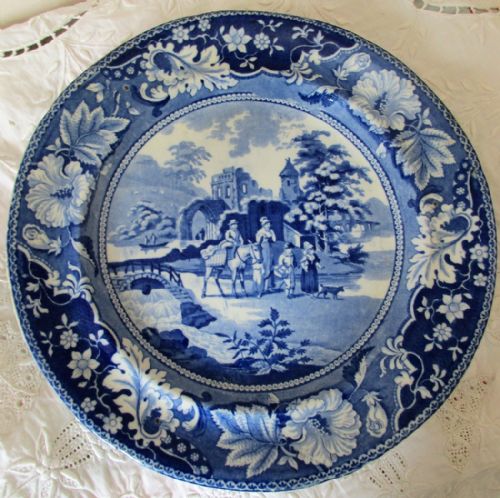
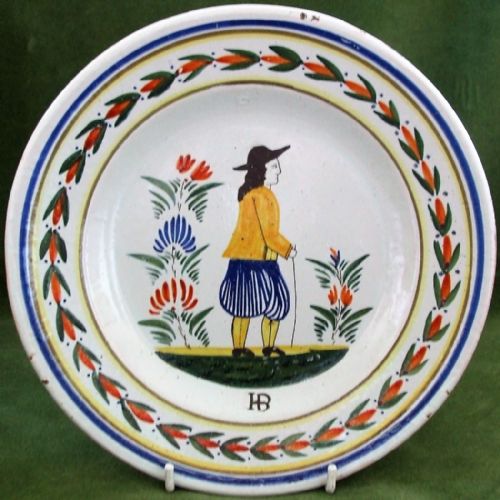
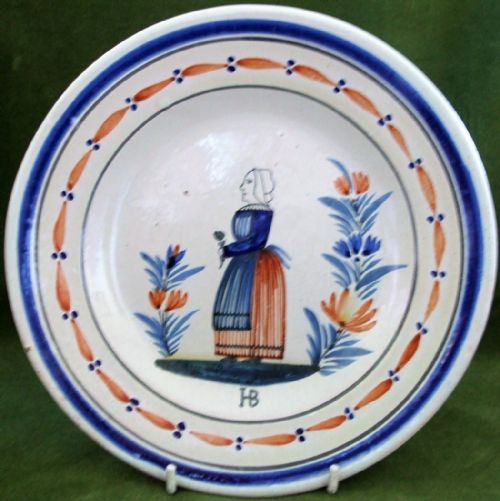
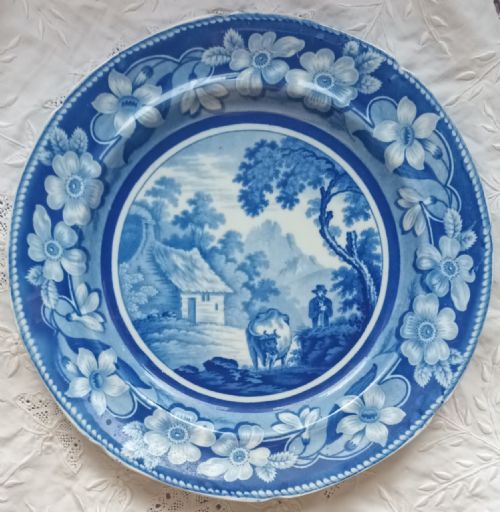
Blue Glazed Pottery Plate
A blue glazed pottery plate brings tin glaze, cobalt pigment, and earthenware together into a wall or table piece.
Blue Glazed Pottery Plate
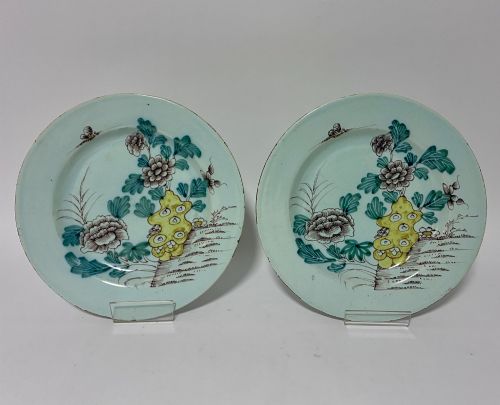
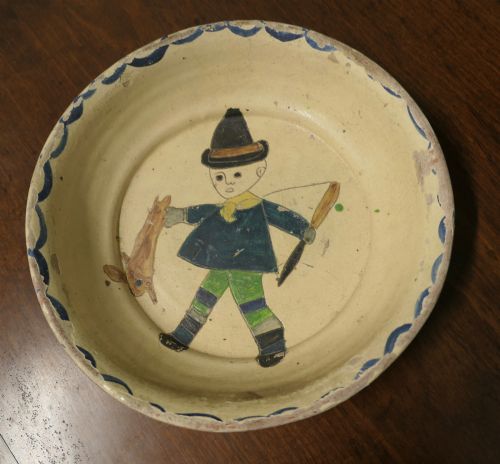
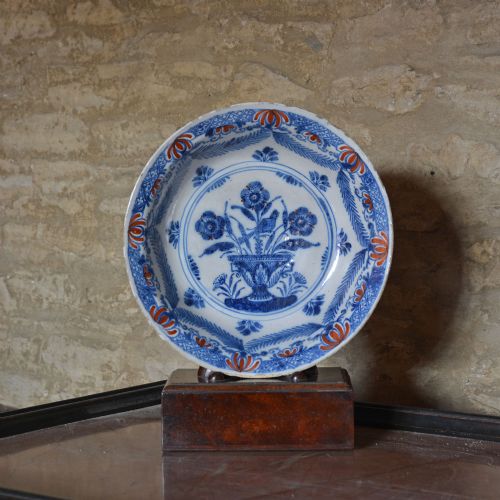
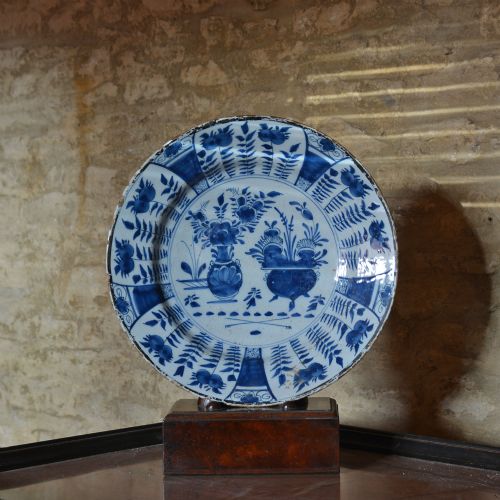
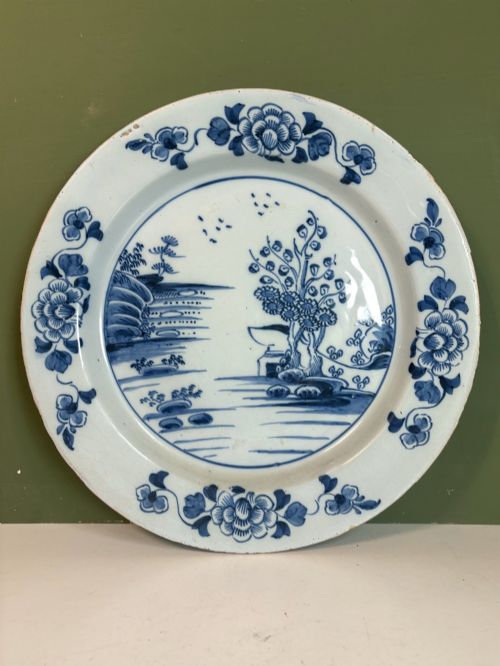
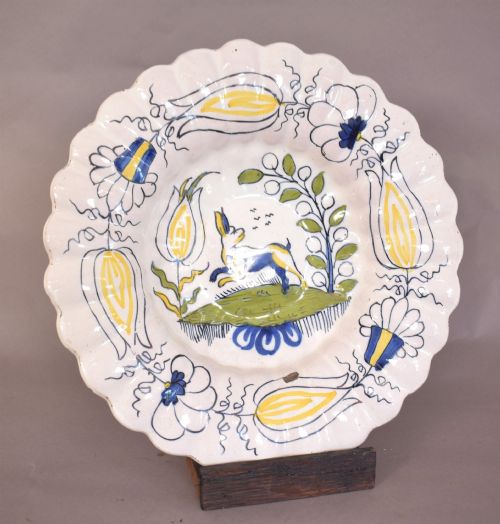
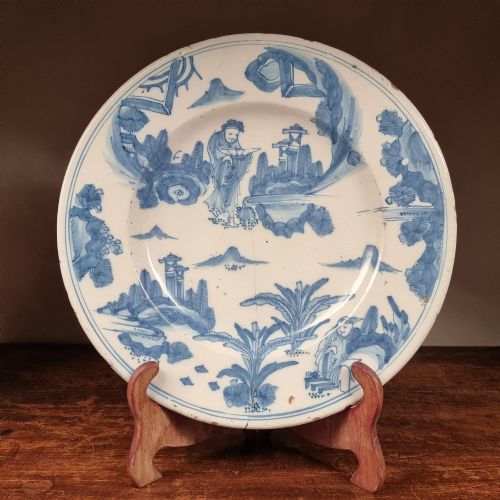
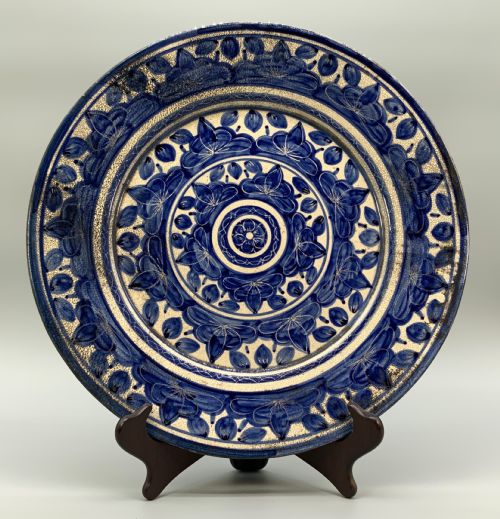
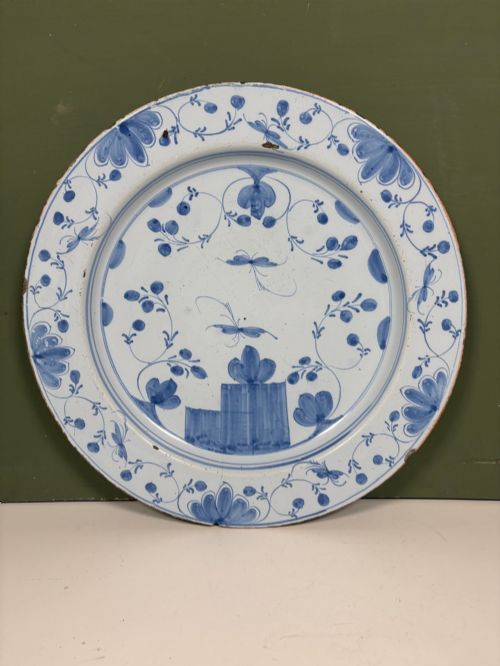
When you search for a blue glazed pottery plate, you are looking at items shaped from clay and finished with mineral pigments. The pieces seen here span the seventeenth century through to the twentieth century, taking the form of plates, chargers, and shallow bowls.
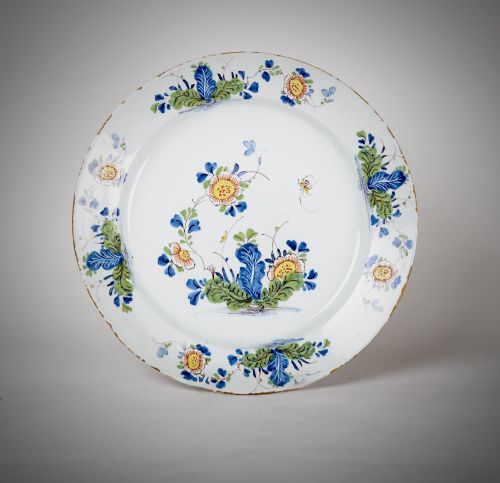
The version you are most likely to meet on this page is a tin-glazed earthenware example from the eighteenth century. These items include English, Dutch, and French regional productions, alongside larger chargers decorated in cobalt blue.
Makers shaped these items for both display and service, utilising styles ranging from Dutch Delftware and Georgian to Arts and Crafts and Moorish designs. The selection relies on earthenware bodies carrying blue glaze or cobalt oxide decoration.
How they were made
Potters formed the body from clay, shaping earthenware on the wheel or pressing it into moulds before firing. Workers then applied a tin glaze containing tin oxide to create an opaque white surface suitable for painting.
Painters applied cobalt pigment directly onto the unfired glaze, allowing the mineral to absorb into the coating during the second firing. This technique produced deep blue tones characteristic of Delftware and related earthenware productions.
Blue Glazed Pottery Plate Retail Price Guide 2026
Typical asking prices for blue glazed pottery plate among the pieces listed under this phrase on Sellingantiques today, from the lower quarter to the upper quarter. They describe what is for sale here now, not the wider market.
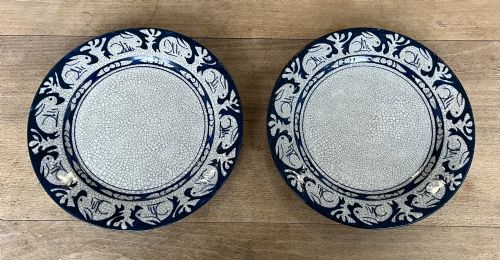
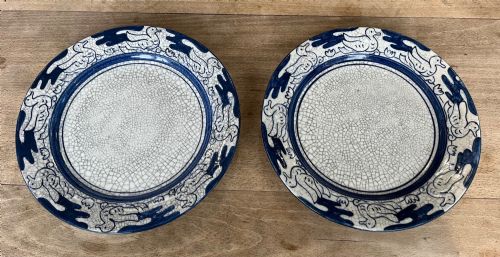
Certain rabbits and ducks managed to immortalise themselves in twentieth-century American art pottery before anyone thought to check their spelling.
What varies in quality
The precision and control of the cobalt painting dictate the visual strength of the piece. Brushwork that remains crisp and deliberate separates finer examples from looser, hurried applications.
The smoothness of the tin glaze and the evenness of the earthenware body beneath reveal the potter's technical skill. Thicker, well-poured glazes provide a stable canvas for the pigment without obscuring the form.
John Ridgway·Dedham Art Pottery
The Blue Glazed Pottery Plate Glossary
- Tin-Glazed Earthenware
- Earthenware covered with a lead glaze made opaque by the addition of tin oxide. This surface served as the standard ground for painting in blue and other pigments.
- Cobalt Pigment
- A metallic oxide used to achieve blue decoration on ceramics. It withstands high kiln temperatures without losing its colour.
- Charger
- A large decorative plate or platter. Potters made these items primarily for display on sideboards or walls rather than for table service.
- Delftware
- Tin-glazed earthenware produced in the Netherlands and England. The style is known for its white glaze and blue painted motifs.
Blue Glazed Pottery Plate: Frequently Asked Questions
What is a blue glazed pottery plate?
A blue glazed pottery plate is an earthenware vessel finished with tin glaze and painted with cobalt pigment. These items include domestic dishes and large decorative chargers.
Potters produced them across several centuries in England, France, and the Netherlands. They served both functional dining roles and formal display purposes.
How were these plates used?
Historical examples served for dining, food presentation, and wall decoration. Large chargers hung in reception rooms to demonstrate household taste.
Smaller plates handled everyday food service or sweet courses. Their glazed surfaces protected the porous earthenware body from moisture.
How do you date a delft plate?
Dating relies on body thickness, glaze tone, and painting style. Early pieces often show thinner potting and specific cobalt hues.
Examinations of the footring and edge wear also help distinguish seventeenth-century items from later nineteenth-century revivals.
How do you care for antique earthenware?
Antique earthenware requires gentle handling and protection from sudden temperature changes. Hand washing with mild soap preserves the fragile tin glaze.
Avoid soaking these porous items in water for extended periods. Display them securely using padded hangers if placed on walls.