





Traditional Staffordshire Earthenware
Traditional staffordshire earthenware brings British heritage straight into your room with figures, jugs, and plates made to be displayed.
Traditional Staffordshire Earthenware
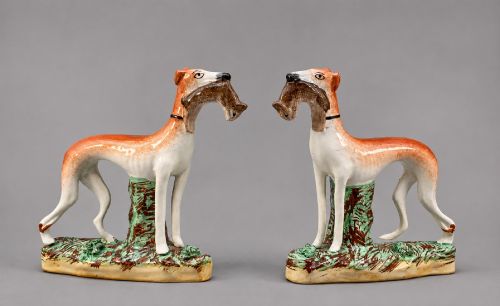
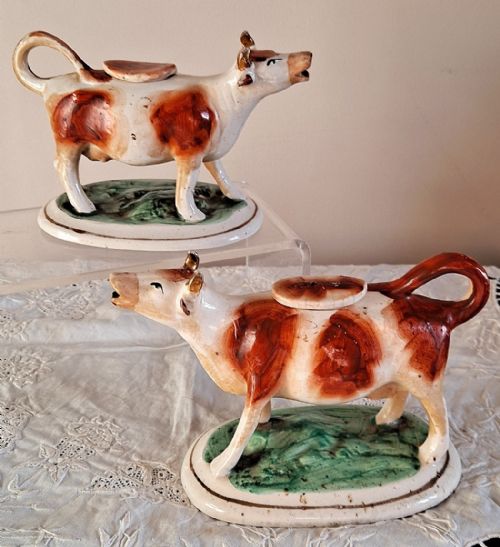
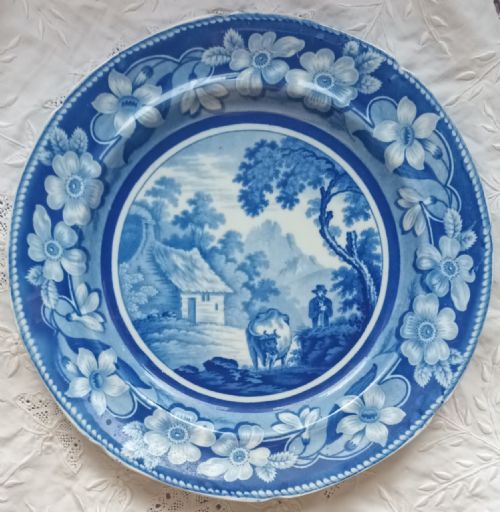
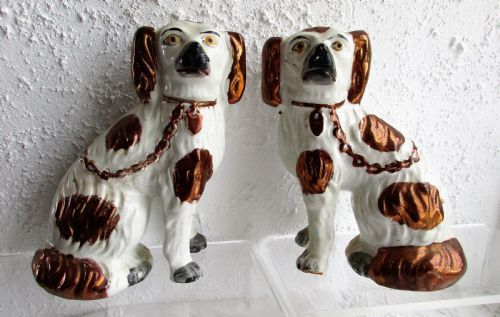
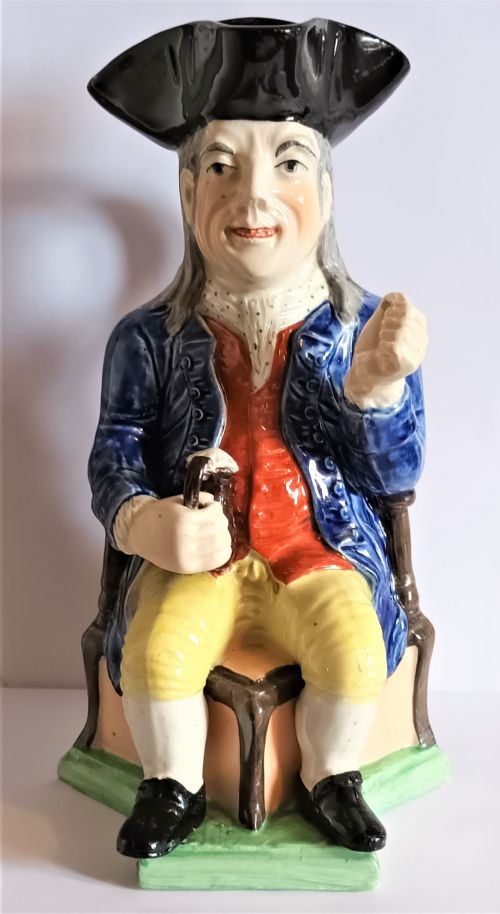
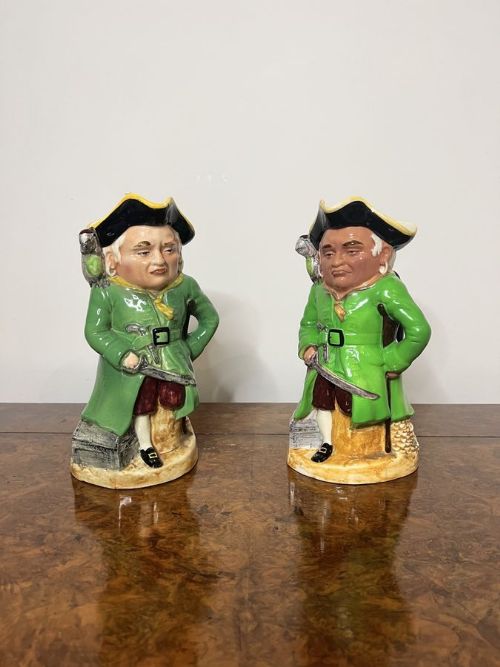
Traditional staffordshire earthenware encompasses figures, Toby jugs, creamers, and plates produced across the nineteenth century. These ceramic pieces range from Georgian transfer-printed plates to Victorian seated spaniels and cow creamers.
The most common items found in this category are pairs of Staffordshire dogs, alongside figural jugs depicting characters like the Squire. Collectors frequently encounter functional forms transformed into ornamental pieces, such as milk jugs shaped as cows.
Originating primarily from English potteries, these works span Georgian, Victorian, and late nineteenth-century periods. Their forms reflect domestic tastes of the era, combining utility with mantelpiece display.
Materials and construction methods
Potters shaped these objects from earthenware clay, applying glazes to seal the porous body. Many pieces feature hand-painting, enamel highlights, or gold leaf applied over the ceramic surface.
Transfer printing provided intricate blue and white patterns on plates, while figures relied on moulded earthenware bodies finished with coloured paints. Some items incorporate details like glass eyes on spaniel figures.
Specialised techniques such as Jackfield glaze created deep black metallic surfaces, whereas copper lustre imparted a reflective, metallic sheen to jugs.
Traditional Staffordshire Earthenware Retail Price Guide 2026
Typical asking prices for traditional staffordshire earthenware among the pieces listed under this phrase on Sellingantiques today, from the lower quarter to the upper quarter. They describe what is for sale here now, not the wider market.
Materials recorded across the inventory include earthenware, gold leaf, enamel, paint, and copper lustre.
Factors that distinguish quality
The presence of supplementary materials, such as applied gold leaf or glass eyes, elevates the standard of certain Victorian spans and jugs. Proportion and expression separate standard production pieces from superior studio outputs.
William Adams
The Traditional Staffordshire Earthenware Glossary
- Earthenware
- A porous pottery type fired at lower temperatures than stoneware or porcelain. It requires a glaze to become impermeable to liquids.
- Transfer printing
- A method of applying detailed monochromatic designs to ceramics using engraved copper plates and tissue paper. This technique created uniform patterns on plates and jugs.
- Toby jug
- A pottery jug shaped as a seated, full-bodied figure, usually an eighteenth or nineteenth-century character holding a mug or jug of beer. These pieces served functional roles in households before becoming purely decorative.
- Copper lustre
- A metallic glaze containing copper that produces a reflective, coppery sheen upon firing. Potters used this finish to highlight decorative jugs and tableware.
- Jackfield
- A type of British earthenware known for its deep black, highly glossy glaze. It originated in Shropshire and later influenced Staffordshire potteries.
Traditional Staffordshire Earthenware: Frequently Asked Questions
How do I identify traditional staffordshire earthenware?
Look for characteristic nineteenth-century forms such as seated spaniels, Toby jugs, and transfer-printed plates. The underlying body consists of porous earthenware, often finished with hand-painted enamels or blue and white transfer prints.
Examine the modelling and glaze quality to determine the period. Victorian examples typically display bolder painted details, while Georgian pieces often feature refined transfer patterns.
Were Staffordshire figures meant for display?
Most figural ceramics and spaniels served as mantelpiece ornaments rather than utilitarian tableware. Their primary purpose was domestic decoration in nineteenth-century homes.
Certain items like cow creamers and Toby jugs retained a dual purpose for serving milk or ale before migrating to display shelves.
What is the difference between Georgian and Victorian pieces?
Georgian examples in this category frequently showcase blue and white transfer printing on plates and simpler figural forms. They date from the earlier decades of the nineteenth century and prior.
Victorian pieces embrace heavier modelling, vibrant enamel paints, and the familiar pairs of mantel dogs. The later nineteenth-century output leans towards ornate decorative subjects.